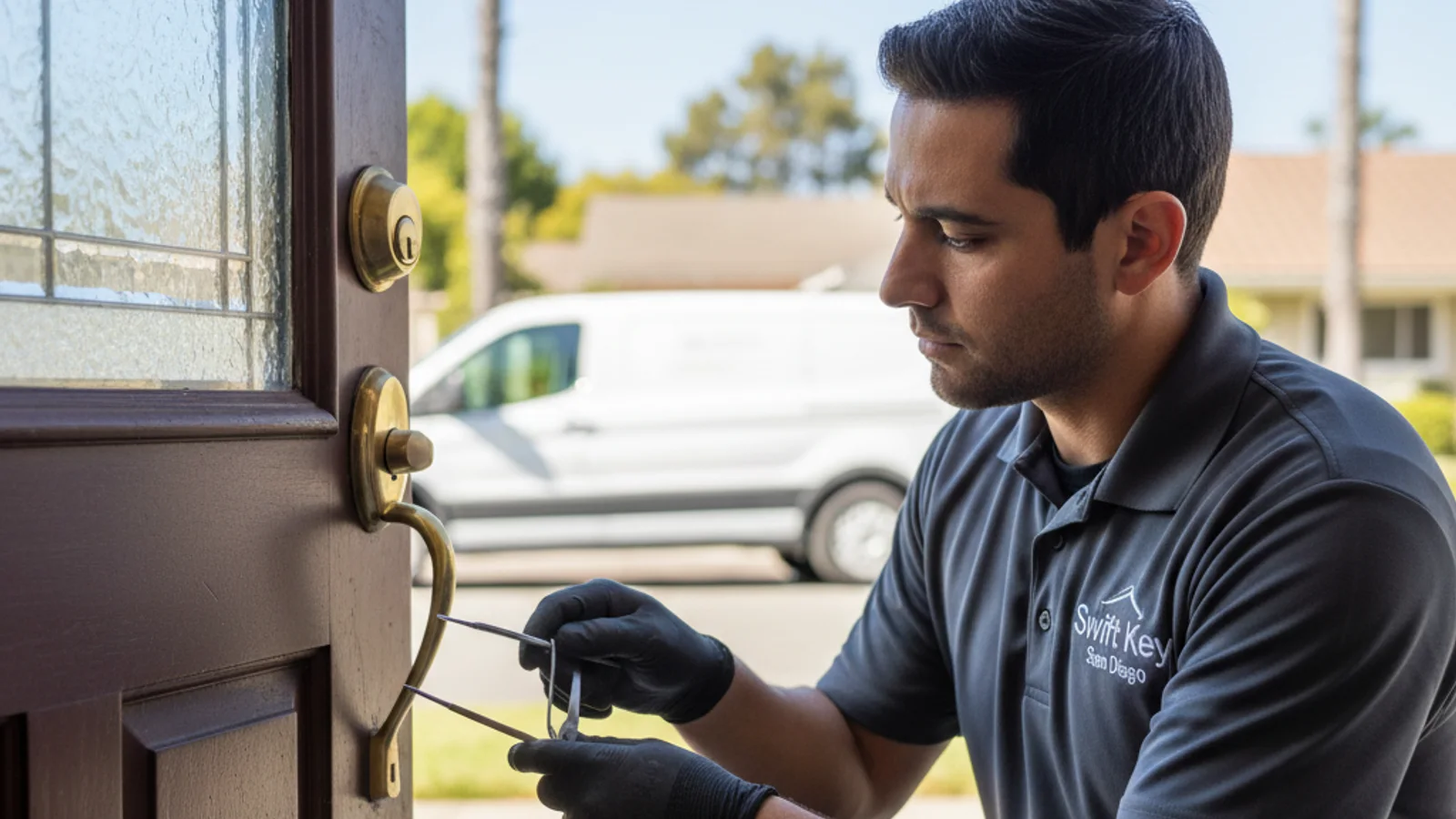
No, tipping a locksmith isn’t expected. Locksmiths are skilled tradespeople, like electricians or plumbers, and the pricing model reflects that. A good locksmith builds their costs into the quoted price upfront. There’s no cultural expectation of a gratuity, and nobody in the trade will be offended if you don’t tip.
That said, there are moments when a small tip lands as genuine appreciation, not obligation. And there are also things that help a locksmith far more than cash.
Why tipping isn’t the norm for locksmiths
The trades work differently from restaurant or delivery work. A locksmith sets a service call fee, a flat labor rate, and a parts cost, and quotes it before touching anything. That pricing already accounts for their time, fuel, tools, insurance, bonding, and the truck keeping the lights on.
Compare that to a server or a food delivery driver, where wages are structured around the expectation of tips. Locksmiths don’t work that way. They’re professionals who charge professional rates, and those rates are the complete transaction.
Plumbers, electricians, and HVAC techs follow the same norm. You wouldn’t feel awkward not tipping your plumber after they fixed a burst pipe at a fair price. A locksmith is the same category of professional.
If you got a clear quote, they showed up when they said they would, and the job went smoothly, paying the invoice is the entire thing. Nothing else is expected.
When a tip genuinely lands
There’s a difference between obligation and appreciation. A few situations where a tip reads as earned, not performative:
Someone showed up at 2am. Emergency lockouts at off hours involve a real person climbing out of bed, loading up a truck, and driving to wherever you’re stranded. After-hours work is a surcharge the locksmith sets, if they charge one at all. Confirm that line before they start. If someone got you back inside at midnight, a modest cash thank-you says you noticed. That’s not weird. That’s decent.
They went beyond the job. Maybe you were locked out in the rain and they waited while you found your spare to compare. Maybe they noticed your lock was failing and pointed it out without upselling you on the spot. Maybe they squeezed you in when their day was already full. Those are gestures that a little appreciation acknowledges honestly.
A genuinely tense situation. If you locked your dog or child in a hot car and they got there fast and handled it without drama, a modest tip is a reasonable expression of gratitude. The work they did was technically the same. The stakes weren’t.
A fair tip in those situations is a modest cash amount, not a second invoice. More than that is uncommon and not expected. Less than that, or nothing, is also fine. The point is that when a tip happens in these scenarios, it comes from a real place rather than social pressure.
What helps a locksmith more than a tip
This is the honest part: a Google review is worth more to a local locksmith than a modest cash tip.
Local service businesses live and die by written reviews from real jobs. When someone searches for a locksmith in San Diego, a specific review that names what happened helps that independent locksmith get the next call. A review is a permanent asset. It shows up on later searches and compounds over time.
A cash tip, by contrast, is a one-time thing. The locksmith appreciates it in the moment and it’s gone.
If you had a good experience, the highest-value thing you can do is pull up Google Maps, find the business, and write two or three honest sentences about what happened. “Showed up on time, quoted me fairly, and got me back in my house without any hassle.” That kind of specific, real review does more for a small local business than you might think.
A referral is the same category of help. If a neighbor, coworker, or family member needs a locksmith and you mention the person who helped you, that’s a tangible return for them. A recommendation from someone who’s actually used the service carries far more weight than an ad or a listing.
Finally: calling them back. If you need a rekey after moving in, a smart lock installed, or car keys replaced in the future, using the same locksmith is a form of loyalty they notice. Building a relationship with a trusted trade professional is genuinely useful for you and appreciated by them.
When a “tip request” is a red flag
There’s a scenario worth knowing about: a locksmith who pressures you for a cash tip on top of an already-inflated bill is not playing a normal game.
Legitimate locksmiths don’t ask for tips. If a technician finishes a job, hands you a bill that’s significantly higher than what you were quoted over the phone, and then suggests a cash tip for “good service,” that combination is a warning sign. It’s the same pattern as the dispatch-network scam, the teaser-price ad that balloons at the door, just with an extra layer. See the full breakdown of how those operations work in our San Diego locksmith scams guide.
The red flags travel together: no price quoted before arrival, reluctance to itemize the invoice, and any cash-only pressure, whether framed as a tip or not. A real local locksmith gives you a written or clearly stated price up front, and that’s the price you pay. The transaction is complete at that point.
How tipping compares across the trades
For context, here’s how the norm sits across similar professionals:
Plumber: Not expected. Same logic as locksmiths. Skill trade, professional pricing, no tipping culture.
Electrician: Not expected. Complex licensed work, professional billing model.
HVAC technician: Not expected. Same category.
Moving crew: Often tipped, especially on difficult moves. The work is physically demanding and often poorly compensated. A modest per-person amount on a long job is common.
Food delivery: Usually tipped. Wages are structured around it, and the driver covers their own gas and wear.
Locksmith: Not expected, but a small gesture is genuinely appreciated when something extra happened.
The through-line is whether tips are structurally built into the wage model. For locksmiths, they’re not. For food delivery, they are. That’s the real distinction.
The script for the awkward moment at the door
If you want to tip and feel strange about it, just hand it over naturally: “Hey, I appreciate you coming out so fast. This is for you.” Done. No locksmith will be offended or confused.
If you’re not tipping and worried it’ll be awkward, it won’t be. Handing over the invoice payment and saying “thanks, you made this easy” closes the transaction cleanly. That’s the normal outcome of a professional service call.
If you had a genuinely good experience and want to do something, say so: “I’ll leave you a Google review.” That lands well, every time.
Swift Key San Diego is a referral service. Call (858) 400-4082 and we connect you with a licensed independent locksmith in San Diego County. That locksmith quotes. Swift Key does not quote. The emergency locksmith page is how those matches are requested. For quote questions on common jobs, see the locksmith cost guide for San Diego.
Frequently asked questions
Do you tip a locksmith?
No, tipping a locksmith isn’t expected. Locksmiths are skilled trades professionals who quote pricing before the job that accounts for their time, tools, and overhead. That said, a modest cash thank-you is a reasonable gesture if someone responded late at night, went out of their way, or handled a high-stress situation calmly. Nobody will be offended either way.
How much should I tip a locksmith?
If you choose to tip, a modest cash amount is appropriate and well-received. More than that is uncommon and not expected. The situations where a tip feels natural are genuine emergencies, late-night calls, or moments where the technician clearly went beyond the standard job.
Is it rude not to tip a locksmith?
No. Locksmiths work in a profession where tipping isn’t part of the social contract. Paying the quoted invoice on time, treating the technician with basic respect, and leaving a Google review if the job went well are all that’s expected. Not tipping won’t register as rude to any professional locksmith.
What helps a locksmith more than a tip?
A Google review is more valuable than a cash tip for most local locksmith businesses. A specific, honest review that mentions what happened builds a permanent record that influences future customers. A referral to a friend or neighbor, and calling the same locksmith for future work, are both meaningful forms of appreciation that compound over time.
What if a locksmith asks for a cash tip on top of a high bill?
That’s a red flag. Legitimate locksmiths don’t ask for tips, and any cash-only pressure that follows a bill higher than what was quoted is consistent with the dispatch-network scam pattern common in San Diego. A trustworthy locksmith gives you a price before the job starts, and that’s the price you pay.