A missing cluster mailbox key creates two problems: getting your mail and identifying who controls the lock. The exact USPS cluster box lock type can’t be confirmed from the approved sources available for this page. Start with your local Post Office or property manager before anyone copies, opens, drills, or replaces the lock.
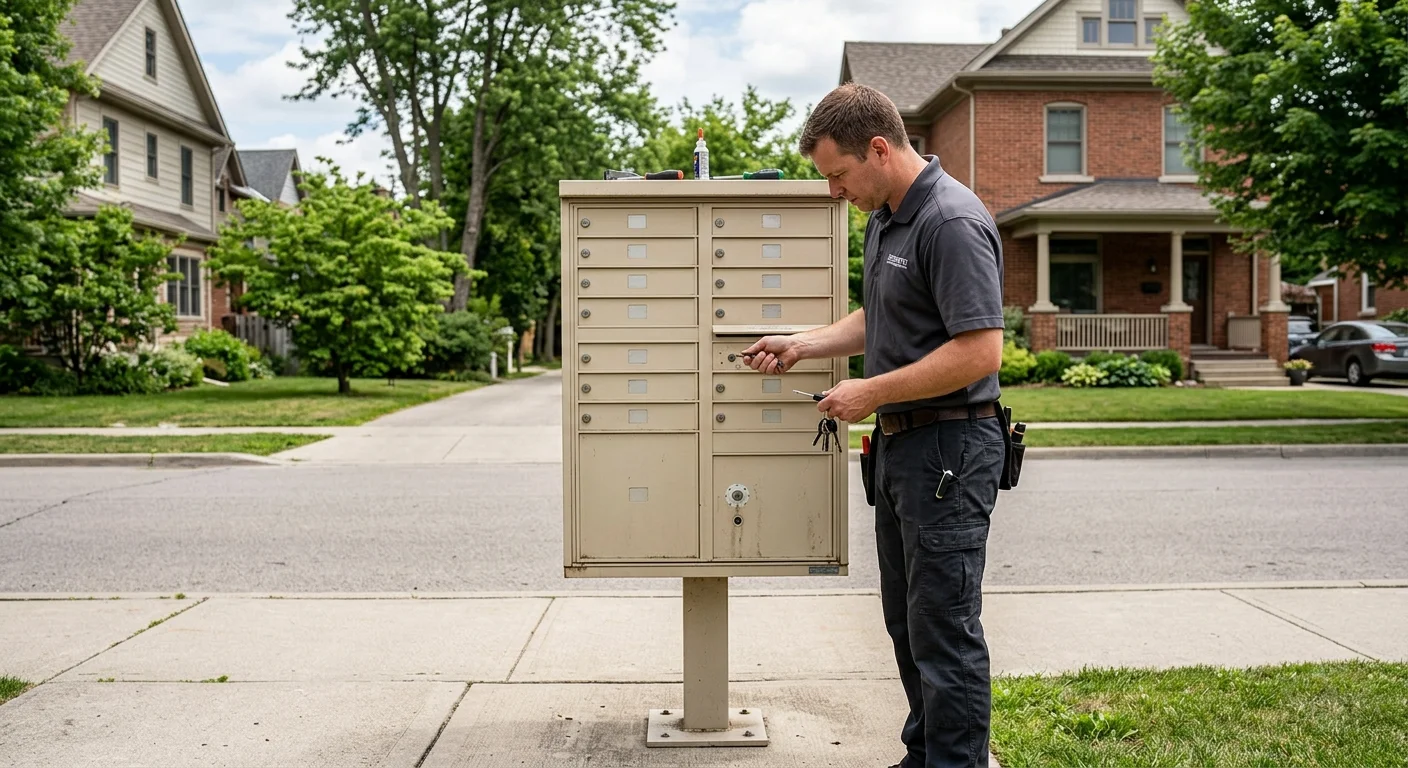
Why a cluster box is not like a private mailbox
A private mailbox and a cluster box may have similar key openings. That doesn’t give them the same ownership or repair path.
A privately controlled mailbox may allow its owner or an authorized property representative to approve work. Our private mailbox lock replacement guide covers that situation. It doesn’t establish permission to work on a USPS-owned cluster box unit.
A cluster box serves multiple compartments. Your key may open only the door assigned to you. That assignment alone doesn’t confirm that you own or control the lock hardware.
This distinction matters before choosing lock replacement. A locksmith needs more than a description of the key problem. The professional also needs to know who can authorize access or alteration.
Don’t pry, drill, or remove the compartment lock while ownership is unclear. Damage can make the access problem harder. It may also affect equipment outside your assigned compartment.
The safest first step is administrative, not mechanical. Identify the party responsible for the unit. Then ask that party how a missing, broken, or unusable key should be handled.
That approach applies across San Diego County. A box near a Chula Vista apartment, a City Heights complex, or a Rancho Bernardo association may involve different contacts. The neighborhood name doesn’t decide ownership. Documentation and confirmation from the responsible party do.
Who owns the lock on your compartment
The appearance of a mailbox doesn’t prove who owns or maintains it. This page can’t determine ownership from a USPS label, street location, building type, or compartment number.
Ask your property manager, landlord, homeowners association, or local Post Office a direct question: “Who owns and controls this cluster mailbox unit and its compartment locks?” Request a written answer when possible.
If the Postal Service identifies the unit as USPS-owned, treat it as postal property. Don’t assume a resident, manager, or locksmith has permission to alter it. Ask the Post Office for its current procedure and follow that direction.
If the property manager says the equipment is privately controlled, ask who can authorize locksmith work. A tenant’s assigned use of a compartment isn’t the same as documented permission to replace its lock.
Separate these questions during the conversation:
- Who owns or controls the mailbox cabinet?
- Who handles the lock on the assigned compartment?
- Who may authorize opening or replacement?
- Is key copying permitted for this specific key?
- Does the responsible party require its own process?
These aren’t questions a locksmith should answer by guessing. They belong with the party controlling the mailbox.
Keep the response, work order, email, or written authorization. It gives the locksmith clear boundaries if professional help is approved. It also reduces the chance that someone works on the wrong compartment or wrong type of mailbox.
What the Postal Service handles and what it does not
This site’s approved source record doesn’t contain a current Postal Service regulation, form number, lock specification, fee, or completion schedule for cluster mailbox access. We can’t confirm those details here, so this page won’t invent them.
Contact the local Post Office serving your address. Explain that you’re locked out of your assigned cluster mailbox compartment. Ask whether the Postal Service controls the unit and how it handles the following issue:
- A lost or stolen compartment key
- A key that no longer turns
- A key broken inside the lock
- A damaged compartment door
- A request for another key
- A requested lock change
Ask what identification or occupancy documents it wants to review. Requirements may differ from the documents already available to you. Don’t rely on a form number or fee quoted by an old forum post.
If the Post Office directs you back to the property, contact the manager or association. Ask for the name of the person authorized to approve access. Get the approval in writing before arranging physical work.
People searching “where to copy mailbox key” often expect a store recommendation. Cluster mailbox keys require an ownership check first. Ask the Post Office or property manager whether that specific key may be copied and who should handle it.
Once permission is clear, our key duplication service can connect you with a licensed independent locksmith for an eligible key. The matched professional can inspect the key and explain available options without assuming authority over postal equipment.
When a locksmith can legally help
California defines paid lock opening, repair, installation, modification, and rekeying as locksmith activity. Locksmith companies and employees must meet the applicable state licensing or registration rules unless an exemption applies.
You can check a professional through the state’s Department of Consumer Affairs license search. Confirm the name and current status before approving work.
A valid locksmith credential doesn’t replace the owner’s permission. These are separate checks. The professional must be qualified for the work, and the person requesting it must have authority over the lock.
A licensed locksmith may be able to help after the responsible party confirms the mailbox is privately controlled or expressly authorizes the requested work. Depending on that authorization, the professional can discuss an approved opening, key copy, or compartment lock replacement.
For a unit identified as USPS-owned, start and remain with the Postal Service’s instructions. Don’t ask a locksmith to drill first and settle the ownership question later. The exact postal rule governing outside locksmith work couldn’t be confirmed from the approved sources for this page.
Swift Key San Diego is a referral service. We don’t open or alter mailbox locks ourselves. We connect callers with licensed, independent local locksmiths when the requested work has proper authorization.
If the problem involves a community gate rather than the mailbox, follow the separate steps in our apartment gate key and fob guide. Gate access and postal access shouldn’t be treated as the same request.
What to bring and who to call first
Gather information before contacting anyone. This helps the property manager, Post Office, or locksmith understand the exact problem.
Have these items available:
- The complete San Diego County delivery address
- The building or community name, if applicable
- The cluster box location and compartment identifier
- A clear photo of the unit and affected door
- The existing key, even if bent, worn, or broken
- Your identification and available occupancy documents
- Any message from the property manager or Post Office
- Written authorization if locksmith work was approved
This isn’t an official USPS document checklist. The local Post Office may request different information. Ask before making a special trip or paying anyone.
For a managed apartment or condominium, contact the property manager first. Ask whether the unit is privately controlled or handled through the Postal Service. For a box without an obvious property contact, begin with the local Post Office serving the delivery address.
Use plain wording: “I’m locked out of my assigned cluster mailbox at this address. Who owns the unit, and who is authorized to handle its compartment lock or key?”
Write down the answer and the contact’s name. If you’re referred elsewhere, ask what information you should provide. Don’t authorize drilling, replacement, or duplication while the answer remains unclear.
After ownership and permission are confirmed, contact a licensed locksmith only if the responsible party directs you to do so. Share the written authorization before the appointment. That lets the professional decide whether the requested work falls within the permission given.
When to call us
Call after the property manager or Postal Service confirms that a licensed locksmith may handle the approved key or lock work. Call us at (858) 400-4082 and we’ll connect you with a licensed local locksmith.