A Volkswagen key can be replaced in San Diego County only after the year, model, and key type are identified, and a licensed independent locksmith or a Volkswagen dealer confirms they can cut the blade and program the functions your car actually supports. That is not automatic for every year. Not every remote button can be set up away from a dealer. Swift Key San Diego does not cut or program keys. We match you with a licensed local locksmith. That pro, or the dealer, confirms compatibility and does the authorized work.
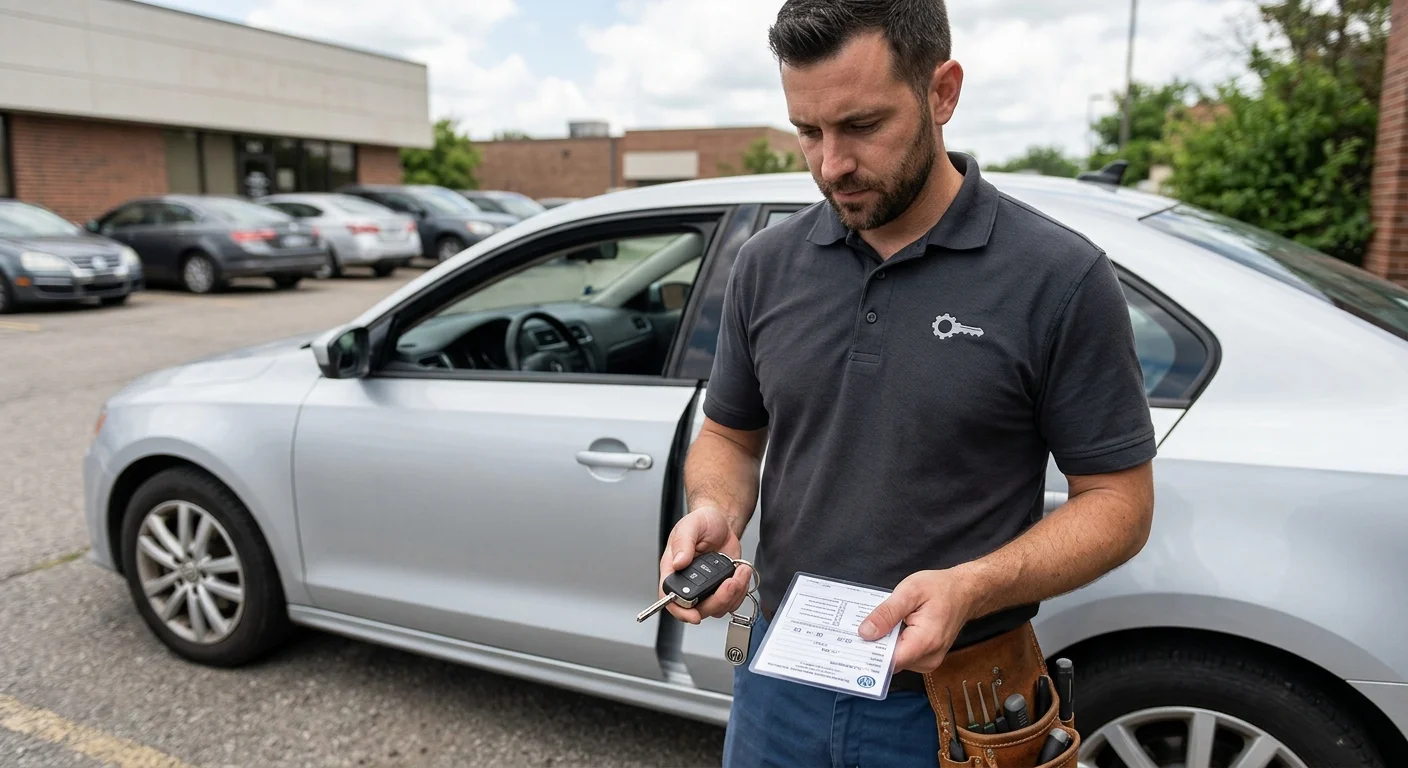
Identify the year, model, and key type
Start with the car, not the blank on the key ring. A 2004 Jetta in Escondido is not the same job as a Tiguan in Carlsbad or an Atlas parked at a Chula Vista school lot. The year and model tell the locksmith which blade profile to look up. They also tell the dealer which electronic system the car uses. Guessing from a photo of a black plastic fob is how people order the wrong blank.
Read the door sticker, the registration, or the insurance card. Write the year, make, model, and trim. Note whether you turn a blade in the ignition or press a start button. Note whether the doors unlock with a switch on the key head, a separate fob, or proximity. If you still have a damaged key, bring it. A worn blade still shows the cut pattern. A cracked fob still shows the button layout. If every key is gone, say that up front. Originating a first key is a different path from copying a spare you still hold.
Volkswagen keys in this county show up in a few common shapes. Older cars may use a metal blade with no electronics. Many later cars use a blade plus a chip in the head, often called a transponder key. Some combine the blade and the remote in one piece. Newer cars use a smart fob you keep in a pocket, with a hidden emergency blade inside the shell. The difference between a transponder key and a smart key matters because cutting steel and pairing electronics are separate tasks. California law treats originating keys and programming electronic operating devices as locksmith work. Making a duplicate from an existing key, and doing only that, sits in a narrow exemption. Once someone rekeys, opens, or programs, licensing applies.
San Diego County is not one parking lot. Coastal cars in La Jolla, Pacific Beach, Encinitas, and Imperial Beach take salt air on the blade and the fob seams. Inland cars in El Cajon, Escondido, and Ramona sit in heat that drains fob batteries and makes a “dead key” look like a programming failure. South Bay commuters in National City and San Ysidro, and I-15 drivers through Mira Mesa and Rancho Bernardo, often need a spare before a weekday trip, not after the only fob disappears at the airport. Name the city where the car sits when you call. The matched locksmith needs that as much as the VIN on the registration.
Do not assume a hardware kiosk or a parts counter can finish this. A store that copies a house key or a simple metal car key is not confirming your immobilizer. If someone offers to cut a VW blade and skip the electronics, ask what will actually start the car. A licensed locksmith can make a car key in many cases. They cannot honestly promise every Volkswagen year, every fob style, or every button. The year, model, and key type come first. Compatibility comes second.
Separate blade cutting from immobilizer programming
A Volkswagen key is often two jobs sold as one. The blade has to match the door and ignition wafers. The electronics have to be accepted by the car. If you only cut the steel, you may open a door and still sit there with a silent starter. If you only pair a fob and the hidden emergency blade is wrong, you are stuck when the battery dies at a Mission Beach lot or a downtown garage.
Blade cutting is physical. The locksmith or dealer looks up the keyway, cuts a blank, and tests the turn in the lock. On some cars that is enough to open the door. It is not enough to start a car that expects an electronic handshake. Modern vehicles use electronic key systems that require programming. Volkswagen is in that group on many later models. The exact module names, tool names, and on-screen steps are not something this page can publish from guesswork. The person doing the work confirms those against current manufacturer information for your VIN.
Programming is its own decision. It may cover the chip that allows a start. It may cover lock, unlock, trunk, or panic buttons. It may cover proximity and push-to-start. Those are not the same function. A locksmith who can cut and pair a transponder on one year may not be able to add every remote feature on another. A dealer may be the only place that can complete a given function. Ask for that split in plain words: what will the new key do on this car, and what will it not do.
This is why car key replacement and key fob programming show up as related services, not one blob. You might need a cut only, a program only, or both. You might need a new shell because the buttons cracked after years in a console on I-8. You might need a full origin because the last fob went into a bag at SAN. Tell the locksmith which of those you are in. Do not ask for “a VW key” and assume the rest is obvious.
Battery versus programming is a local trap. Heat in East County and a weak fob battery can look identical to a failed chip. Try a known-good battery in the fob if the shell opens, before anyone sells you a full replacement. If the mechanical blade still turns and the car still starts when the fob is held in the documented backup position, say so. If the car will not start with a fresh battery and a known blade, you are in programming or a deeper electrical issue. The matched pro should separate those, not bundle them.
California locksmiths who program automotive keys and electronic operating devices are doing licensed locksmith work under Business and Professions Code section 6980. You can confirm a company or employee through the state license lookup. Ask to see the pocket license when someone arrives. Cutting a blade from a sample you already hold is the smaller slice. Programming is the part people skip, then discover in a UTC parking structure when the engine will not turn over.
Compare locksmith and dealer support
You have two honest paths in this county: a licensed independent locksmith, or a Volkswagen dealer. Neither path is “always cheaper” or “always complete” on this page, because published dollar figures and turnaround promises are not something we can verify here. What you can compare is access, scope, and who is allowed to do the work.
A mobile locksmith comes to the car. That matters when the VW is in a beach lot, a hospital garage in Hillcrest, a driveway in Oceanside, or a street in City Heights with no spare. The locksmith can often cut on site and, when their equipment and the car allow it, program on site. They cannot claim every year. They cannot claim every remote function. If they say they will confirm against the VIN before they start, that is the right order. If they promise every German car, every button, no questions, keep shopping.
A dealer has factory parts channels and factory software for that brand. That can matter when the car will not accept an aftermarket fob, when all keys are lost, or when a function the locksmith cannot reach still has to work. The tradeoff is logistics. You may need the car at the store. You may need a tow if you have no key to drive it there. Dealer support is the right call when the locksmith tells you, after checking the year and system, that they cannot complete the programming. That is a professional answer, not a failure.
The locksmith-versus-dealer choice is the same fork people hit on other European cars. Volkswagen is not BMW, and it is not a generic “import.” The principle is the same. Identify the system. Ask who can complete which functions. Do not pay for a cut that will not start the car, and do not tow by default if a licensed mobile pro can finish the job where it sits.
Proof of ownership belongs in both paths. Expect a request for photo ID and registration or another document that shows you have a right to the vehicle. That is normal after a lost key, and it is how you avoid handing a stranger a working VW. The brand you called, Swift Key San Diego, does not perform the work, hold a BSIS locksmith license, or set the price. The independent locksmith you are matched with is the one who is licensed. You contract and pay that professional directly.
A parts store that only copies metal is not a third equal path for most later Volkswagens. If they can cut a simple blade from a sample, that may help an older car with no chip. It does not replace immobilizer programming. Ask what they will test: door, ignition, start, and remote. If the answer is only “it looks like the old key,” you still need a licensed locksmith or the dealer.
What to prepare before replacement
Have the facts in one place before anyone cuts a blank. Year, make, model, trim. City where the car is sitting. Whether you have a working spare, a broken spare, or nothing. Whether the car uses a turn-key ignition or a start button. Whether the problem is a lost key, a snapped blade, a fob that will not unlock, or a fob that unlocks but will not start.
Gather documents. Driver license. Registration or insurance card in your name. If the car is a company vehicle, have the fleet contact available. If it is a family car, the person on the title should be reachable. Locksmiths and dealers both need a clean ownership story. That is slower at the curb for thirty seconds and faster than arguing later.
Describe the key you had, even if it is gone. Flip blade or solid head. Number of buttons. Chrome or matte. Hidden emergency key inside a fob, or a separate metal key. Trunk or hatch button. Panic button. Remote start, if you had it. Those details keep the locksmith from ordering a three-button shell for a four-button car. They also keep the dealer from programming a function you never paid for, or skipping one you rely on at a gated apartment in Pacific Beach.
Say where you are in the county in concrete terms. “Fashion Valley garage, level three” is useful. “Somewhere in San Diego” is not. Coastal jobs deal with corrosion on blades and battery contacts. Inland jobs deal with heat-soaked fobs. A car on Camp Pendleton access, a street in San Ysidro, or a lot off SR-52 in Santee each has a different meeting point. The matched locksmith needs a legal place to stand and work, not a red-curb scramble.
Ask the compatibility questions out loud. Can you cut this blade from code or from a sample. Can you program the immobilizer on this year. Which remote functions will work when you are done. What will still require a dealer. What you will test before you leave. If the locksmith cannot answer those, they are not ready to start. Swift Key San Diego will not invent a yes for them. We connect you. They confirm.
Skip DIY cutting and skip swapping random used fobs from a marketplace listing. A used fob that is still tied to another car, or never tied to yours, is a paperweight. Programming is not a YouTube toggle on every Volkswagen. If you already bought a blank, tell the locksmith the brand on the box. They may or may not be able to use it. That is their call against the car, not a promise from this site.
Test every supported function after service
Do not pocket the new key and drive off after one start. Walk the functions the locksmith or dealer said they would enable. Door lock. Door unlock. Driver door with the blade. Passenger door if your car still has a passenger keyway. Trunk or hatch. Glove box if that lock shares the blade. Ignition turn, or start button with the fob in the cabin. Start with a foot on the brake. Shut down. Start again.
If you have a hidden emergency blade, take it out of the fob and open the door with it. That is the test that matters when the fob battery dies at Torrey Pines or a parking garage downtown. If the car has a documented backup start method with a dead fob, test that too, using the instructions that apply to your year. Do not invent a method from another brand.
Test range in a boring way. Stand a few steps off the bumper and lock. Walk to the sidewalk and unlock. You are not measuring a published distance. You are checking that the remote that was just programmed talks to this car, not that the old worn fob still works by habit. If you have two keys, test both. A new key that works while the spare stops, or the reverse, is a programming issue to catch now.
If a function was never promised, do not treat that as a defect after the fact. If remote start, proximity unlock, or a sliding-door button was out of scope, that should have been said before work began. If it was in scope and it fails, say so before the locksmith leaves. Have them show the license again if you have any doubt, and keep the work description in writing. You can verify a California locksmith company or registration on the DCA search.
Keep a spare once you are back in the car. The second copy is what prevents a lost-key day at SDSU, Petco, or a Coronado hotel lot from becoming a full origin. Store it at home, not in the VW. If the first key was lost, ask whether anything else should be done so the missing fob cannot start the car. Whether that step is available on your year is a question for the locksmith or dealer. This page will not claim a wipe or a reset that has not been confirmed on your VIN.
When to call us
Call when a Volkswagen in San Diego County needs a key originated, a spare cut, or a fob programmed, and you want a licensed independent locksmith to confirm the year and the functions before anyone starts. Call when you are choosing between that locksmith and a dealer and you need the match made, not the work promised in advance. Call us at (858) 400-4082 and we’ll connect you with a licensed local locksmith.