A locksmith may be able to replace your car key without the original. The answer depends on the vehicle, its key system, and the provider’s capabilities. The locksmith or dealer must confirm compatibility before doing any work.
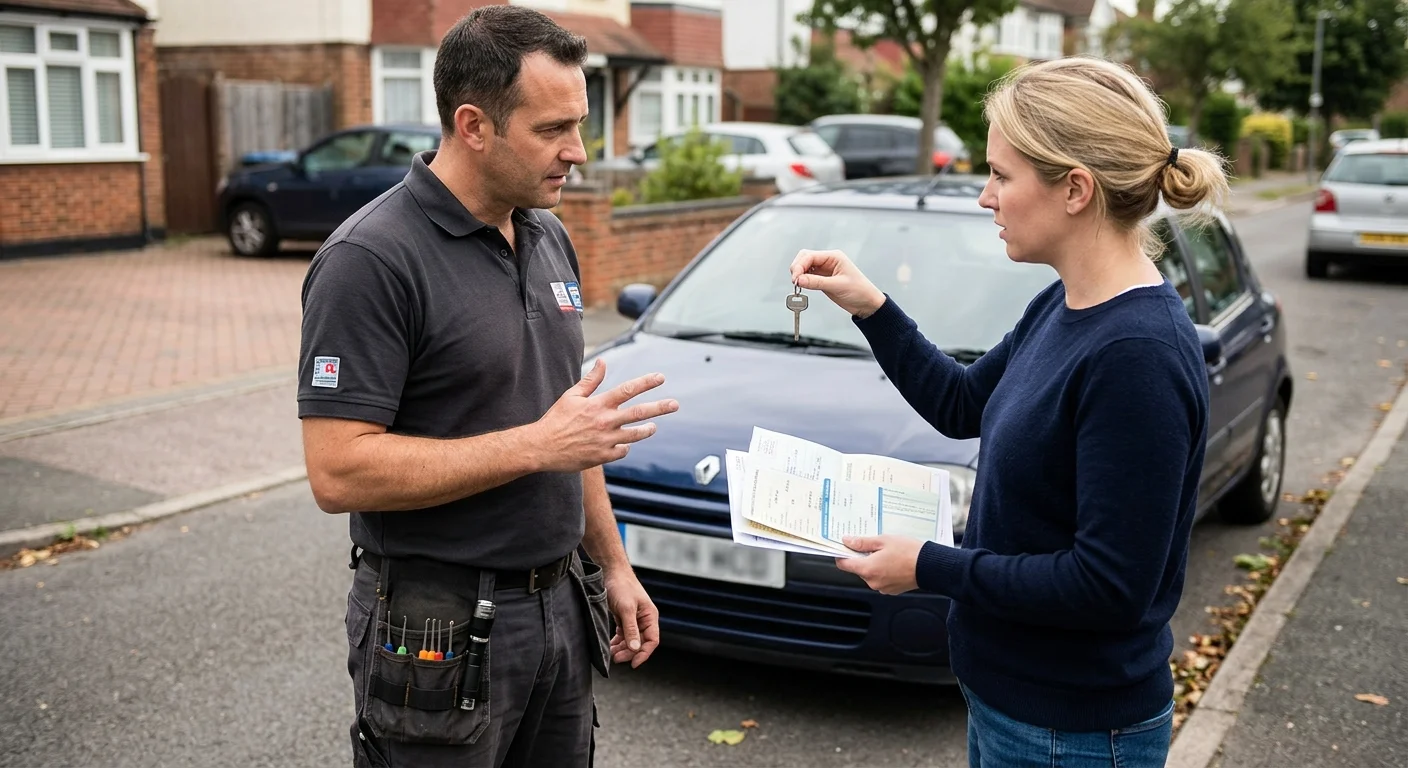
Confirm whether any working key remains
Start by checking every key connected to the vehicle. Look through drawers, bags, coat pockets, lockboxes, and the places where spare keys are kept. Ask other drivers whether they have a key, remote, or emergency insert.
Tell the provider exactly what you find. Don’t describe the situation as “no original” if another working key exists. A worn key, damaged remote, or key that performs only certain functions may still affect the options available. Let the locksmith or dealer inspect it before deciding whether it’s useful.
Test each remaining key without forcing anything. Note whether it unlocks a door, turns in the ignition, starts the vehicle, or operates remote buttons. Report only what you directly observed. Don’t assume that one working function means the entire key works correctly.
If every key is missing, say that clearly. You’re seeking a replacement without a working key, not a routine car key copy. Our guide for drivers who have lost every car key in San Diego explains how to organize that situation.
Also tell the provider where the vehicle is parked. In San Diego County, that could be a secured Mission Valley garage, a City Heights curb space, or a Chula Vista driveway. Access conditions may affect which provider can evaluate the job. If the vehicle is behind a gate or inside managed parking, arrange lawful access before the appointment.
Swift Key San Diego can connect callers with licensed independent locksmiths. The matched professional decides whether an existing key can help and what service the vehicle requires.
Separate copying from creating a new key
“Car key copy” can describe two different requests. One starts with an existing key. The other begins with no usable key at all. Explain which situation applies when calling.
California law draws a related distinction. Its locksmith definition includes originating keys and programming automotive keys or electronic operating devices. The definition narrowly excludes someone whose activities are limited to duplicating a key from an existing key. That legal distinction doesn’t prove a provider can service your particular vehicle.
A true copy starts with a key you already possess. If no key remains, ask whether the provider can create a replacement for the exact vehicle. Don’t ask only, “Can you copy my key?” That wording can hide the most important part of the request.
The physical key and any electronic functions may also require separate confirmation. Modern vehicles can use electronic key systems that need programming. The locksmith or dealer must determine what applies to your vehicle. Swift Key San Diego doesn’t inspect keys, choose equipment, or program them.
This distinction also prevents confusion when comparing services. Car key replacement covers situations where a usable key may be missing. Key fob programming concerns electronic functions that a compatible provider confirms for the vehicle.
Household key duplication isn’t a reliable comparison. Automotive compatibility can involve more than matching the visible shape of a key. Don’t assume a shop that copies a basic key can create and configure your complete car key. Ask about your exact vehicle before traveling or arranging access.
Identify the exact vehicle and key type
Gather accurate vehicle details before contacting a locksmith or dealer. Start with the make, model, model year, and vehicle identification number. Copy the information from the vehicle or its documents instead of relying on memory.
Next, describe the missing key in plain language. Did it have a visible metal blade? Were there remote buttons? Did the driver turn it, insert it elsewhere, or keep it nearby while starting the car? If you have a photo of the lost key, mention that. Don’t guess at technical labels.
Ask what ownership and identity documents the provider requires. Have the available records ready, but don’t send sensitive information to an unconfirmed recipient. Verify who is receiving it and why it’s needed.
Location details matter too. Give the exact San Diego County location and explain how the vehicle can be reached. A car parked near an Oceanside apartment complex presents different access details from one inside a Downtown San Diego garage. State whether a property manager, gate code, parking attendant, or registered owner must provide access.
If another key exists, photograph it and report its observed functions. Don’t modify, open, or discard it before the provider evaluates the situation. A damaged key may still contain information the professional wants to inspect.
For a broader explanation of creating keys when the starting key is unavailable, read whether a locksmith can make a key from a lock. A car remains a vehicle-specific question, so don’t treat the general answer as confirmation.
The most useful first call is factual and short: identify the vehicle, say whether any key remains, describe the known key features, and state the vehicle’s location. That gives the provider enough context to check compatibility without pretending the answer is universal.
Compare locksmith and dealer compatibility
Neither “locksmith” nor “dealer” is a complete compatibility answer. Ask each provider to confirm whether it handles your exact vehicle and requested functions. Don’t rely on a broad statement about a make or key category.
For a locksmith, verify the business or individual through California’s Department of Consumer Affairs license search. California requires people performing covered locksmith activities to hold a valid locksmith company license, be registered with a licensed company, or qualify for an exemption. Electronic automotive key programming and key origination fall within the state’s locksmith definition.
Swift Key San Diego is a referral service. We match callers with licensed independent local locksmiths. We don’t hold a locksmith license, perform the work, set the price, or provide a warranty. The customer contracts with and pays the matched professional directly.
Ask the locksmith and dealer the same practical questions. Can they confirm compatibility using the exact vehicle information? Does the request involve cutting, electronic programming, or both? Which key functions will the completed work support? What proof and access do they require? Who provides any warranty, and what does it cover?
Request the full price directly from the provider before authorizing work. No verified universal figure applies to every vehicle or key system. Swift Key San Diego doesn’t publish or set provider rates. Confirm what the quoted amount includes and which circumstances could change it.
Also confirm where the work can occur. Don’t assume every vehicle can be handled at its parked location. Don’t assume every vehicle must go to a dealer, either. The locksmith or dealer must answer based on the exact vehicle and available access.
Keep notes from each conversation. Compare the promised functions, identification requirements, service location, price terms, and warranty terms. A clear match matters more than choosing a provider based on a general label.
Test every supported function before approval
Agree on the expected result before work begins. The provider should state which functions the replacement key is intended to support. Your job is to compare the finished key with that agreed scope.
Test each supported function while the provider is present. Depending on what was promised, that may include unlocking and locking the doors, operating the trunk, turning the ignition, starting the vehicle, or using remote controls. Test only functions the vehicle and replacement are supposed to have.
Don’t approve the work after checking one button. A key may have several distinct functions, and each agreed function deserves its own check. If something doesn’t behave as expected, describe the exact result without guessing at the cause.
Check the physical fit gently. Don’t force a key that resists or continue repeated attempts after a problem appears. Ask the provider to examine it. If the replacement includes separate pieces, confirm which piece serves each function and how the complete set should be used.
Review the paperwork before paying. Make sure the provider’s identity matches the business you contacted. Confirm the final amount, any stated warranty terms, and the description of the completed work. The independent locksmith or dealer controls those terms, not Swift Key San Diego.
Keep the receipt and provider details with your vehicle records. Store any spare where an authorized driver can reach it without leaving it inside the vehicle. If the missing key later turns up, ask the provider whether any further evaluation is appropriate. Don’t assume the recovered key’s status.
A successful replacement isn’t just a piece that looks correct. It’s a key whose agreed functions have been demonstrated on the exact vehicle. Testing before approval gives you a clear point to raise any mismatch with the provider who performed the work.
When to call us
Call when no working key remains, the existing key is damaged, or the vehicle needs a replacement with confirmed electronic functions. Swift Key San Diego will match you with an independent professional who can evaluate the exact vehicle and explain the available options.
Call us at (858) 400-4082 and we’ll connect you with a licensed local locksmith.