If your key shell is cracked or your buttons are worn, a repair is usually all you need. A full replacement is only necessary when the metal blade snaps, the circuit board gets water-damaged, or the transponder chip fails. Knowing which situation you’re actually in keeps you from buying a whole new key when a shell would do. Here’s how to tell the difference before you call anyone.
When a car key can be repaired (and when it can’t)
The good news is that many common car key problems are fixable. The useful split is cosmetic versus mechanical versus electronic. An independent locksmith inspects the fob and tells you which side you’re on. Swift Key San Diego does not.
Your key can likely be repaired if:
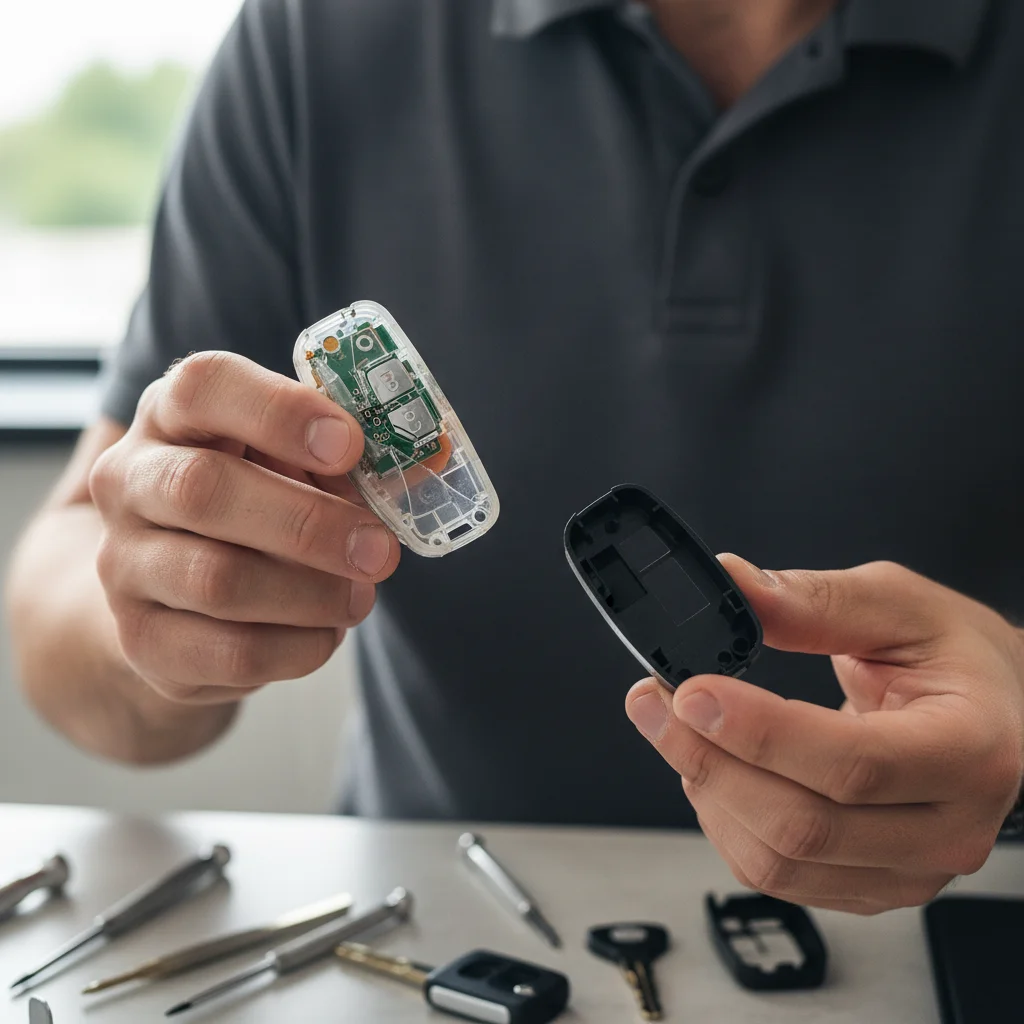
- The plastic shell is cracked or broken: If the internal electronics, the circuit board and transponder chip, are still working, a locksmith can often transfer them into a new shell. You keep the original brains of the key and get a new housing.
- The buttons are worn out: If you have to press a button a dozen times to lock your doors, the problem is often just the physical button on the remote. The contacts can be cleaned or the button pad replaced without needing a whole new key.
- The key blade has separated from the fob: On “switchblade” or flip keys, the hinge mechanism can break. As long as the metal blade itself isn’t snapped, a locksmith can often secure it in a new fob shell.
- The battery terminals are loose or corroded: Sometimes a key stops working not because the battery is dead, but because the metal contacts that hold it are bent or corroded. This is often a simple soldering fix.
You’ll probably need a full replacement if:
- The metal blade is snapped in half: A broken key blade cannot be safely welded or glued back together. Its integrity is compromised, and a new key must be cut.
- The internal circuit board is damaged: Water is the usual culprit here. If you’ve run your key through the wash or dropped it in the pool at your La Jolla apartment complex, the delicate electronics are likely fried. A visual inspection often reveals corrosion or burn marks.
- The transponder chip is dead: The transponder is a tiny glass or ceramic chip that tells your car’s immobilizer it’s a valid key. If this chip fails, the car will crank but won’t start. Diagnosing and replacing this component almost always requires a full car key replacement and programming.
- The key is lost or stolen: This one is obvious, but it’s important to note. When a key is lost, a replacement isn’t just about a new physical key; it’s also about ensuring the old one can no longer start your car for security.
Common issues: broken shell, worn blade, bad transponder
Let’s dive a little deeper into the three most frequent problems San Diego drivers face with their car keys. Understanding the specifics can help you explain the issue when you call for help.
The broken key shell
This is a frequent fob failure, and a shell swap is usually a lighter job than programming a new key. Modern car key fobs are plastic that gets brittle from sun, drops, and daily wear. You’ll notice a crack forming, a piece chipping off where it attaches to your keychain, or the two halves of the shell no longer snapping together tightly. A car key shell replacement is a procedure where the locksmith opens your existing key, transfers the circuit board and transponder chip to a new shell, and cuts the new blade to match your original when the blade is part of that shell. It fits a broken car key where the remote functions still work.
The worn-out key blade
This applies more to traditional all-metal keys or the emergency blade tucked inside a smart key. After years of being inserted into ignitions and door locks, the metal grooves can wear down. The edges become rounded, and the key might struggle to turn in the lock or ignition. You might have to jiggle it to get it to work. In some cases, a locksmith can duplicate the key “by code” using your car’s VIN, creating a factory-fresh cut. However, if the wear is too severe or the blade is bent, a full replacement is the only safe option.
The bad transponder chip
This is the most complex issue. Your car won’t start, and you see a blinking security light on the dashboard, it’s often a transponder problem. The chip may have been damaged from a hard drop, or it could have simply failed electronically. Diagnosing this requires equipment that can read the signal from the chip. If the chip is faulty, a locksmith can’t just fix car key electronics. They have to program a new key with a new transponder chip to your vehicle’s computer. That work is quoted on key fob programming. Swift Key does not program fobs.
Cost comparison: repair vs. a full replacement
Price belongs to the independent locksmith after they see the fob and the vehicle. Swift Key San Diego does not publish a rate card. Still, the shape of the job is useful before you call.
Typical repair path:
- Shell replacement: New housing, labor to transfer the electronics, and a new blade when the shell includes one.
- Button pad or soldering: Loose battery terminal or worn button contact. The locksmith quotes from how involved that is.
- Re-shell plus blade: Combining those steps is still usually lighter than a brand-new programmed fob.
Typical replacement path:
- Basic transponder key (no remote): Older vehicles with a chip but no buttons.
- Remote head key: Buttons on the key, plus programming.
- Smart key / proximity fob: Push-to-start. European models sometimes still route through a dealer.
A shell transfer is usually lighter than a programmed replacement. Ask the locksmith to quote after they open the fob. Do not treat a repair as a guaranteed savings figure.
How mobile locksmiths handle key repairs on-site
One hurdle with a broken key is logistics. How do you get the car to a shop if you can’t start it? A tow is one option. A mobile locksmith who accepts the job is another.
Swift Key San Diego matches the call. The locksmith inspects, quotes, and does the work on their schedule.
- You describe the key: Call with year, make, model, and what failed: cracked shell, dead buttons, snapped blade, wet board, or a missing key. Whether you’re at Fashion Valley, at home in Escondido, or in a downtown lot, those details help the match.
- Swift Key connects you: We refer you to a licensed independent locksmith. That professional decides whether the description sounds like a repair or a replacement. They set the price. Swift Key does not quote and does not promise a no-surprises rate.
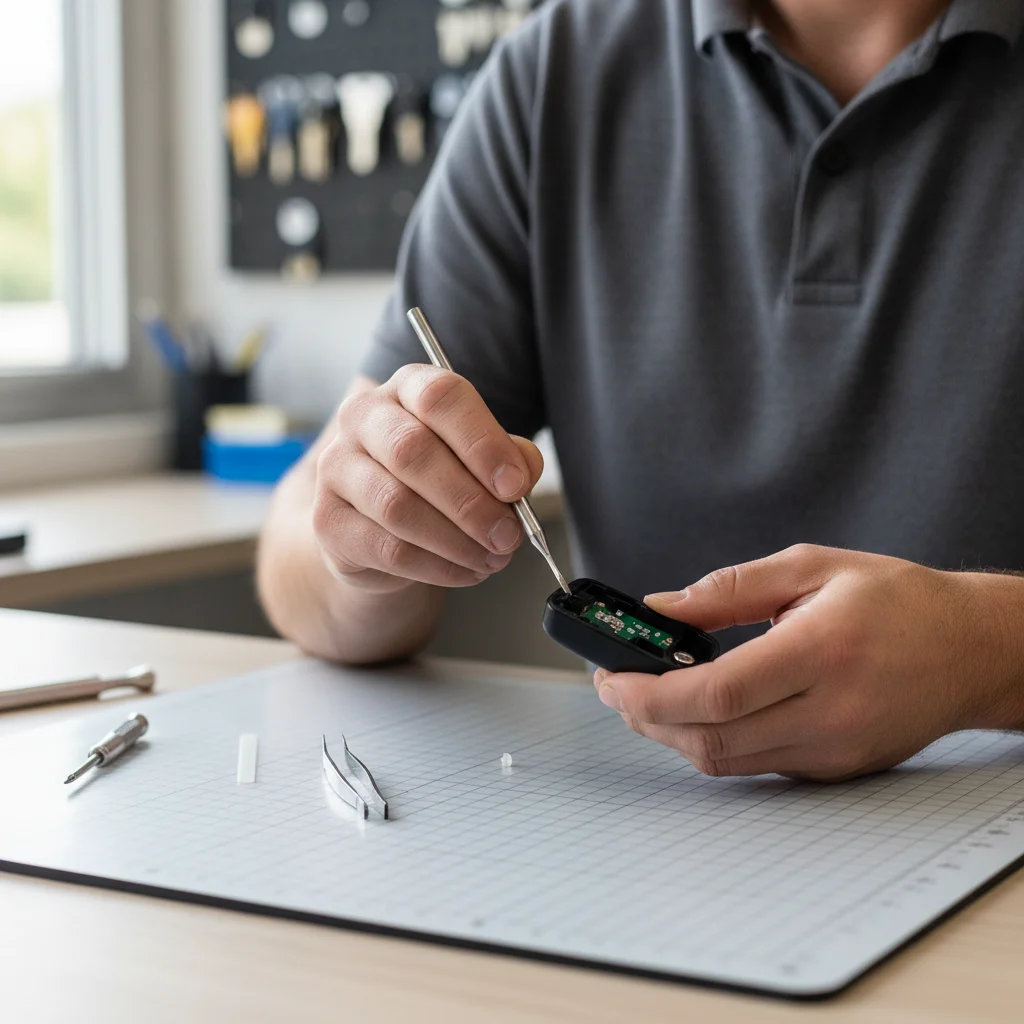
- The locksmith comes to you if they accept the job: Their van may carry cutting and programming tools. That is their equipment, not a Swift Key truck.
- On-site work: They perform the agreed scope at the vehicle when access and parts allow. If the part has to be ordered, they say so before they start.
Dealer versus mobile locksmith logistics
A dealership and a mobile locksmith are different logistics, not a Swift Key speed guarantee. Swift Key San Diego is a referral service. It matches callers with licensed independent locksmiths. It is not a locksmith company and it does not promise a faster route than the dealer.
The typical dealership path has extra steps. You call the service department and book an appointment. Then you have to get the car there. If it isn’t drivable, that can mean a tow. Once you’re there, key work sits in a shop that also does engines and oil changes.
Many dealerships are set up to sell a new key rather than fix car key electronics in a cracked shell. If they don’t have your specific key in stock, they order it. Ask that department what they actually do for a shell versus a programmed replacement.
A mobile locksmith who accepts the job may come to the vehicle. They quote after they inspect the fob. Parts on the truck, programming coverage, and start time belong to that professional. Compare those answers to the dealer before you choose.
Frequently asked questions
How much does a car key shell replacement cost in San Diego?
A shell replacement, where a locksmith transfers your existing chip and circuit board into a new plastic housing, is usually the lightest on-site job. You keep the original electronics, so no reprogramming is needed.
Can a locksmith repair a car key that got wet?
It depends on the damage. If the key went through a wash cycle or sat in water for more than a few seconds, the circuit board is often corroded or shorted out. A locksmith can open the fob and inspect the board, but water-damaged electronics usually need full replacement rather than repair. If you caught it quickly and dried it out immediately, the circuit board may be fine and only the battery contacts need cleaning.
How do I know if my transponder chip is the problem and not the battery?
Replace the fob battery first, since that’s the most common fix and it’s a hardware-store cell. If the car still won’t start and you see the security light blinking on your dashboard, the transponder chip is the likely culprit. A locksmith with diagnostic equipment can read the chip’s signal and confirm whether it’s functioning. A dead chip requires a full key replacement and programming, not just a battery swap.
How long does a mobile locksmith take to make a new car key on-site?
A shell replacement or cut-only key is one of the quicker on-site jobs. A full car key replacement that includes cutting and programming a new transponder key takes longer, depending on the vehicle. Push-to-start smart keys and European luxury vehicles can take longer still due to more complex programming steps.
Will my car be less secure if I use an aftermarket key shell?
No, as long as the original chip and circuit board are transferred into the new shell. The chip contains your vehicle’s unique immobilizer code. The shell is just the housing; it has no effect on your car’s security system. What matters is that the chip is seated correctly and protected, which is why professional re-shelling with the right tools produces a reliable result.
Can a locksmith handle a key that isn’t working or won’t turn in San Diego?
A locksmith diagnoses the cause first, then quotes the repair before any work starts. If the buttons stopped responding, they check the battery and the board. If the blade won’t turn in the door or ignition, they inspect the cut and the cylinder. Swift Key San Diego does not diagnose that over the phone. Call for a match. The independent locksmith handles the work at your location if they accept the job.
When to call us
If the key and fob both check out and it is the door that will not respond, the fault is usually in the door itself: see car power door lock repair in San Diego. If you’re dealing with a cracked key casing, unresponsive buttons, a bent blade, or you’re not sure what’s wrong, call for a referral. Swift Key San Diego is a referral service. It does not assess the key, quote a repair, or recommend a cost-effective solution. The matched licensed locksmith inspects, quotes, and does the work. Before hiring, verify their license on the BSIS website.
Call us at (858) 400-4082 and we’ll connect you with a licensed local locksmith.