Whether you can rekey after a breakup depends on title, lease, occupancy, and any court papers, not on a one-line rule. If you are the only person with a legal right to occupy and control the door, changing the pins so a departed person’s key stops working is often a practical next step. If both names are still on the deed or the lease, or if someone still has a right to occupy, locking that person out can create a legal problem separate from the locksmith visit. A family law or tenant attorney should review your documents. Swift Key San Diego is a referral service. Independent licensed locksmiths perform work only after you have authority to change that lock.
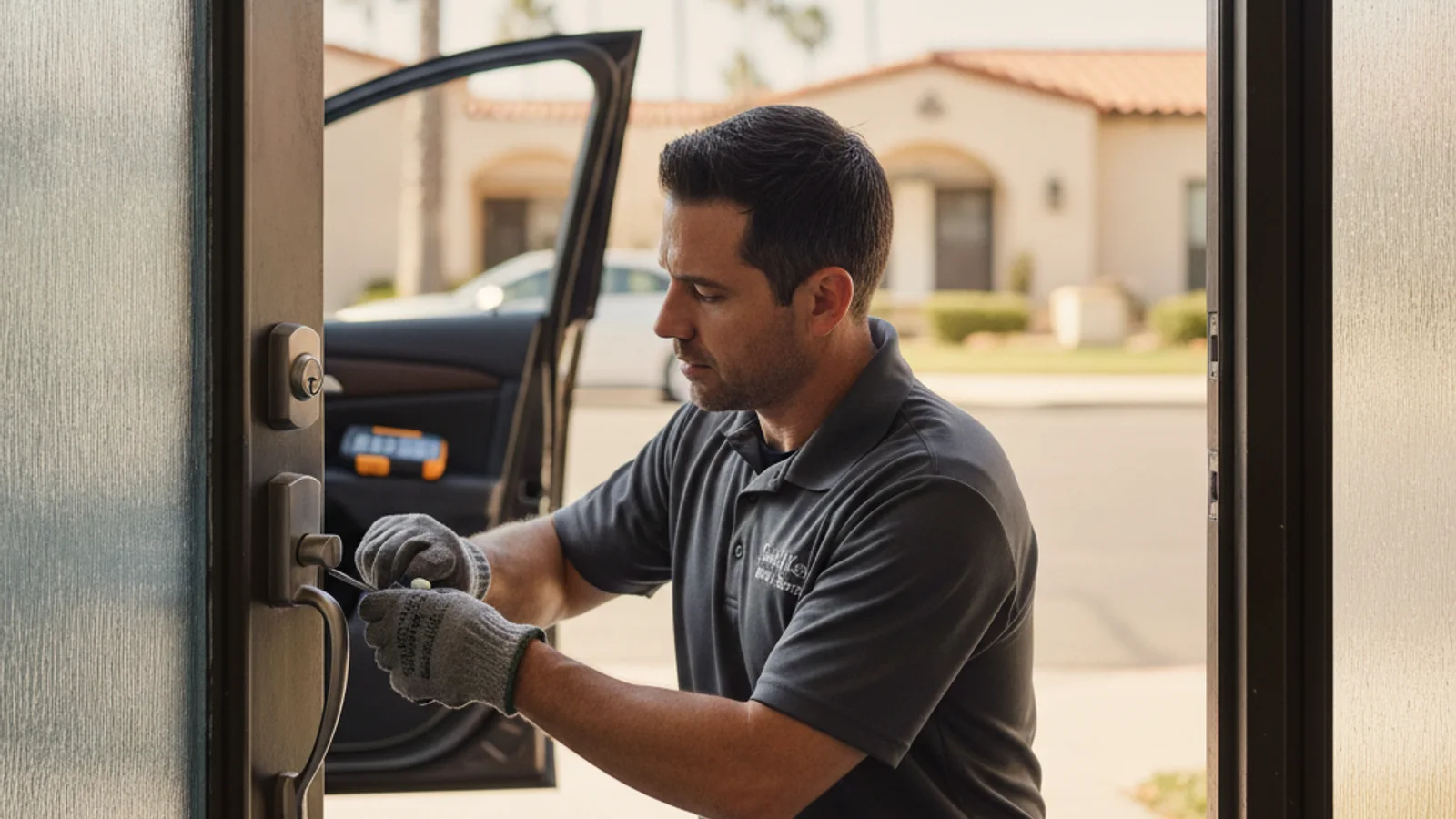
Can you change the locks after a divorce or breakup?
Start with the paperwork, not with the hardware:
- Whose name is on the deed, mortgage, or lease?
- Who still has a right to occupy the home?
- Is there a court order, exclusive-use order, or written agreement about who stays?
- If you rent, what does the lease say about lock changes, and is the other person a named co-tenant?
If you are the sole owner or the only remaining authorized occupant, and the other person has moved out with no remaining occupancy right, a rekey is often the access reset people want. That is still a fact-specific conclusion. It is not a substitute for legal advice.
If both names remain on the title or the lease, neither person automatically has the right to exclude the other. Rekeying a shared property without an agreement, a court order, or a lease change can become its own dispute. Ask a qualified attorney before anyone changes the pins.
If you are in immediate danger, call 911. Hardware advice does not replace emergency services.
Abuse or violence: two different Civil Code paths
California has two separate landlord lock-change statutes for qualifying abuse or violence. They are not a general breakup rule, and they are not the same case.
Civil Code section 1941.5 applies when the person alleged to have committed abuse or violence is not a tenant of the same dwelling unit. After a qualifying written request and allowed documentation, the landlord has 24 hours to change the exterior locks at the landlord’s expense. If the landlord misses that deadline, the tenant may change the locks, must notify the landlord within 24 hours, and must provide a key by a reasonable method the parties agree on. The statute does not say the new key itself must be delivered within 24 hours.
Civil Code section 1941.6 applies when the restrained person is a tenant of the same dwelling unit. The request requires a qualifying court order that excludes that person from the dwelling. Do not treat a 1941.5 packet as enough for a 1941.6 co-tenant case.
The tenant rekey rights in California article walks through those two statutes in more detail. A tenant attorney or victim-services lawyer should review your documents before you rely on either path.
Rekey or replace: which one do you actually need?
For most breakups where you have authority to change the lock, a rekey is the right hardware call. It changes the internal pins so the old key stops working, while the hardware stays in place.
Replacement makes more sense when a lock was damaged, the hardware is already failing, or you want a smart lock instead of a physical key. Our rekey versus replacement comparison covers the decision inputs. The independent locksmith inspects the cylinders and quotes each door.
What if you’re renting, not the homeowner?
Most California leases require landlord permission before you touch the locks, even if the person moving out was a partner rather than a named co-tenant. Send a written request and keep the reply.
If the other person is named on the lease with you, that is a different situation than an unofficial occupant. A named co-tenant generally keeps occupancy rights until the lease is changed or a qualifying court order applies. See tenant rekey rights in California for the lease-first path and the two abuse-or-violence statutes.
What if you’re both on the mortgage or the lease?
If you and your former partner both own the home or both signed the lease, a locksmith cannot decide who may stay. Practical paths are usually a written agreement about who occupies the home, a court order addressing exclusive use, or a lease amendment removing one name. Once authority is clear, the physical rekey is a standard pin change.
What else needs to change besides the front door?
A rekeyed deadbolt handles one entry point. Review every other way someone used to get in.
Garage keypad codes. If the other person used the garage, change the code. This is a short panel or opener-menu task, not a locksmith visit.
Alarm system codes. Change or delete their user code when you change the door pins. Most systems allow this from an app or the panel.
Smart lock codes and shared apps. Delete their code and remove them from any shared home app. Do this even if you also rekey mechanical locks on other doors.
Hidden spare keys. If they knew a planter, frame, or lockbox location, move the spare or change the box code.
Mailbox and gate fobs. In apartments or condos, ask the HOA or property manager to deactivate fobs or access cards. That is a building process, not a cylinder rekey.
Vehicle keys and remotes. If the car is in your name, treat a remaining fob as a separate question from the house rekey.
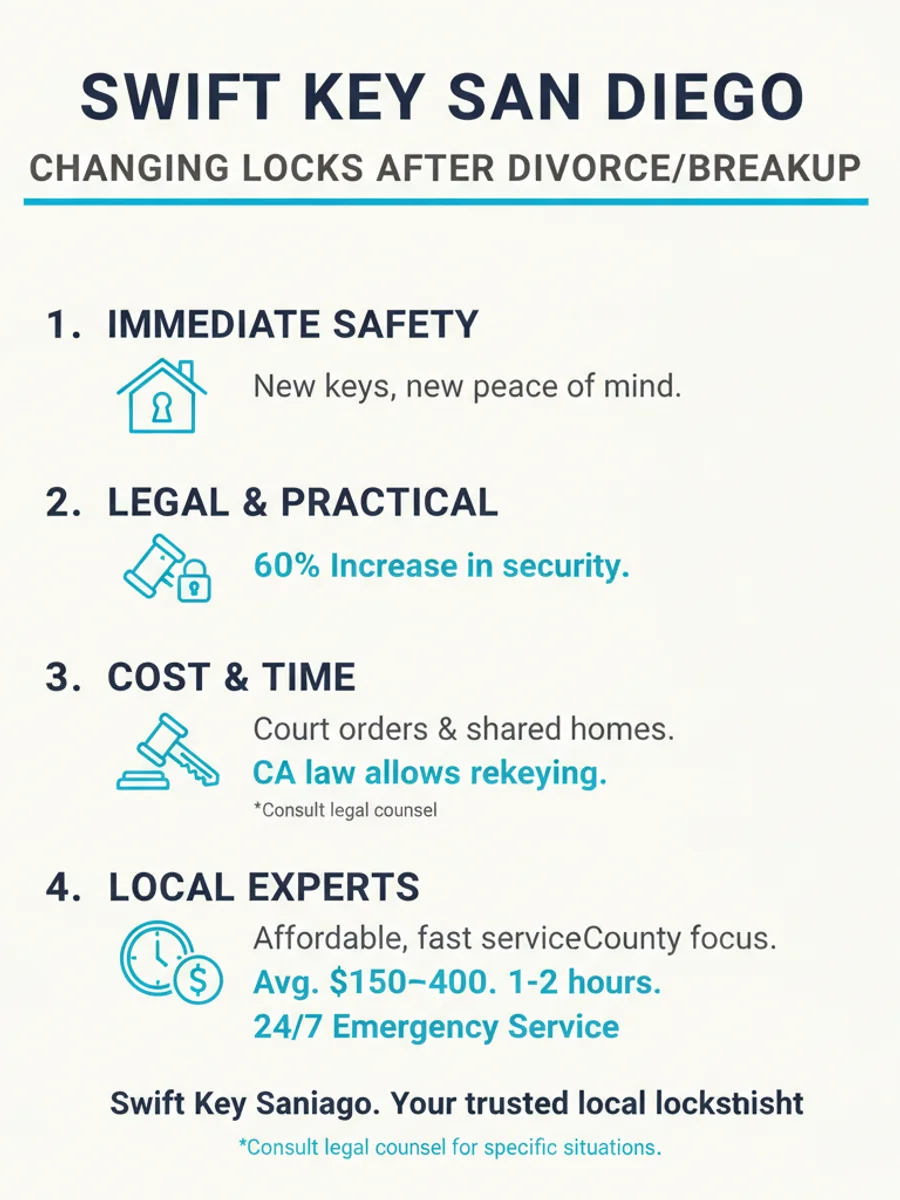
Is a smart lock worth installing during a breakup rekey?
A smart lock can make later code changes easier, especially when custody exchanges or family visits need temporary access you can revoke. It is not required, and it does not replace legal authority to exclude someone. If you are weighing hardware types, smart lock versus deadbolt covers the practical differences. The independent locksmith confirms fit, wiring or battery needs, and price.
Frequently asked questions
Can I change the locks after a breakup without my ex’s permission?
Only if you have the legal right to control that door. Sole ownership or sole remaining occupancy can support a rekey. Shared title, a shared lease, or a remaining occupancy right usually requires an agreement, a court order, or a lease change first. Ask a qualified attorney about your documents.
How much does it cost to rekey after a divorce or breakup?
The independent locksmith sets the price. Ask for an itemized quote by cylinder, plus any hardware that must be replaced. Swift Key does not set fees.
How fast can a locksmith come out in San Diego?
Availability and arrival time are set by the independent locksmith, not by Swift Key. Call (858) 400-4082 for a referral. The professional confirms when they can inspect the locks.
What if my ex still has the garage code or an alarm code?
Change both when you change the door pins. A garage keypad reset and an alarm user-code change are usually owner or tenant tasks through the opener or the alarm panel.
My ex and I are both on the mortgage. Can I still rekey?
Not as a default. Get a written agreement or a court order addressing who stays, then rekey. The hardware step is straightforward once authority is clear.
Should I rekey or fully replace the locks?
Rekey if the hardware is sound and you only need the old key to stop working. Replace if the locks are damaged, failing, or you want a smart lock. The locksmith inspects each door.
Swift Key San Diego matches San Diego County callers with independent licensed locksmith professionals after you confirm you have authority to change the lock. Call (858) 400-4082.