Before a local locksmith touches the lock, get their business and license details. Verify those details through California’s official lookup, then match the record to the person and company. This check matters during a lockout, but don’t let urgency push it aside.
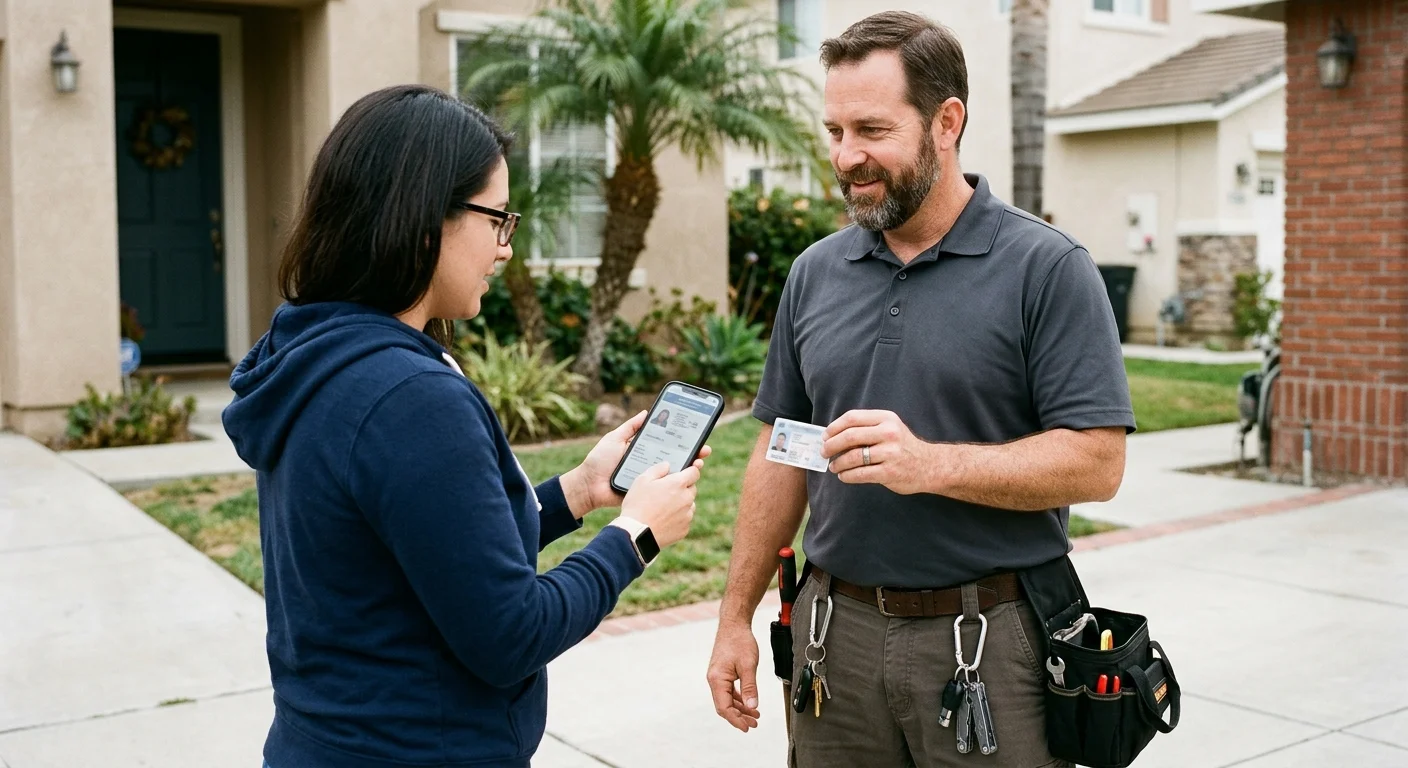
Get the locksmith’s business and license details
Start collecting details during your first conversation. Ask for the locksmith company’s full business name and license number. If an individual locksmith will arrive, ask for that person’s name and registration details too.
California’s Bureau of Security and Investigative Services, called BSIS, regulates locksmiths. BSIS handles company licenses and employee registrations. City or county permits may be separate from the state locksmith license.
Write down the information exactly as provided. A missing letter or transposed number can lead to the wrong result. Your notes should include:
- The complete business name
- The company license number
- The individual locksmith’s name
- The employee registration details, when applicable
- The name that should appear on the written scope and invoice
Don’t rely on a company name from an advertisement alone. The San Diego name in a listing doesn’t establish a valid license. The number also isn’t useful until it matches a current state record.
California law requires locksmiths to carry a pocket version of their license and show it when requested. Ask to see it before work begins. Compare the name and number with the details you received earlier.
The licensing requirement covers opening, rekeying, installing, repairing, and modifying locks. It also covers originating keys and certain electronic vehicle key work. California’s definition has a narrow exception for someone whose only activity is duplicating an existing key. That exception shouldn’t be stretched to cover other locksmith work.
If you’re locked out, our emergency locksmith referral service can match you with a licensed, independent local professional. Swift Key San Diego is the referral service. The professional performs the work, sets the price, and contracts with you directly.
Find the current California license record
Use California’s BSIS “Verify a License” tool for the official record. BSIS is part of the Department of Consumer Affairs, and the state lookup provides current license status information.
Search with the license number first. Numbers are more precise than similar business names. Then run a second search using the business name. If you’re checking an employee registration, search the individual’s details separately.
Follow this order:
- Open the official DCA search page.
- Select the relevant BSIS license or registration category.
- Enter the number exactly as provided.
- Read the status shown on the current record.
- Search the business or person’s name as a second check.
- Save the result or keep the page open for comparison.
The exact search labels and fields can change. We couldn’t confirm a fixed set that appears on every result. Follow the current prompts on the DCA page. If a field or status isn’t clear, ask BSIS to explain the record before authorizing work.
Look beyond the presence of a search result. A number appearing in the database doesn’t prove that it belongs to the person standing at your door. It also doesn’t prove that the business using it is connected to the named license holder. The next step is matching the record.
Avoid directory pages that copy government data. Their listings may not reflect a recent change. Use them only to locate possible information, then confirm everything through DCA.
This process applies across San Diego County. A request in La Jolla, City Heights, Chula Vista, or Oceanside still leads to the same California licensing authority. Local geography doesn’t replace the state record.
Match the record to the person and business
Compare the official result with the details you collected. The business name and license number should line up. The individual’s name and registration information should also match when an employee is doing the work.
Ask the person who arrives to show the pocket license. Read the information rather than accepting a quick flash of the card. Compare it with the DCA result you kept open. If the individual says they work for a licensed company, confirm the company information as well.
Use a simple three-way comparison:
- The information given during the first conversation
- The current DCA license or registration result
- The identification presented before work starts
Treat a difference as something to resolve, not something to explain away. A spelling difference might be minor, but don’t decide that yourself. Ask the locksmith to clarify it and provide matching documentation. Contact BSIS when the connection remains unclear.
Pay attention to which party appears on the work documents. The business identified in the scope and invoice should make sense beside the license record. Don’t accept a borrowed license number or another company’s record as proof for the person in front of you.
San Diego County includes dense central neighborhoods, coastal communities, inland cities, and the South Bay. A broad service area can be normal. Still, a familiar neighborhood name doesn’t verify the operator. The official record and presented details carry more weight than local wording in an advertisement.
Identity also matters on your side of the transaction. Be ready to explain your authority to access the home, vehicle, or business. The precise documents requested can depend on the professional and the job. Don’t ask a locksmith to bypass a reasonable ownership or authorization check.
Check the written scope before work begins
License verification answers who you’re dealing with. A written scope answers what you’re authorizing. Review both before the locksmith starts physical work.
Ask for the proposed work in writing. It should be specific enough that you can identify the lock, door, vehicle, or key involved. It should also distinguish the requested task from possible added work.
A useful written scope can identify:
- The property or item receiving service
- The opening, rekeying, repair, installation, or key work requested
- Any hardware expected to be removed or installed
- The business responsible for the work
- How a change in scope will be presented for approval
- The payment terms provided by the independent professional
Swift Key San Diego doesn’t set locksmith prices. The independent professional gives you the price and accepts payment directly. Review the terms before authorizing work. Our guide to comparing locksmith quotes explains how to compare the same job across different proposals.
For local pricing context, read how much a locksmith costs in San Diego. Confirm the current amount directly with the professional before work begins. Don’t rely on an old article, advertisement, or verbal starting figure as the final agreement.
If the task changes after inspection, pause and request a revised written scope. Make sure you understand the reason for the change and its effect on the terms. You can decline work that you haven’t authorized.
Keep the final invoice with the license information and written scope. These documents create a clear record of who performed the work and what you approved. Don’t add assumptions about warranties. Any warranty comes from the independent professional and should appear in that professional’s written terms.
What to do when details don’t match
Stop before work begins when the license details don’t match. Don’t hand over a key, approve drilling, or authorize new hardware while the discrepancy remains unresolved.
A mismatch can take several forms:
- The license number returns a different business
- The person’s name doesn’t match the registration shown
- The DCA search doesn’t return the provided number
- The state record shows a status you don’t understand
- The name on the written scope differs from the verified business
- The person refuses to show the pocket license when requested
Ask for corrected information once. Then repeat the search through the official DCA page. If the result still doesn’t align, contact BSIS for guidance. We couldn’t confirm that every unusual status has the same meaning, so don’t guess.
Don’t let a lockout change this standard. Move to a safe location if your surroundings feel unsafe, then continue the verification process. You can also choose another licensed local locksmith.
Watch for pressure to begin before you receive clear terms. A familiar San Diego area name, a polished listing, or a claimed connection to another company isn’t a substitute for verification. Our guide to San Diego locksmith warning signs covers more issues to review before hiring.
Swift Key San Diego matches callers with licensed, independent locksmith professionals. We don’t perform locksmith work, employ technicians, hold a BSIS locksmith license, set prices, or provide warranties. Your service agreement is with the professional you select.
When to call us
A lockout, rekey, lock repair, installation, or electronic key job calls for a licensed locksmith professional. Call us at (858) 400-4082 and we’ll connect you with a licensed local locksmith.