When you need an emergency locksmith in San Diego, prepare five details before calling. Share the problem, location, access point, authorization, and requested scope. Then confirm the independent locksmith’s identity and price before approving work.
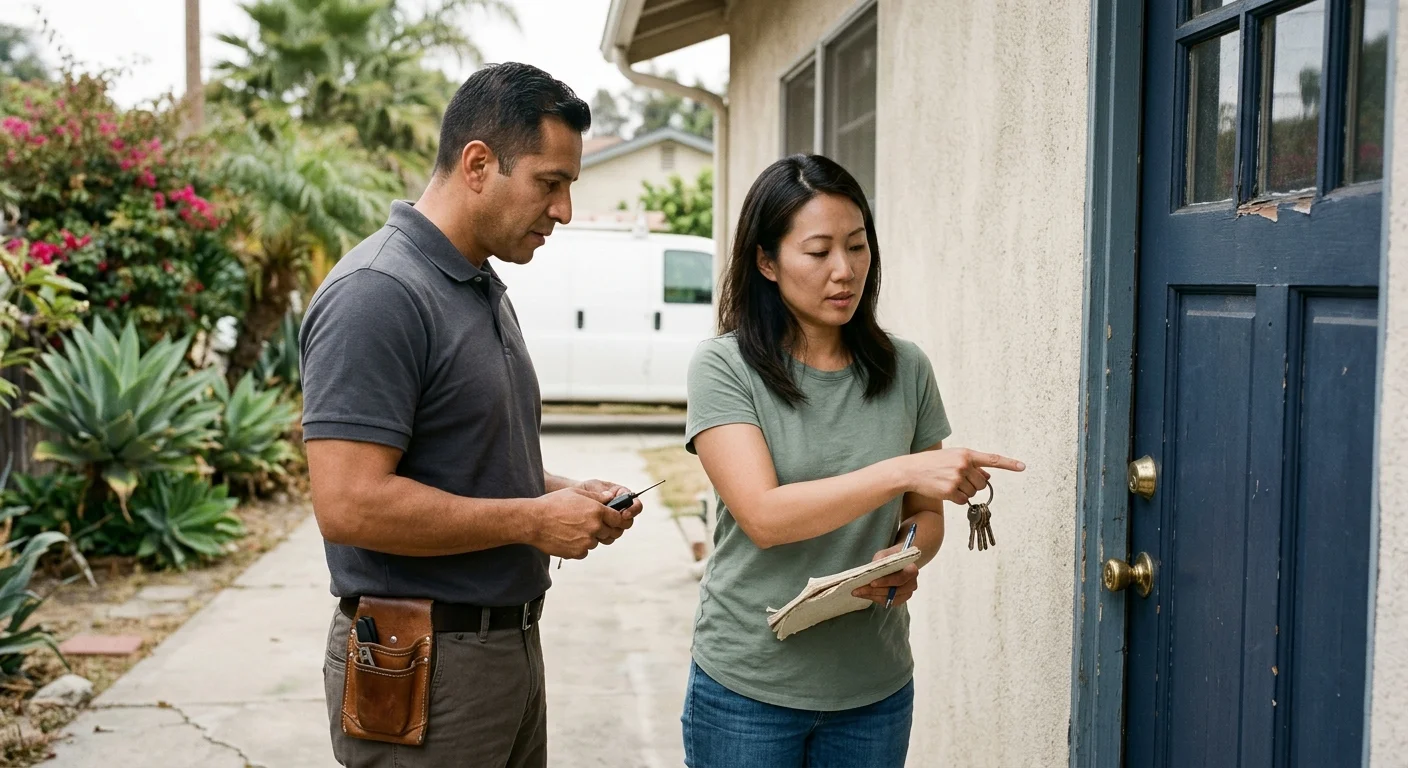
Describe the lock problem in plain words
Start with what you can see, hear, and operate. You don’t need to diagnose the lock. A clear description gives the matched locksmith a useful starting point.
Name the locked item first. It might be a front door, vehicle, office suite, gate, safe, or interior door. Then explain what happened. For example, the key may be missing, broken, stuck, or turning without opening the lock. A keypad may accept input without unlocking. A door may be closed with the keys visible inside.
Include changes you noticed before the lockout. Mention whether the key became difficult to turn or the door stopped closing normally. If someone else recently used the lock, say what they observed. Don’t label the lock as broken unless you can see the damage.
Tell the caller whether this is an opening request only. If you also want a lock changed or another key made, describe that as a separate request. The independent locksmith can then confirm what work they’re prepared to offer.
For a house entry problem, our home lockout page explains the referral service. If you’re deciding whether the issue can wait, describe what changed and what still works. Availability still needs confirmation from the matched professional.
If there’s an immediate threat to a person, don’t treat it as a routine lock call. Contact the appropriate emergency authority first.
Share the exact address and access point
Give the complete service address as it appears in your map or records. Include the unit, suite, building, floor, or parking level. A business name alone may not identify the correct entrance.
San Diego properties often have several possible meeting points. A Mission Valley complex may have multiple buildings. A Downtown address may include a lobby, garage, and loading entrance. A North Park property may face one street while its usable gate faces an alley. Describe the exact place where access is needed without assuming the address tells the whole story.
Share any entry instructions you’re authorized to provide. These might include a gate location, call box name, parking entrance, or property contact. Don’t send a gate code or access credential until you know who’s receiving it and why.
Navigation details also matter when several roads serve the property. Give the street name, nearest cross street, and the I-5 or I-805 exit shown by your map when useful. If the map pin lands away from the correct entrance, say so plainly. Describe a visible meeting point without relying on temporary objects.
For vehicle lockouts, give the vehicle’s location within the property. “Parking structure, level three, near the north elevator” is more useful than the shopping center’s name. State whether the vehicle blocks traffic or sits behind controlled access.
Before ending the location discussion, repeat the address and access point. That final check can catch a wrong unit number, reversed street direction, or mismatched city name.
Identify the property and authorization limits
Explain your connection to the property, vehicle, or locked area. You might be the owner, tenant, manager, employee, driver, or authorized representative. Don’t imply that you control an area when someone else must approve the work.
Ask the matched locksmith what identification or authorization they’ll want to review. The exact documents may depend on the request and the professional’s process. Swift Key San Diego doesn’t decide whether your documents are sufficient.
If your identification shows another address, mention that before the visit. This can happen after a recent move or when helping a family member. Tell the locksmith what records or contacts you can provide. Let that professional explain what they’ll accept.
For a rental, describe your request narrowly. Opening a door and changing its lock aren’t the same authorization decision. If a property manager or owner must approve changes, get that approval before expanding the work. The same principle applies to offices, shared buildings, storage areas, and managed parking facilities.
For a vehicle, provide the make, model, and year if known. Say whether registration or other ownership records are inside the locked vehicle. Don’t claim you can approve work for a borrowed, rented, or company vehicle without checking.
Our guide to locksmith identification and proof requirements offers more preparation details. The key point is simple: state who you are, what you control, and where your authority ends. That protects the conversation from becoming broader than your actual request.
Ask who sets the scope and final price
No single San Diego emergency locksmith price could be confirmed from the approved sources for this page. Swift Key San Diego doesn’t set prices. The customer contracts with and pays the independent locksmith directly.
Ask the professional to describe the proposed work before you approve it. Plain language matters here. Confirm whether the scope covers opening the lock only, removing a broken key, changing hardware, making a key, or another specific task.
Next, ask who can authorize additions. If the locksmith discovers that the original request won’t address the problem, pause and discuss the new scope. Don’t let “fix the lock” stand in for several undefined services.
Useful price questions include:
- What exact work does this amount cover?
- Is the amount an estimate or the final total?
- What could change the amount?
- Does the proposal include every approved part of the work?
- Will I receive the scope and total in writing?
These are questions, not claims about how every locksmith charges. The matched professional sets their own terms and explains their own price. Swift Key San Diego can’t approve work, change a price, or promise a discount.
Keep your description consistent while discussing the amount. A request to open one door shouldn’t quietly become permission to replace several locks. If you decide to add work, name each addition and confirm its price separately.
Our emergency locksmith service page explains how the referral works. The professional you hire remains responsible for confirming the offered scope, price, and payment terms.
Confirm the matched locksmith’s details
Swift Key San Diego matches callers with licensed, independent local locksmith professionals. The brand doesn’t employ locksmiths, perform the physical work, hold a locksmith license, or provide warranties.
California locksmith licensing is handled by the Bureau of Security and Investigative Services, or BSIS. Ask for the professional’s name, business name, and license or registration details. You can check the information through the state’s Department of Consumer Affairs license search.
Compare the search result with the details you received. If names differ, ask the professional to explain the relationship before approving work. Don’t substitute a logo, vehicle appearance, advertisement, or verbal assurance for the state record.
Our guide to checking a locksmith license in San Diego walks through that verification step. BSIS, not Swift Key San Diego, maintains the official licensing information.
Also confirm who will perform the work and who will receive payment. Ask for the proposed scope and price from that independent professional. If they offer any warranty or follow-up terms, request those terms directly from them. Swift Key San Diego doesn’t provide or set those terms.
Save the professional’s contact information and the written scope you approve. If the person, business, or requested work changes, repeat the confirmation process. A careful match is only the beginning. You still choose whether to contract with the professional.
When to call us
Call when a lockout or urgent lock problem needs a licensed locksmith professional and you’re ready to share the essential details. Call us at (858) 400-4082 and we’ll connect you with a licensed local locksmith.