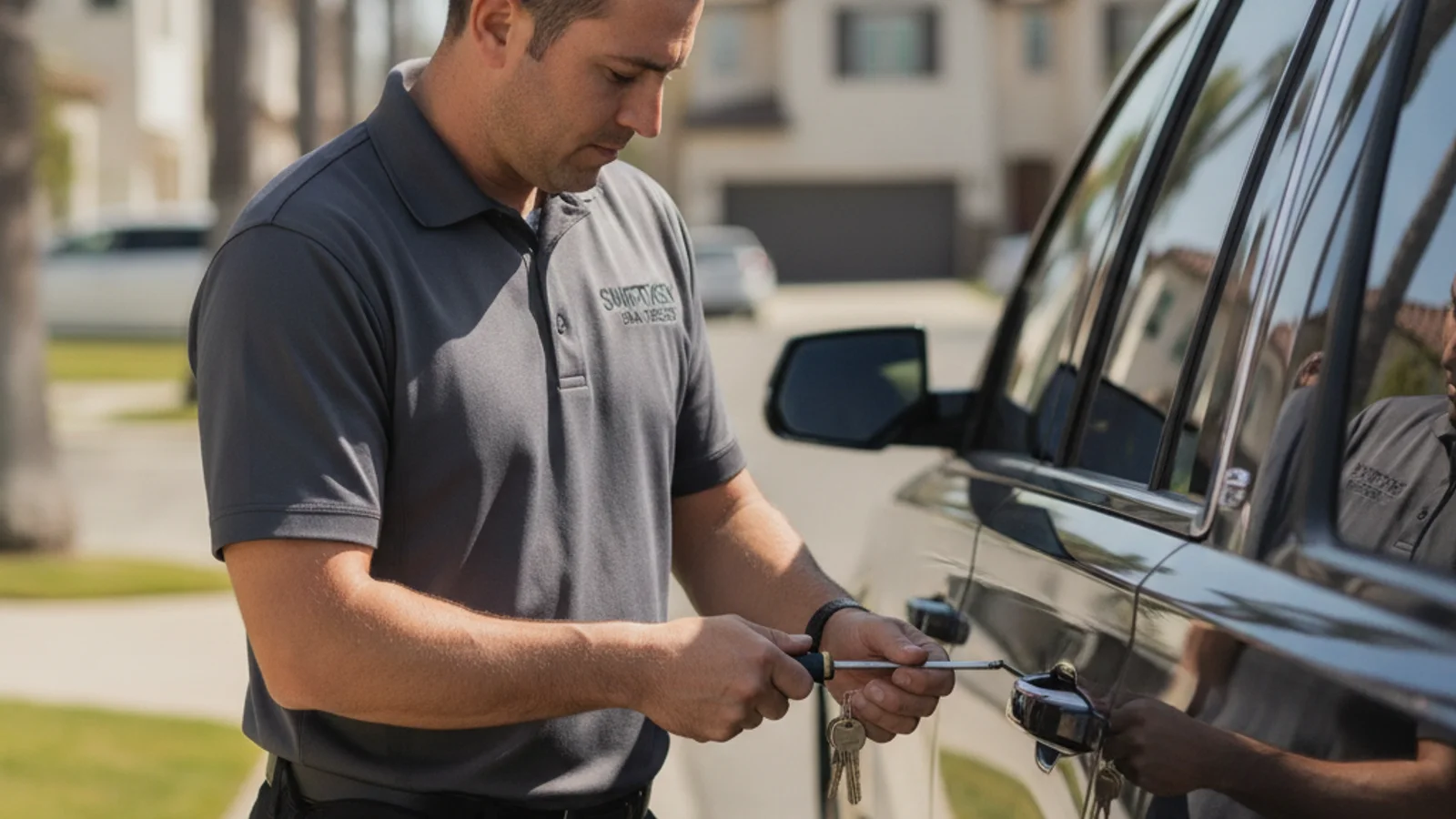
If you drive a Chevrolet in San Diego, losing your keys or needing a spare costs somewhere between $150 and $450 depending entirely on the type of key your vehicle uses. A basic transponder key for an older Malibu sits at the low end. A proximity fob for a newer Tahoe or Equinox sits at the high end. A dealership will charge anywhere from $300 to $550 for the same job, plus a possible tow if you’ve lost all your keys.

This guide covers what that price buys you, how Chevy’s key systems changed over the decades, and what to know before you call anyone.

Chevy key types and what they actually cost

Chevrolet has used several different key technologies across its lineup over the years. The type your vehicle has is the main driver of cost.

Key typeVehiclesLocksmith rangeDealer range
VATS/Passlock (resistor key)Pre-2003 trucks, Malibu, Impala$90 – $150$150 – $250
Basic transponder2003 – 2015 Silverado, Malibu, Equinox$150 – $260$250 – $400
Flip/remote head key2008 – 2018 Silverado, Colorado, Cruze$200 – $340$300 – $475
Smart proximity fob2016+ Tahoe, Suburban, Equinox, Malibu$280 – $450$350 – $550

These are honest ranges based on what the key technology requires. Prices can vary with the specific year and trim, the programming time the vehicle demands, and whether you’ve lost all copies or just need a spare.

VATS and Passlock era (pre-2003)

Older GM vehicles used a system called Vehicle Anti-Theft System, or VATS. The key has a small resistor pellet in the blade. The car reads its resistance value; if the value doesn’t match, the fuel system shuts off. These keys are relatively inexpensive to replace, but the locksmith needs to know the correct resistance value for your specific car. Some Chevy trucks from this era used Passlock instead, which relies on a sensor in the ignition cylinder rather than a chip in the key. Both systems are well understood and reasonably simple to work with.

Transponder keys (mid-2000s to mid-2010s)

Starting in the mid-2000s, Chevy moved to radio-frequency transponder chips embedded in the plastic head of the key. The metal blade starts the ignition mechanically; the chip tells the immobilizer it’s an authorized key. Without a matching chip signal, the engine starts briefly and then cuts out. Replacing one means cutting the blade to your vehicle’s key code and programming the new chip to your car’s computer via the OBD-II port. Most mobile locksmiths carry the equipment to handle this for Silverados, Malibus, and Equinoxes without any problems.

Flip keys and remote head keys

Many Chevy models from roughly 2008 through 2018 use a flip key where the blade folds into the fob body, or a remote head key where the blade sticks out from a larger plastic housing that includes lock/unlock buttons. Both combine the transponder chip and a remote transmitter in one unit. You’re paying for two things to be programmed: the immobilizer and the remote. That’s why the cost steps up compared to a basic transponder key.

Smart proximity fobs (push-to-start models)

Newer Chevys with push-to-start ignitions use a proximity fob. The car detects the fob in your pocket or bag and lets you unlock the doors and start the engine without inserting anything. These fobs contain more complex circuitry and use rolling codes, which makes replacement more involved. A locksmith needs proper programming software and a working connection to the vehicle’s modules. Done correctly on-site, the process takes 45 to 60 minutes.

Locksmith vs. dealer: how the math works

For most Chevy owners in San Diego, a mobile locksmith is the faster and cheaper option. Here’s why the numbers work out that way.

A dealership service department runs high overhead. Their parts pricing adds a markup, and their labor rates reflect the location. On a Chevy Silverado transponder key, a dealer might charge $280 to $380. A mobile locksmith does the same job for $175 to $260, comes to wherever you are, and can usually get there the same day.

The one situation where a dealer may be your only choice is when you have a very new model and the programming tools for it haven’t reached the aftermarket yet. For most Chevys more than a year or two old, that’s not a concern. Ask the locksmith directly whether they support your year and model before booking.

For a broader comparison that covers other makes too, the car key replacement cost by vehicle type post has a full breakdown.

Worn keys and GM ignition wear

Chevy trucks and SUVs are known for high mileage, and the ignition cylinder gets that mileage too. A worn key is one of the most common reasons a Chevy owner ends up needing a replacement sooner than expected.

Here’s how it happens. A Silverado that’s been driven for 150,000 miles has had its key inserted and turned tens of thousands of times. The metal-on-metal contact inside the ignition cylinder slowly rounds off the key cuts. The key still works, but it fits loosely. On a bad day, that loose fit turns into a key that won’t turn, won’t come out, or both.

GM ignitions from roughly 2000 through 2015 also have a documented wear pattern where the ignition cylinder itself becomes loose or sticky over time. If you’ve noticed that your Chevy key requires a wiggle to turn, or the steering wheel seems to catch before the key releases, that’s early-stage ignition wear. It’s worth addressing before it progresses.

A new key cut to the correct code is sometimes enough to solve the problem. If the ignition cylinder itself is worn, a locksmith can diagnose whether the cylinder needs replacement or whether a new key will buy more years. The car key stuck in the ignition post covers the GM ignition wear pattern in more detail, including what to try before calling anyone.

When you bring in a car key replacement, a good locksmith will also inspect the ignition cylinder for wear at the same time, since a new key in a badly worn cylinder may still cause problems.

All-keys-lost situations

Losing every copy of your Chevy keys is a bigger job than replacing a spare, but it’s handled routinely by mobile automotive locksmiths.

The difference is the programming process. When at least one working key exists, adding a new key is a straightforward procedure. When no working key exists, the locksmith has to generate the first key from the vehicle’s immobilizer data. This requires more advanced equipment and takes longer, which is why all-keys-lost jobs typically run $50 to $100 more than a standard spare.

For Chevy trucks and SUVs, this process is done on-site. No tow required. The locksmith arrives, verifies ownership, and works directly from your vehicle’s VIN and immobilizer module to cut and program a new key. On older GM vehicles, there’s sometimes a 10 to 30-minute relearn wait built into the programming sequence. That’s normal and expected.

For more detail on the ownership verification process and what the locksmith needs from you, see the lost car keys San Diego guide.

What to have ready when the locksmith arrives

Ownership verification is standard practice. Have these ready:

  • Driver’s license matching the vehicle registration
  • Current vehicle registration
  • VIN (on the driver’s door jamb sticker, or on the dashboard visible through the windshield)

The locksmith confirms the vehicle is yours before cutting or programming anything. Having these documents ready speeds up the job and avoids any back-and-forth. If you’re at an unfamiliar location and your registration is in the car you’re locked out of, a photo of the registration on your phone usually works.

Frequently asked questions

How much does a Chevy key replacement cost in San Diego?

It depends on the key type. A basic transponder key for an older Silverado or Malibu runs $150 to $260 with a mobile locksmith. A flip or remote head key for a mid-era model is $200 to $340. A smart proximity fob for a newer Tahoe, Suburban, or Equinox is $280 to $450. Dealers charge $300 to $550 for the same work and require you to tow the car to them if you’ve lost all your keys.

Can a locksmith make a Silverado key?

Yes. Chevrolet Silverado keys are well-supported by mobile automotive locksmiths. The Silverado has used transponder keys, flip keys, and proximity fobs across different model years, and locksmiths carry programming software for all of them. The locksmith cuts the blade from your VIN, programs the chip or fob to your truck, and confirms it works before leaving. You don’t need to go to a dealer for this.

Why does my Chevy key stick in the ignition?

Sticky GM ignitions are usually caused by wear in the ignition cylinder, a worn key blade that doesn’t engage the tumblers cleanly, or the steering wheel lock engaging and putting sideways pressure on the cylinder. Try gently moving the steering wheel left and right while turning the key to release the lock. If the sticking is recurring, the cylinder itself may be worn and due for replacement. The stuck key in the ignition guide walks through the full troubleshooting sequence.

What’s the difference between a transponder key and a smart fob for a Chevy?

A transponder key has a metal blade you insert and turn. A chip in the plastic head communicates with the car’s immobilizer when you turn the key. A smart fob doesn’t need to be inserted at all. The car detects the fob’s radio signal in your pocket, allowing you to unlock the doors and press a start button. Smart fobs are standard on most Chevys from around 2016 onward. Replacement cost is higher for smart fobs because the circuitry is more complex and programming takes longer.

Can a locksmith handle all-keys-lost for a newer Chevy Equinox or Tahoe?

Yes. Mobile locksmiths have the equipment to generate a first key from the vehicle’s immobilizer module without an existing working key. For newer Chevy models with proximity fobs, this process takes longer than a standard spare and costs a bit more, typically $50 to $100 above the standard replacement price. No tow needed.

Should I get a key fob programmed separately from the key cut?

For proximity fobs, yes, programming is a separate step that happens after the physical fob is obtained. A mobile locksmith handles both in the same visit. You don’t need to source the fob yourself and then find someone to program it. The locksmith brings the hardware and does the full job on-site.

Ready when you are

If you need a Chevy key replacement in San Diego County, a mobile locksmith is usually the fastest and most affordable option. We carry the equipment for Silverado, Tahoe, Equinox, Malibu, Colorado, Suburban, and most other GM models on the road today, including all-keys-lost situations.

Call (858) 925-5546 for a same-day estimate.