You’ve just had that sinking feeling: your house key snapped right off, leaving a piece stuck deep inside the lock. You’re probably standing right at your door, frustrated and unsure what to do next. Don’t panic, and whatever you do, resist the urge to force it further. Take a deep breath, and let’s walk through the immediate steps to take.
I just broke my key in the lock: what to do first
A broken key in a lock is a genuine emergency when it traps you outside your home at night or in bad weather. If you can’t extract the piece yourself, stop and call a locksmith. Pushing a broken key deeper or using the wrong tool can damage the cylinder’s pins and turn a simple extraction into a full lock replacement. Our emergency locksmith service is available across San Diego County for exactly this situation. For a detailed look at the professional extraction process, our broken key extraction guide covers every step.
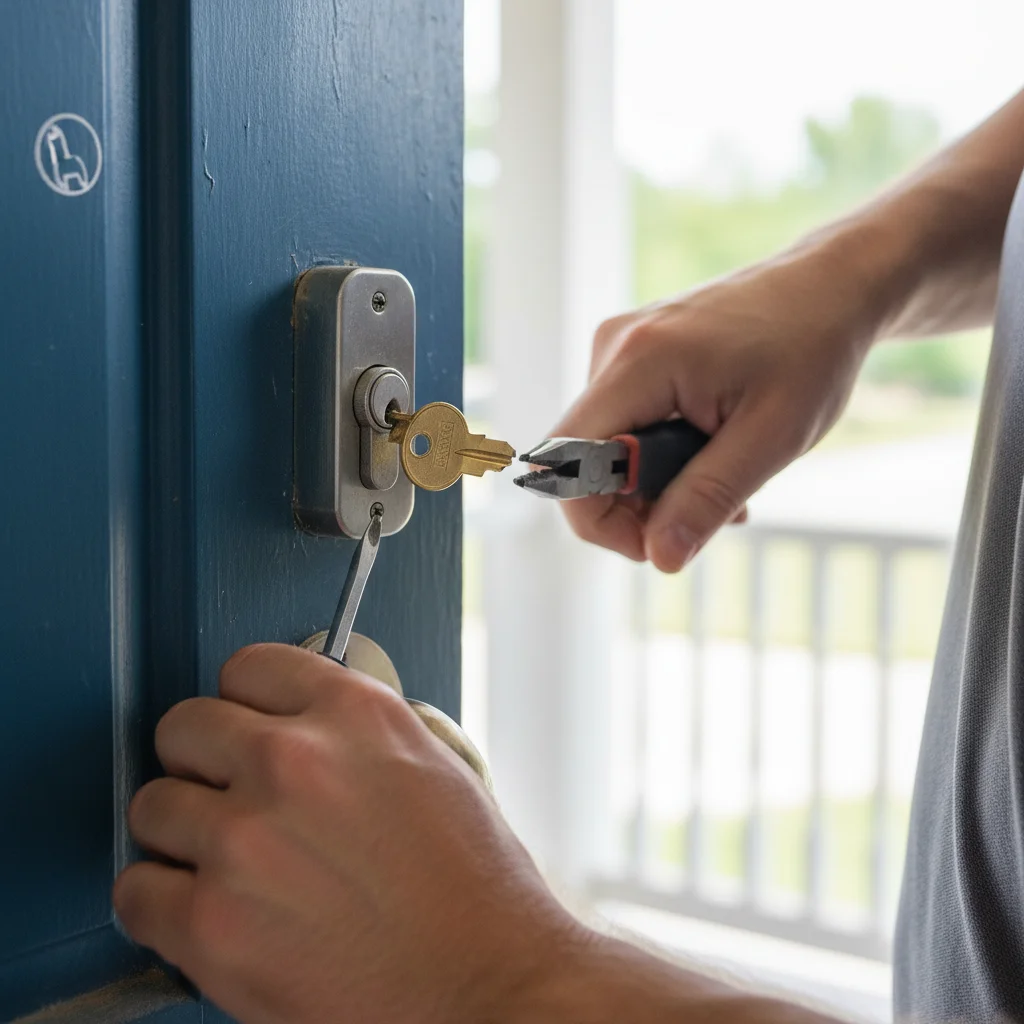
Stop before you make it worse
This is the most crucial first step. When a key breaks in a lock, your immediate instinct might be to poke at it or try to wiggle it out. Don’t. Applying more force, especially with another key or screwdriver, can push the broken piece deeper, damage internal pins, or bend the remaining key part. This can turn a tricky situation into a full lock replacement.
If the key broke off in a deadbolt or doorknob, assess how much is visible. Is a small sliver sticking out, or is it flush? This determines your next step. Keep the lock lubricated if possible; a small spray of graphite or WD-40 can help. Avoid excessive force. Your goal is to prevent further damage, preserving the lock’s integrity. Patience here can save you money and hassle.
DIY extraction methods that actually work
If a piece of the key is still protruding, you might have some luck with DIY extraction. The key is gentle, precise movements.
Using pliers or tweezers
If enough of the key stub is sticking out, use needle-nose pliers or strong tweezers. Gently grasp the exposed portion. Twist and pull simultaneously, very slowly. Align the key piece with the keyway while pulling it straight out. If the lock is in the “locked” position, try to turn the cylinder slightly with a flathead screwdriver (next to the broken piece, if possible) to align the pins before pulling. This is delicate work, requiring patience.
Using a saw blade or key extractor tool
When the key is broken off flush or nearly flush, you’ll need something thinner. A broken-key extractor tool, available at hardware stores, is designed for this. It looks like a thin, barbed hook. Insert the tool alongside the key piece, hook onto the bitting (the jagged edge) of the key, and gently pull it out. A thin coping saw blade or jigsaw blade (just the blade) can also work. Insert the blade into the bottom of the keyway, teeth up, hooking onto the key’s bitting. Slowly pull the blade out, bringing the key piece. Lubricating the lock with graphite powder or silicone spray before trying this can ease the process. Remember, hook the bitting and pull straight out without forcing or bending.
When the lock is salvageable vs. when it’s not
Determining whether your lock can be saved or if you need a full replacement often comes down to the extent of the damage. If you successfully extract the broken key piece using DIY methods and the lock mechanism still turns freely and smoothly with a working key (after a duplicate is made), your lock is likely salvageable. This best-case scenario means you’ve avoided a costly replacement, as internal components are probably fine.
However, if the key piece is stuck deep, or if attempts to extract it damaged the cylinder’s pins or mechanism, the lock might not be salvageable. Signs of irreversible damage include the lock cylinder refusing to turn even after extraction, a grinding or stiff feeling with a new key, or visible keyway deformation. In these situations, further repairs could compromise security. If severely damaged, especially an older or less secure model, a complete lock replacement might be more cost-effective and safer. A damaged lock is a security risk. Swift Key San Diego locksmiths can assess damage and recommend the best solution.
How a locksmith extracts a broken key
When DIY methods fail, or if you prefer professional assistance, calling a skilled locksmith is the smartest next step. Here in San Diego, the locksmiths in our network are equipped with specialized tools and expertise to handle even stubborn broken key extractions. The locksmith starts by carefully inspecting the lock and key piece to understand its position and any internal damage.
The most common tools locksmiths use are professional broken key extractor sets, which include various fine picks and tension wrenches. These are designed for maximum precision, allowing the locksmith to manipulate tiny pins inside the cylinder while hooking and pulling out the key piece. A scope or strong light is often used for a clear view. Specialized graphite powder or silicone spray is applied to reduce friction.
The process is meticulous, requiring a steady hand and extensive experience. In most cases, the key comes out without damaging the lock, preserving its functionality and saving you replacement costs. Once extracted, a new key can often be cut on the spot if you have the original parts or code. If the lock was damaged, the locksmith can perform repairs or recommend and install a suitable replacement. For urgent situations, our emergency locksmith services are available across San Diego County to get you back inside securely. Locksmiths in our network handle all types of residential and commercial locks. You can verify a locksmith’s license through the BSIS website.
Why keys break: brass wear, misalignment, weather
Keys don’t just snap without reason. Several common culprits are behind a broken key. Understanding these helps prevent future incidents.
Material wear and tear
Most house keys are brass, a softer metal designed to wear down rather than damaging harder lock components. However, this means keys have a lifespan. Years of daily use, turning, twisting, and rubbing against the lock’s internal pins gradually erode the key’s bitting (the cuts that engage the tumblers). A worn key becomes thinner and weaker, highly susceptible to snapping under pressure, especially if misaligned or forced.
Forcing a misaligned key
This is a very common reason for keys breaking. If you’re rushing, distracted, or the lock is stiff, you might try to force the key. If the key isn’t fully inserted, the bitting doesn’t align, or the lock cylinder is sticky, forcing it puts immense stress on the key’s weakest point, often snapping it where it enters the keyway. Always ensure the key is fully seated and turns smoothly.
Poor quality or duplication
Sometimes, the key itself is the problem. Poorly made or incorrectly duplicated keys can be weak. Thin, flimsy keys or those with inaccurate cuts are prone to breaking. Cheap blanks from non-professional key cutting services contribute to premature failure. Opt for quality key duplication from a reputable locksmith for sturdy, precise new keys.
Environmental factors and lock health
Your lock’s condition also plays a significant role. Rust, dirt, dust, or debris can accumulate inside the cylinder, making it stiff. When you force a key into a dirty or rusty lock, the key bears the brunt of resistance and can snap. Extreme temperatures can make keys more brittle. Regular lock maintenance, including occasional lubrication, prevents these issues.
Preventing the next break
Now that you know why keys break, you’re better equipped to prevent it from happening again.
Don’t rush or force it
This is the golden rule. Always insert your key fully into the lock before turning it. If you feel resistance, don’t force it. Wiggle gently, remove, and reinsert. If still stiff, a small amount of graphite lubricant can help. Forcing a key is a sure way to snap it.
Keep your locks maintained
Regular maintenance extends the life of both keys and locks. Spray a small amount of graphite lubricant into your locks every 6-12 months, especially for exterior doors in San Diego’s climate. This keeps pins moving smoothly and prevents buildup. Avoid WD-40 for long-term lubrication; use a dedicated lock lubricant.
Replace worn keys
Examine frequently used keys periodically. Look for signs of wear like thinning metal, rounded bitting, or cracks. If a key looks significantly worn, replace it before it breaks. Duplicating a working key is much easier than extracting a broken one.
Quality key duplication matters
When you need a spare key, trust a professional locksmith. Professional locksmiths use high-quality key blanks and precision cutting machines for strong, accurate new keys. While big-box stores offer cheap cutting, quality can be inconsistent, leading to easily broken or poorly functioning keys.
Consider lock upgrades
If your locks are old, stiff, or problematic, it might be time for an upgrade. Modern locks are often more durable and offer enhanced security. Swift Key San Diego offers a range of high-quality, durable locks. Talk to us about deadbolt installation or other lock improvements to boost your security and reduce key-related headaches.
Frequently asked questions
Is a broken key in the lock an emergency?
Yes, if it leaves you locked outside at night or in unsafe conditions, it’s an emergency. A professional can extract most broken keys without damaging the cylinder. Waiting and trying to force the fragment deeper is the move most likely to turn a quick extraction into a full lock replacement.
How much does broken key extraction cost in San Diego?
Most broken-key extractions run $120 to $200 in San Diego. If the cylinder was damaged during the break or by a prior DIY attempt, the tech may recommend a full lock replacement, which adds $30 to $80 for hardware plus $50 to $75 labor. A locksmith will tell you before starting work if replacement is likely.
Can I extract a broken key myself?
Sometimes. If a piece is sticking out enough to grip with needle-nose pliers, a slow, straight pull sometimes works. A thin barbed key extractor tool from a hardware store can hook the bitting and pull the fragment out. The risk is pushing the piece deeper or damaging the pins. Stop if you meet resistance and call a professional rather than forcing it.
Will the lock still work after a key extraction?
In most cases, yes. If the locksmith extracts the fragment cleanly and the pins are undamaged, the cylinder will turn normally with a new key. If internal pins were bent or broken during the snap or a DIY attempt, the cylinder may need rekeying or replacing even after the fragment comes out.
How do I stop keys from breaking in the lock again?
Replace brass keys showing visible wear or rounded bitting before they snap. Lubricate exterior locks with graphite powder once a year and never force a stiff key. When you need a spare, get it cut by a professional locksmith using a code-cutting machine rather than a hardware store kiosk, since imprecise copies stress the lock and are more prone to breaking.
When to call us
A key that will not turn is the warning that usually comes first, and a door key that won’t turn in the lock covers what to check before it snaps. If you can’t extract a broken key, or if you suspect internal lock damage, it’s time for a professional. The expert locksmiths in our network can handle complex extractions without further damage and provide solutions for lock repair or replacement. Call us at (858) 400-4082 for an estimate.