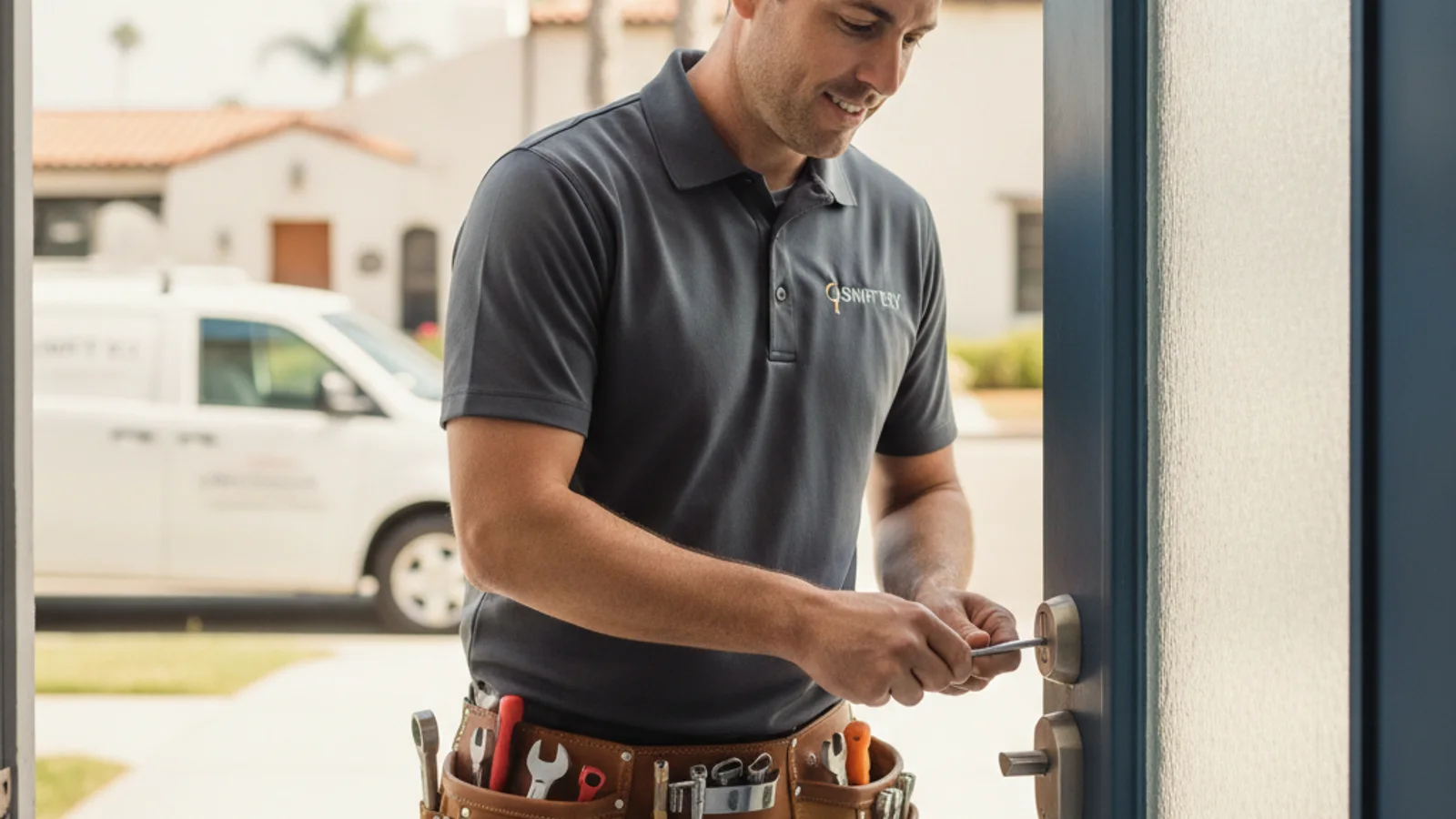
A reputable independent locksmith checks who you are before they open a house. If your ID is locked inside, many will enter first and verify before they leave. That is their call, not a Swift Key rule. Someone who opens any door with no check at all is a problem, not a convenience.
Swift Key San Diego is a referral service. Call (858) 400-4082. We match you with a licensed independent locksmith. We do not open doors, set ID rules, or quote the job. That locksmith decides what proof they will accept.
What counts as proof of residency or ownership
The locksmith wants a consistent story and at least one document that ties you to this address or this vehicle. They are not a court.
The cleanest case is a government photo ID that lists the address on the door. A California driver’s license or ID card with that address is usually enough.
When the ID address is old (you moved, you have not updated the license), locksmiths often ask for a mix:
| Situation | Proof they commonly ask for |
|---|---|
| ID address matches | Government photo ID |
| ID address is outdated | Photo ID plus a utility bill, lease, or mail to you at that address |
| No ID on you | Lease or mortgage plus a second document with your name and the address |
| Renting, landlord unreachable | Lease plus mail or a bank statement showing the address |
| Vehicle lockout | Registration in your name, or your name on the tow paperwork |
For a company or borrowed car, they may ask you to reach the registered owner before they start. Tow yards run their own document rules before they release a vehicle.
When the ID is locked inside
You stepped out for the mail. The wallet is on the counter. Digital ID is on the phone you left inside.
Many reputable locksmiths open first, stay while you retrieve ID, verify, then wrap up. They should not hand you the house and drive off with no check. If you still cannot produce anything once you are in, they typically stop and tell you to get a landlord, manager, or owner on the phone. Ask on the call how they handle this. Do not treat this page as a guarantee they will open first.
When a locksmith typically stops
No documents and no path to documents is a stop. “I moved last week and mail has not started” is a story they can work with. “I have nothing” plus confusion about the house is not.
They also do not referee fights. Two people claiming the same unit, a landlord-tenant argument, roommates, or a breakup where both names are still on the lease are not solved by picking a lock. If only one name is on the lease and that person is there with ID, the path is usually clearer. If both names are on it, they will often send you to the landlord.
If the scene feels like a domestic dispute rather than a lockout, a careful locksmith slows down or walks away. Swift Key does not decide that. The independent locksmith does.
Car lockout verification
Registration is the usual document. If the name matches the person at the car, they often proceed. Title works. A lease copy with your name works on a leased vehicle.
If the registration is on the dash, they can often read it through the glass before they open, then check it in hand after. On a partner’s car they may want a short call with the registered owner. If nobody answers and you have no paperwork, a tow to the registered owner’s location is the backup some people use. Tow yards will not release a car to a stranger with no tie to the owner.
More on the lockout itself: what to do when you’re locked out of your car.
Why verification protects you
A locksmith who opens for anyone who asks is a security hole on your street. Locks only matter if access is limited to people who belong there. If something goes wrong after a visit, a written record of who authorized entry matters. A shop that keeps that record is easier to deal with than a cash van with no name.
Locksmiths do not referee landlord-tenant disputes. A person at the curb who says they are the landlord still needs the tenant or proper authorization. A story at the curb is not enough. Whether they open first when ID is inside is that locksmith’s call, not a Swift Key rule.
Teaser-price ads that skip the ID check
Search “locksmith near me” in San Diego and you will see tiny service fees. The pattern is a low phone number, then a much higher figure after work starts. The same outfits often skip licensing, skip a written scope, and skip ID.
A local locksmith who will still be here next year has a reason not to open for the wrong person. An unnamed dispatcher with no local name does not. Swift Key is a referral service. We connect you. We do not perform the entry. You still want the independent locksmith’s LCO at search.dca.ca.gov.
Hiring help: who to call when you’re locked out of your house in San Diego. No-spare walkthrough: home lockout with no spare.
Frequently asked questions
Will a locksmith open my house without ID?
A reputable locksmith will not open with zero verification. ID that lists the address is the simple case. If the ID is inside, many open first and verify before they leave. Opening for anyone with no documents at all is the red flag.
What if my ID is locked inside?
Ask how they handle it before they roll. Common practice is open, retrieve ID, check it, then finish. You do not have to have the wallet in your pocket before they start. You do need a way to prove the house once you can reach your things.
What if I don’t have any ID at all?
They typically pause and look for a manager, landlord, or owner who can authorize. A rental has a tenancy record. An owned house may have a mortgage statement or mail inside. A locksmith who skips all of that is not doing you a favor.
Can a locksmith open a house I co-own after a breakup?
If both names are on the deed or lease and the dispute is live, a locksmith should not pick a winner. Call the manager on a rental. On an owned house you may need an attorney. Opening for one side can make the legal mess worse.
What counts as proof for a car lockout?
Registration is the standard. If it is in the car, they can often read it through the window. Title works. Borrowed or company cars often need a call to the registered owner.
Why do some locksmiths skip verification?
High-volume ads, unlicensed techs, and bait pricing often travel together. Skipping ID is one tell. Check the LCO before you book.
If you are locked out in San Diego County, call (858) 400-4082 to connect with a licensed independent locksmith. That locksmith sets the ID check and quotes. Swift Key does not quote. After-hours is their line, not a Swift Key hours promise. Home lockout and car lockout explain the connect path. Check the licence: how to check a locksmith’s California licence.