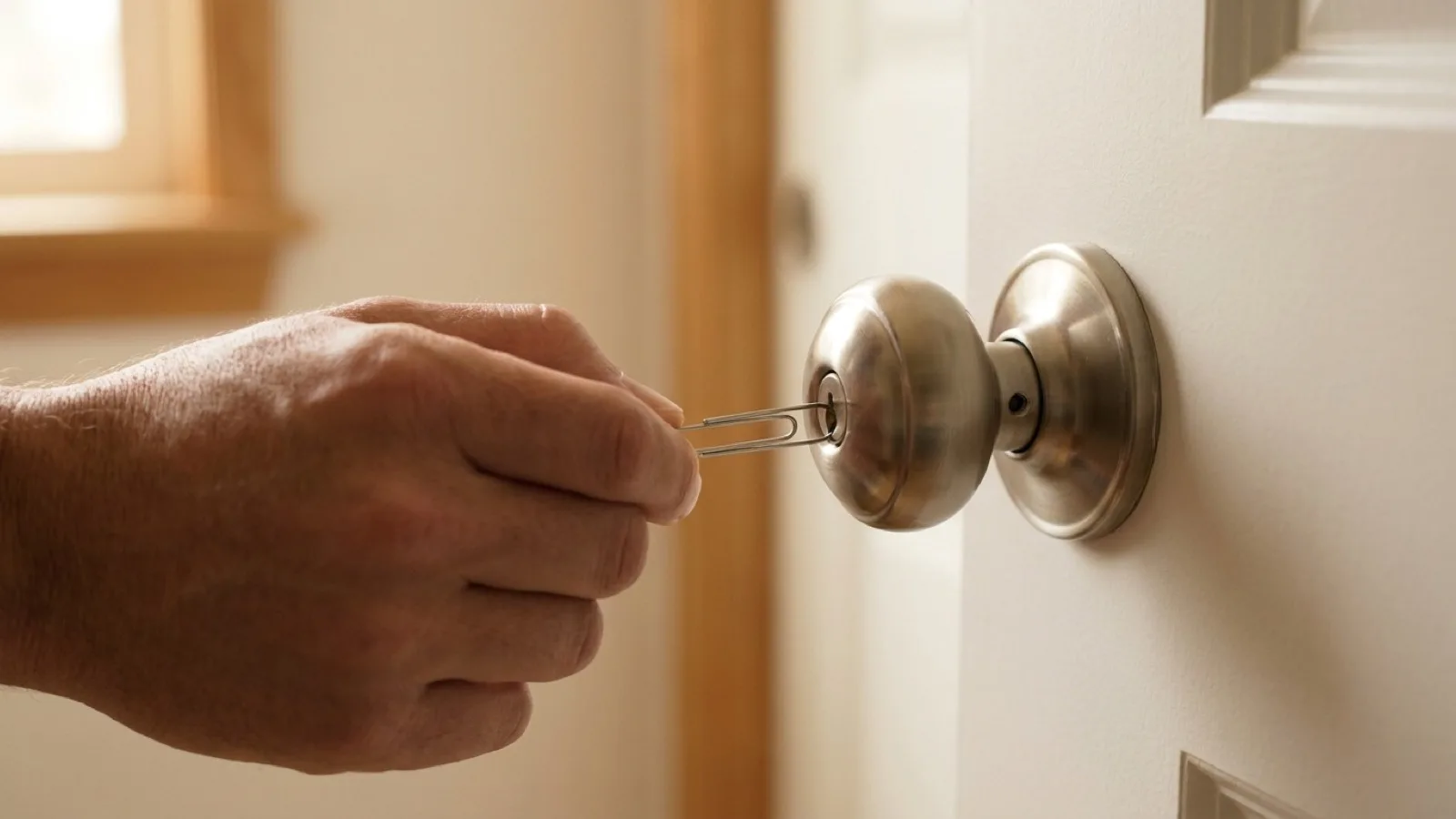
Most interior doors, like a bedroom, bathroom, or closet, use a privacy lock you can open from the outside in under a minute. Look for a small hole in the center of the knob or lever, then push a straightened paperclip or a small flathead screwdriver straight in until the button releases or the slot turns. Doors with a keyhole or a deadbolt are the exception, and those usually need the key or a locksmith.
It usually happens at the worst moment. A toddler flips the button and pulls the bedroom door shut. The bathroom lock sticks after a shower. A closet door latches with the cat still inside. The good news is that interior doors are built to be opened from outside in exactly these situations, and you almost never need to damage anything. Here’s how to get in, matched to the kind of lock you’re actually looking at.
How do you open a locked interior door?
Start by identifying the lock, because interior doors use only a handful of types and each opens a different way.
Look at the outside of the knob or lever, the side you’re standing on. If you see a small round hole in the center, it’s a privacy lock, the most common kind on bedrooms and bathrooms. If you see an actual keyhole, it’s a keyed interior lock and you’ll need the key. If there’s no hole at all, it’s a passage set with no lock, and the door is either just stuck or held by a spring latch you can sometimes slip. Most people are dealing with the first one, and that’s the quickest to solve.
How to open a push-button or twist privacy lock
A privacy lock is designed to release from the outside with any thin, rigid tool, which is the whole point of that little hole.
Grab a straightened paperclip, a small flathead eyeglass screwdriver, or the thin metal pick that came clipped to the original lockset. There are two versions, and you’ll feel which one you have as soon as the tool goes in. The push type releases when you push the tool straight into the hole until you feel the inside button pop out, usually with a soft click, then the knob turns freely. The turn type has a small slot instead, so you insert the flathead and rotate it about a quarter turn until it lines up and the lock lets go. Keep the tool straight and steady rather than jamming it around. If nothing gives after a few seconds, you probably have the other type, so switch between pushing and turning before assuming it’s stuck.
Can you open an interior door with a credit card?
The card trick only works on a spring latch, never on a lock that’s actually engaged, so it’s a narrow fix.
If the door has no privacy button and it’s simply latched, you can sometimes retract the angled spring latch by sliding a stiff plastic card between the door and the frame at the latch, then flexing it toward the hinges while you push the door. It only works when the door opens away from you and the latch’s angled edge faces your card. It will not open a privacy lock that’s been pushed in, and it will never open a deadbolt. Use an old card you don’t mind creasing, because this can bend or snag it. For the non-destructive methods a pro uses on tougher doors, see our guide on how locksmiths open locked doors.
What if the interior door has a keyhole?
A keyed interior lock needs the key, so the fix is finding the key rather than forcing the lock.
Some older San Diego homes have keyed knobs on bedrooms, home offices, or a converted room, and these use a real (if tiny) key. Check the usual spots first: on top of the door trim, above the frame, in a nearby drawer, or on the ring the previous owner left behind. If you can identify the lock, our rundown on types of door locks helps you tell a keyed knob from a privacy set. Resist the urge to pry it with a screwdriver, since that usually wrecks the knob and the door edge without opening anything. If the key is gone for good, a locksmith can open it without damage and, if you want, swap it for a keyless privacy set through a straightforward lock replacement.
How to open the door by removing the knob
When no tool works, you can reach the latch by taking the knob off, which is faster than it sounds and doesn’t harm the door.
On older knobs you’ll see two visible screws on the interior rose, the round plate against the door, so those come off with a Phillips screwdriver. Newer knobs hide the mounting with a snap-on rose, and there’s a small slot or pinhole on the neck of the knob. Press a paperclip or flathead into that detent while pulling the knob, the cover pops off, and the screws are underneath. With the knob removed you can retract the latch by hand or with pliers and the door opens. If the knob was failing anyway, it’s a good moment to read our walkthrough on door knob replacement before you put it back together.
What to do if a child or pet is locked inside
Move straight to the privacy tool, because that pinhole exists specifically so a locked bathroom or bedroom can be opened from outside in seconds.
Stay calm and talk to the child through the door while you push the paperclip or flathead into the hole, since most privacy locks release on the first try. If the tool fails and someone inside is in real distress, don’t keep fighting the door. Call 911 for a medical emergency, or reach a locksmith who can open it without damage. Swift Key can connect San Diego County homeowners with locksmiths who handle emergency lockouts across the county.
Is this different from being locked out of the whole house?
Yes, an interior door is a quick fix, while a locked front door or a lost house key is a different problem with different solutions.
If you’re actually shut out of your home rather than one room, the front-door approaches and who to call are covered in who to call when you’re locked out of your house and what to do in a home lockout with no spare key. Renters have a few extra steps and rights, which we lay out in the apartment lockout guide. And if the door you’re stuck at is a car door, that’s its own playbook in what to do when you’re locked out of your car.
Frequently asked questions
How do you unlock a bedroom door without a key?
Most bedroom doors have a privacy lock, not a keyed one, so you open them by pushing a straightened paperclip or small flathead screwdriver into the little hole in the center of the outside knob until the button releases or the slot turns.
Where is the hole to unlock a bathroom door?
It’s the small round opening in the middle of the outside knob or lever. That hole leads to the privacy lock’s release, and pushing or turning a thin tool through it pops the lock so the door opens.
Will a credit card open a locked bedroom door?
Only if the door is held by a plain spring latch with no privacy button engaged. A card can slip an angled latch on a door that opens away from you, but it won’t release a pushed-in privacy lock and never opens a deadbolt.
What if the interior door won’t open even after the lock releases?
The lock and the latch are separate, so if the button pops but the door still holds, the latch is likely stuck or the door is swollen or painted shut. Pull firmly while turning the knob, and if it still won’t budge, remove the knob to reach the latch directly.
Can a locksmith open an interior door without damaging it?
Yes. A locksmith opens privacy and keyed interior doors with non-destructive tools in most cases, so you avoid a broken knob or a gouged door edge, and they can rekey or replace the lock in the same visit if you want.
When to call us
Try the tool first, since a privacy lock usually opens in under a minute and costs you nothing. Call a professional when the door has a keyhole and the key is gone, when the knob or latch is broken, or when someone is locked inside and the tool isn’t working. Swift Key connects San Diego County homeowners and renters with licensed locksmiths for home lockouts, lock replacement, and emergency locksmith help across the county, from Chula Vista to every city in our San Diego service area.