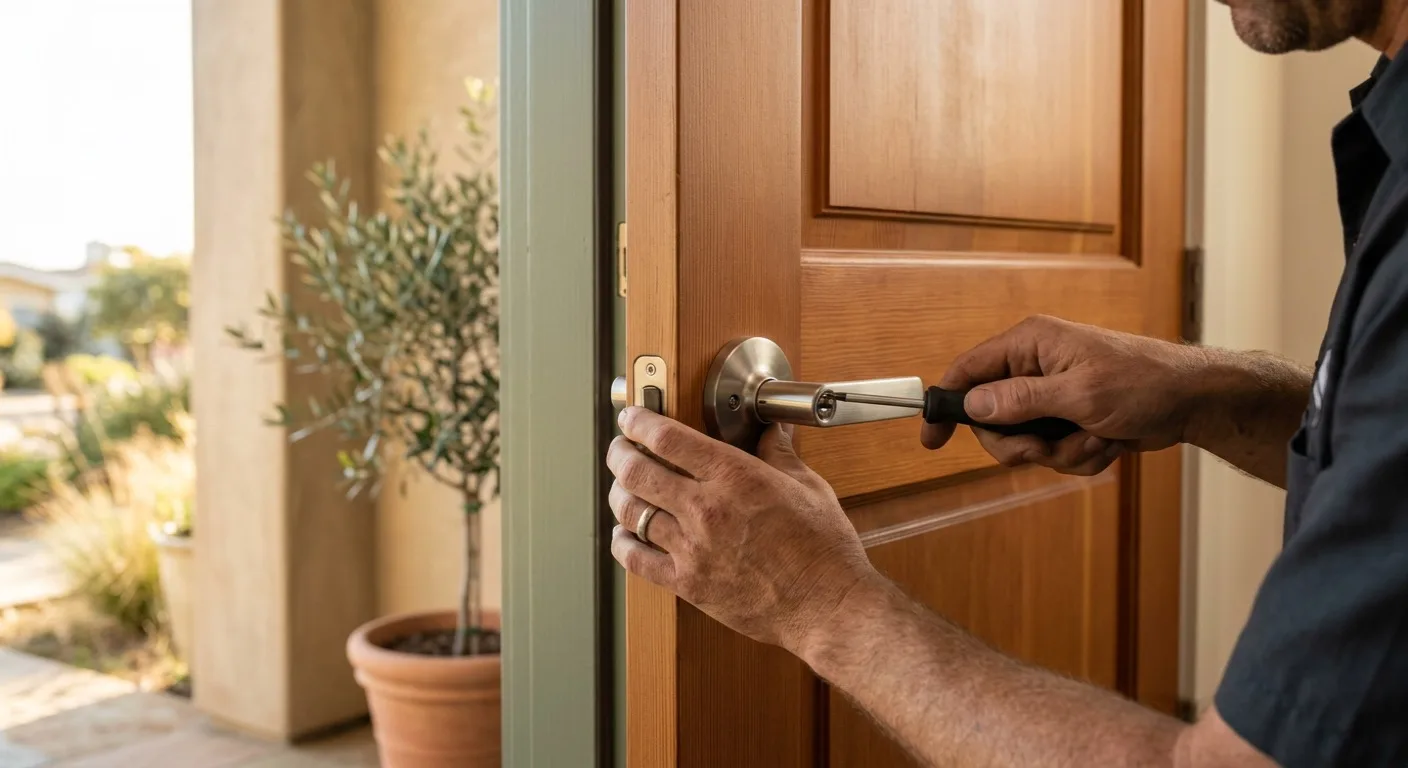
About 49.6% of homes in the city of San Diego were built before 1978, per Census ACS figures, and a good share of those older doors still carry an original mortise lock. A mortise lock is a heavy locking mechanism that slides into a deep pocket cut directly into the edge of the door. When these older mechanisms start sticking or failing, mortise lock repair in San Diego usually comes down to a clear choice. You either hire a professional to rebuild the internal springs and clear out coastal corrosion to keep the historic look, or you modify the door to accept standard modern hardware.
Swift Key San Diego is a referral service that matches customers with licensed, independent local locksmith professionals. We don’t perform the work ourselves. The locksmiths in the San Diego network handle both complex repairs of historic locks and full modern hardware retrofits.
This guide covers how to identify your old door hardware, why it fails over time, and how to decide whether to fix the original mechanism or upgrade to a completely new system.
How to identify a mortise lock on your door
Standard modern locks sit on the surface of the door face. A mortise lock lives entirely inside the door. You can identify one by opening your front door and looking at the edge. If you see a tall metal plate measuring six to eight inches high secured by screws at the top and bottom, you’ve got a mortise lock.
These locks feature a single large internal cassette that houses both the latch for the door knob and the deadbolt. Older craftsman and bungalow homes often feature decorative backplates on the face of the door. The keyway is usually positioned a few inches below the door knob or thumb latch. If you want to understand how these compare to modern cylindrical locks, you can review our guide on the different types of door locks in San Diego.
Common reasons old mortise locks fail
These locksets were built to last for generations. Many original locks in local neighborhoods date back to before 1978, some considerably older. However, decades of daily use and environmental exposure eventually cause mechanical failures.
Coastal salt air corrosion is a primary culprit for homes in Point Loma, Ocean Beach, and Sunset Cliffs. The dense marine layer carries moisture and salt that slowly eats away at the internal brass and steel components. The metal parts oxidize, causing the internal levers to bind. If you live near the water, you can learn more about finding local pros on our La Jolla locksmith service page.
Inland neighborhoods like University Heights and Normal Heights deal with different issues. Decades of accumulated dust mix with old grease to form a thick sludge. This prevents the small internal springs from moving freely.
The most common signs of a failing mortise lock include:
- A door knob that sags downward and fails to spring back to a horizontal position.
- A key that spins freely inside the cylinder without engaging the heavy deadbolt.
- A deadbolt that feels stiff or requires you to pull hard on the door to lock it.
- A latch that gets stuck inside the door edge and refuses to pop back out.
Wooden doors also warp and sag on their hinges over time. This causes a misaligned strike plate. The heavy deadbolt no longer lines up with the hole in the door frame. The locksmiths we send can determine if the lock itself is broken or if the door alignment is the actual problem.
When mortise lock repair in San Diego makes sense
Repairing the original lock is usually the best path for historic preservation. Hillcrest, North Park, South Park, and Mission Hills are defined by their pre-war architecture. Ripping out original solid brass hardware to install a cheap modern lock damages the aesthetic value of a classic home.
The independent locksmiths we connect you with often repair these mechanisms by removing the entire cassette from the door. They open the metal case, clean out decades of grime, and inspect the internal parts. The most common repair involves replacing a broken flat spring or a worn hub.
Sourcing original parts for a lock manufactured decades before 1978 is difficult. Local professionals often carry universal replacement springs or source salvaged parts to rebuild the mechanism. They then lubricate the moving pieces with modern dry graphite or silicone. This restores the crisp, heavy clunk that a quality mortise lock makes when you turn the key. You can find professionals who handle this delicate work through our San Diego city service directory.
When replacement makes more sense than repair
Sometimes a lock is simply beyond saving. If the main cast iron case is cracked, the internal posts are shattered, or the brass components are entirely eaten through by rust, a repair won’t hold.
Security upgrades are another common reason to replace the hardware. Very old mortise locks sometimes rely on simple skeleton keys or outdated cylinder designs that offer minimal protection against modern picking techniques.
Replacing a mortise lock with modern hardware requires significant carpentry. The large pocket inside the door must be filled with a solid block of wood. The edge of the door and the face of the door must be patched, sanded, and painted. Once the door is solid again, the technician drills new standard holes. This allows for standard deadbolt installation and modern handle sets.
If you decide to abandon the historic lock entirely, you can learn more about the process on our door knob replacement and general lock replacement pages.
Decision framework for old door hardware
Deciding between a repair and a full retrofit depends on the condition of the door and your budget. This table outlines the standard recommendations based on common scenarios.
| Current lock condition | Recommended path | Reasoning |
|---|---|---|
| Knob sags but key works fine | Repair the lock | Usually just a broken internal hub spring. The fix is straightforward and preserves the hardware. |
| Key is lost but lock functions | Cylinder replacement | The professional can unscrew the exterior cylinder and replace it with a new one without touching the historic lock body. |
| Case is cracked or shattered | Full replacement | Internal moving parts require a solid housing. A broken case means the lock will continually jam. |
| Door is heavily damaged | Full replacement | If the wood around the lock is splintered or rotting, the door needs structural repair and modern hardware reinforcement. |
| Upgrading to a smart lock | Full replacement | Most consumer smart locks require standard cylindrical holes. Modifying a mortise lock for smart hardware is highly complex. |
Understanding the cost of historic lock repair
Fixing a decades-old locking mechanism is a specialized skill. It requires patience, an understanding of obsolete mechanical designs, and the ability to hand fit replacement parts.
Because exact market rates for historic hardware repair aren’t published by state regulators, no verified average cost exists. Repairing original hardware often costs less than buying a high-end historical reproduction lock, but it usually costs more than swapping a standard modern deadbolt. The final price depends entirely on how long it takes to source or fabricate the broken internal components.
You should always ask the locksmith to assess the lock and provide a firm quote before you authorize the repair. Confirm the current rate and the expected timeline directly with the professional before you pay.
Frequently asked questions
Can you put a smart lock on a mortise door?
Installing a standard smart lock on a mortise door requires permanently modifying the door. The locksmith must remove the old lock, fill the large empty cavity with solid wood, and drill new holes to fit the modern smart deadbolt. A few specialized smart locks are designed to integrate with mortise hardware, but they are expensive and often require commercial grade installation.
Do locksmiths still carry parts for very old locks?
Locksmiths rarely carry exact factory replacement parts for locks manufactured decades before 1978. Instead, they carry universal flat springs, varied wire gauges, and blank brass stock. The professionals we connect you with often hand file replacement pieces or source salvaged hardware to rebuild the internal mechanism.
Is a mortise lock more secure than a standard deadbolt?
A mortise lock is physically very strong because the locking mechanism is protected inside a deep pocket within the solid wood door. The heavy metal case resists blunt force attacks. The actual security level depends on the key cylinder on the outside. You can have a professional install a modern, high security cylinder into a historic mortise lock body to maximize your protection.
How long does mortise lock repair take?
It depends entirely on the damage. Replacing a sagging knob spring or cleaning out dried grease is usually a straightforward visit. If internal parts are shattered and the technician needs to fabricate a replacement piece from blank metal, the job takes longer and can require a return visit. Ask the locksmith to estimate the time once they have seen the actual lock.
Can I just replace the keyway and keep the old lock body?
Yes. If the heavy metal cassette inside the door still works smoothly, you don’t need to replace it just to change your keys. The locksmith can unscrew the threaded cylinder from the exterior face of the door and install a brand new cylinder with a new set of keys. This is the most cost effective way to secure a newly purchased historic home.
If you’re dealing with a sagging door knob, a stuck deadbolt, or a rusted locking mechanism, getting professional help is the safest route. Call Swift Key San Diego at (858) 400-4082. We’ll connect you with an independent local professional who can diagnose your hardware and help you decide whether to save your historic lock or upgrade to a modern system.