The main types of door locks are knob locks, lever handles, deadbolts, mortise locks, cam locks, euro cylinders, smart or keypad locks, and padlocks. Most San Diego homes use a keyed entry knob or lever paired with a deadbolt on each exterior door, which is the setup that actually resists a break-in. The others solve specific jobs, from interior privacy to commercial doors to cabinets and gates. Here’s what each lock is, how secure it is, and which one fits your door.
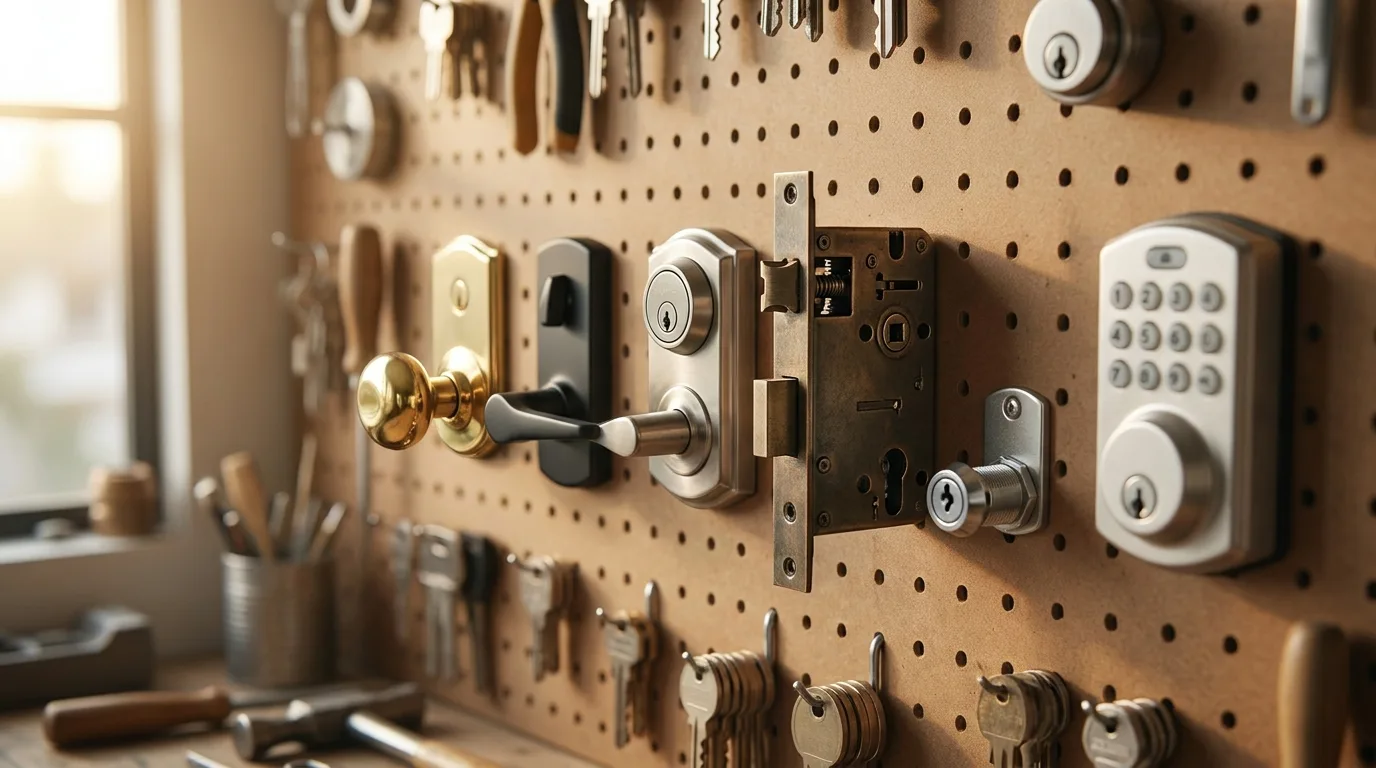
What are the main types of door locks?
There are eight lock types you’ll run into on a typical home or small business. Each one is built for a different door and a different level of security.
A knob lock puts the locking cylinder in the knob itself. A lever handle works the same way but pushes down instead of twisting. A deadbolt is a separate bolt that throws deep into the door frame and does the real security work. A mortise lock is a heavy unit that fits into a pocket cut into the door edge, common on older and commercial doors. A cam lock is the small flat turn-latch you see on cabinets, mailboxes, and lockers. A euro cylinder is a slim profile lock used in patio and some modern doors. A smart or keypad lock opens with a code, phone, or fob instead of a key. A padlock is the portable lock you clip onto a gate, shed, or storage unit. The rest of this guide walks each one and where it belongs.
Knob locks and lever handles: what are they for?
Knob and lever locks handle everyday operation, not serious security. Treat them as the handle, not the lock that keeps burglars out.
A keyed knob or lever on an exterior door can be twisted off or forced with basic tools, so it should never be the only lock on an entry door. Their real strengths are interior doors and accessibility. A passage set has no lock at all and is used on hallways and closets. A privacy set locks with a push-button or turn for bedrooms and bathrooms, with a pinhole to release it in an emergency. A lever is easier to use with full hands or limited grip, which is why California requires lever handles on most commercial and public building doors under ADA and the state building code. If your hardware is worn or you’re changing the look, our lock replacement service connects you with pros who swap knobs and levers across San Diego County.
Deadbolts: the lock that actually stops a break-in
A deadbolt is the single most important lock on any exterior door. It throws a solid metal bolt straight into the frame, and it has no spring latch to shim or loid open.
Single-cylinder deadbolts, the most common, use a key outside and a thumbturn inside. Double-cylinder deadbolts need a key on both sides, which helps on doors with glass nearby but can be a fire-exit hazard, so check local code before installing one. Deadbolts are graded by the BHMA and ANSI system, from Grade 3 up to the strongest Grade 1. For a front door in San Diego, a Grade 1 bolt with a reinforced strike plate is the standard worth paying for. Our guide on how to choose a Grade 1 deadbolt explains what the grades mean for kick-in and drilling resistance. If you’re adding one to a door that doesn’t have it, the deadbolt installation pros in our network handle the bore and fit.
Mortise, cam, and euro cylinder locks: where do they fit?
These three cover the doors a standard knob-and-deadbolt setup doesn’t. You’ll meet them on older homes, commercial storefronts, and specialty doors.
A mortise lock combines a latch and a deadbolt in one heavy body that sits inside a pocket in the door edge. Many older San Diego homes in North Park, Kensington, and Hillcrest have them, and they need the right parts, not an off-the-shelf swap. A cam lock is the simple quarter-turn latch on cabinets, mailboxes, and file drawers, keyed or combination. A euro profile cylinder is the slim, oval-ended lock used in many patio doors and modern European-style entries, and it’s easy to rekey or upgrade on its own. If your door has a mortise or an unusual cylinder and you want new keys, our lock rekey service resets the pins without replacing the whole unit.
Smart locks and keypad locks: are they secure enough?
Smart and keypad locks trade the physical key for a code, phone, or fob. The good ones are as secure as a quality deadbolt, and some are deadbolts with electronics added on top.
A keypad deadbolt opens with a PIN, so you stop hiding keys and stop rekeying after a roommate or guest leaves. A full smart lock adds Wi-Fi or Bluetooth, app control, and access logs, which is useful for rentals and busy families. The security still comes from the bolt and the strike, not the electronics, so buy a model with a Grade 1 or Grade 2 deadbolt underneath. Two San Diego-specific cautions: coastal salt air corrodes cheap finishes and battery contacts fast, and a dead battery can lock you out if there’s no key override. For a straight comparison, read our post on whether a smart lock or a deadbolt is safer. To decide if the upgrade is worth it at all, see are high-security locks worth it.
Which type of door lock should you choose?
For most San Diego homes, the answer is simple: a keyed lever or knob for operation, plus a Grade 1 deadbolt for security, on every exterior door. Everything else is a specific-job decision.
Choose a privacy knob or lever for bedrooms and bathrooms, and a passage set where you don’t need to lock at all. Choose a keypad deadbolt if you’re tired of hiding keys or you run a short-term rental. Choose a mortise or euro cylinder only when your existing door already uses one. Near the coast, spend up for solid metal hardware, since hollow, low-grade finishes pit and seize in the salt air. And whatever you pick for the entry, back it with a longer three-inch strike screw into the frame stud, which does more to stop a kick-in than the lock brand itself. For the full picture on hardening an entry door, read our notes on improving front door security.
Frequently asked questions
What are the most common types of door locks?
The most common are knob locks, lever handles, and deadbolts. A typical San Diego home has a keyed knob or lever plus a deadbolt on each exterior door, privacy knobs or levers on bedrooms and bathrooms, and passage sets on hallways and closets. Mortise locks, cam locks, euro cylinders, smart or keypad locks, and padlocks cover more specific jobs like older doors, cabinets, patios, and gates.
What is the most secure type of door lock?
A Grade 1 single-cylinder deadbolt with a reinforced strike plate is the most secure everyday lock for a home. The bolt throws deep into the frame and resists kick-ins, drilling, and prying far better than a knob or lever. A high-quality keypad or smart deadbolt can match it, as long as the bolt underneath is Grade 1 or Grade 2. The strike plate and long screws matter as much as the lock itself.
What’s the difference between a knob lock and a deadbolt?
A knob lock puts the latch and lock in the handle, and it can be forced or twisted off. A deadbolt is a separate lock with a solid bolt that slides straight into the door frame and has no spring latch to shim. Knobs handle daily operation. Deadbolts handle security. That’s why exterior doors should have both, not a knob alone.
Are smart locks safe for San Diego homes?
Yes, if you buy a quality model. The security comes from the deadbolt and strike, not the electronics, so choose a smart or keypad lock built on a Grade 1 or Grade 2 bolt. Near the coast, pick a corrosion-resistant finish, since salt air degrades cheap hardware and battery contacts. Make sure the lock has a physical key override or a way in if the battery dies.
Can a locksmith rekey any type of lock?
Most standard knobs, levers, deadbolts, mortise locks, and euro cylinders can be rekeyed instead of replaced, which is cheaper than buying new hardware. Rekeying resets the pins so old keys no longer work. Some smart locks reset their access codes in the app instead. A locksmith can tell you on site whether your specific lock is worth rekeying or replacing.
When to call us
If you’re not sure which lock your door takes, or you want new hardware keyed to match your existing keys, a professional swap is faster and cleaner than guessing at the store. The locksmiths in our network install, replace, and rekey every lock type in this guide across San Diego County. Call us at (858) 400-4082 for a firm estimate.