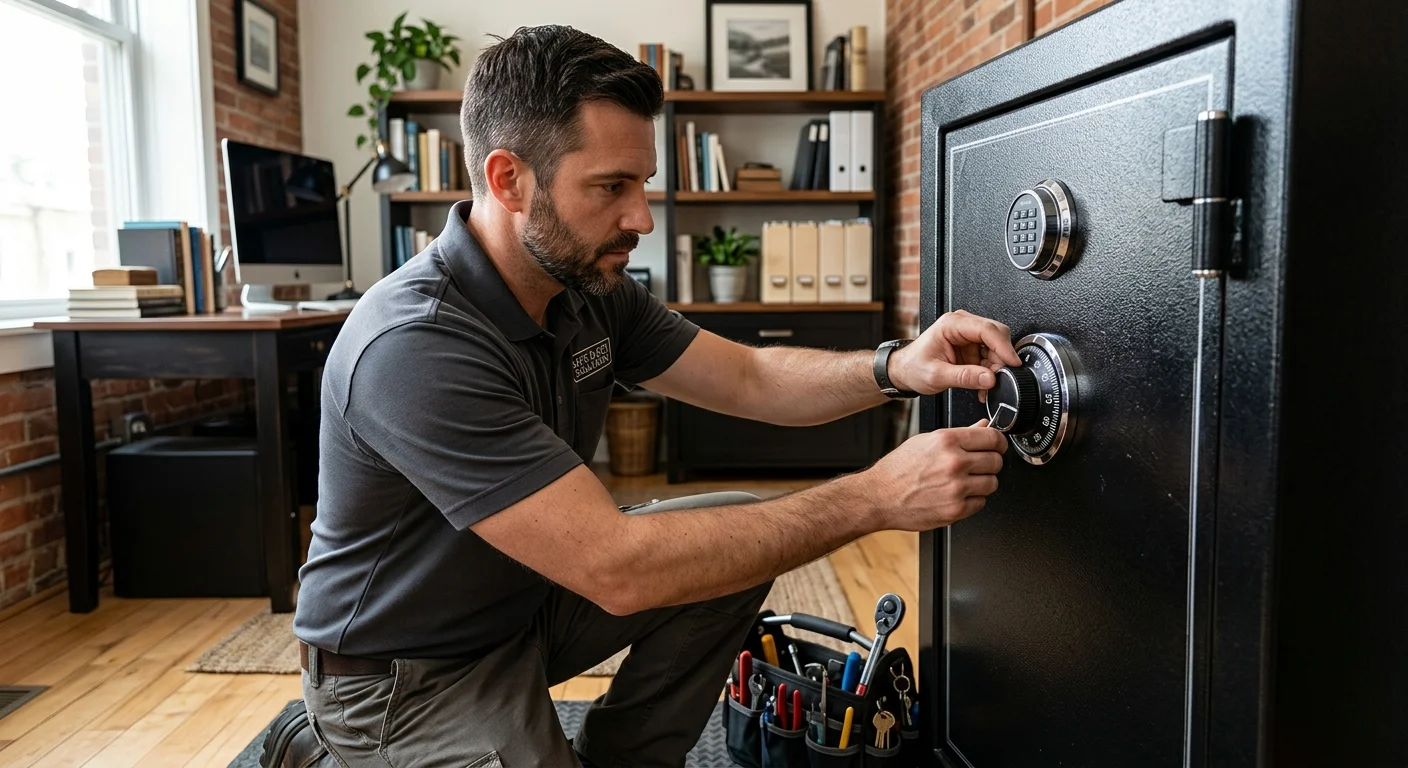
Discovering you’re locked out of your home safe can be incredibly frustrating. Whether it holds important documents, family heirlooms, or valuable possessions, gaining access quickly and without damage is crucial. In San Diego County, homes use a wide variety of safes, each with its own unique locking mechanism and security features. Knowing what kind of safe you have can help us understand the challenge, but rest assured, Swift Key San Diego has the expertise to open them all.
Locked out of a dial combination safe?
Dial combination safes are a classic choice for home security, instantly recognizable by their rotating numbered dial. These mechanical safes rely on a series of internal wheels or “tumblers” that align when the correct sequence of numbers is entered, allowing the bolt to retract. They’re often favored for their reliability and lack of electronic components.
Common reasons you might find yourself locked out of a dial combination safe often revolve around human error or mechanical wear. The most frequent issue is a forgotten combination, especially if it’s a safe that hasn’t been accessed in years. Other problems include the combination being slightly off due to a user input error, or an internal mechanical failure where a tumbler or spindle has become sticky or misaligned over time. Sometimes, a past attempt to force the safe might have damaged the internal mechanism, preventing it from opening even with the correct combination.
At Swift Key San Diego, our technicians are highly skilled in opening dial combination safes. We prioritize non-destructive methods whenever possible. This often involves “safe manipulation,” where we use our experience and a sensitive touch to “listen” or “feel” the internal mechanisms, deciphering the combination without drilling. In cases of internal damage or if manipulation isn’t feasible, we use precise drilling techniques that target specific components, minimizing damage to the safe’s structure. Our goal is always to get your safe open and, if possible, restore it to working order. If you’ve forgotten your combination, we have options to help. Learn more in our blog post about what to do if your safe combination is forgotten.
Troubleshooting electronic and keypad safes
Electronic and keypad safes offer a modern alternative to traditional dial models, providing quick access with a digital code. These safes typically feature a keypad for entering a numeric code, which then activates a solenoid or motor to unlock the safe. Many electronic safes also include a backup key override for emergency access, and some even incorporate biometric scanners for fingerprint recognition.
While convenient, electronic safes come with their own set of lockout challenges. The most common culprit is a dead battery, as the electronic locking mechanism requires power to function. Forgotten codes are also frequent, similar to dial safes. Users might experience electronic malfunctions, such as a keypad that stops responding, or an internal circuit board failure that prevents the safe from recognizing the correct code. Some safes enter a “lockout” mode after too many incorrect attempts, preventing further entry for a set period. Losing the backup override key can also leave you in a bind if the electronics fail.
Our San Diego safe opening experts are well-versed in diagnosing and resolving issues with electronic and keypad safes. We start with simple troubleshooting steps like battery replacement or checking for error codes. When the problem is more complex, we use specialized diagnostic tools to identify the electronic fault. Our techniques are designed to bypass the electronic lock system non-destructively, often without needing to drill. This means we can usually open your safe and, in many cases, get the electronic lock working again, or advise on a replacement if necessary. We can open electronic safes even without the original key.
Opening high-security fireproof and burglary safes
High-security safes are designed for maximum protection, combining heavy-duty construction with advanced locking mechanisms to resist both fire and forced entry. Fireproof safes use special insulation materials within their walls to protect contents from extreme heat, while burglary safes feature thick steel plates, complex boltwork, and often a “relocker”, a secondary locking device that activates if the primary lock is attacked. These safes are built to withstand sophisticated attacks from drills, pry bars, and torches.
Lockouts in high-security safes can be particularly challenging due to their formidable construction. Beyond forgotten combinations or electronic failures, you might encounter issues like a failed relocker mechanism that permanently locks the safe if tampered with. Internal damage from a previous, unsuccessful forced entry attempt can also render the safe inaccessible. The sheer thickness and multiple layers of steel and fire-retardant material make breaching these safes a specialized task that amateur attempts can easily worsen.
Swift Key San Diego technicians possess the specialized tools and advanced training required to open high-security fireproof and burglary safes. This isn’t a job for just any locksmith; it demands a deep understanding of safe engineering and precise, calculated techniques. We employ methods like advanced manipulation, specialized drilling patterns, or scope access, always with the aim of preserving the safe’s integrity. Our goal is to retrieve your valuables and, whenever possible, repair the safe so it can continue to protect your most important assets.
Specialized techniques for gun safes
Gun safes are a specific type of home safe designed to securely store firearms and ammunition, meeting legal requirements for responsible gun ownership. They come in various sizes, from small pistol safes to large cabinets for multiple long guns. While their locking mechanisms can be dial, electronic, or even biometric, gun safes often incorporate additional security features like thick steel construction, internal relockers, and reinforced door jambs to deter theft and unauthorized access. Many are also designed to be bolted to the floor or wall for added security.
Lockout reasons for gun safes are similar to other safe types: a forgotten combination or code, a dead battery for electronic locks, or a malfunction in a biometric scanner. However, the urgency to access a gun safe can be higher, especially in emergency situations where quick access to a firearm might be needed for self-defense, or if specific firearms are needed for competition or hunting. Mechanical failures, such as a stuck bolt or a misaligned handle, can also prevent access.
Our locksmiths at Swift Key San Diego understand the unique security considerations of gun safes. We are equipped with the specialized knowledge and tools to open these safes efficiently and responsibly. Whether it’s a complex electronic lock issue or a stubborn mechanical dial, our techniques are tailored to overcome the specific security features found in gun safes, including bypassing internal relockers. We prioritize opening the safe without damaging its structure, ensuring it can continue to function as a secure storage solution for your firearms. If you’re a gun owner in San Diego County and need your gun safe opened, don’t hesitate to reach out to our team for professional assistance. We specialize in comprehensive safe opening services for all types of residential safes.
What about wall safes and floor safes?
Wall safes and floor safes are unique because they’re integrated directly into your home’s structure, offering a hidden and often less conspicuous storage solution. Wall safes are typically installed between wall studs and concealed behind a picture or furniture, while floor safes are cemented into the floor and covered by a rug or other flooring material. Due to their concealed nature, they often have simpler locking mechanisms than large freestanding safes, though high-security versions exist.
Lockouts for these integrated safes can present additional challenges beyond the lock itself. For a wall safe, you might forget the combination or misplace the key for its often simple key lock. If the safe’s door is flush with the wall, it can be tricky to get proper leverage if the mechanism is stuck. Floor safes are particularly susceptible to issues like rust or corrosion due to moisture in the concrete or air, which can seize up the lock or bolts. Structural shifts in the home can also subtly misalign the safe door over time, making it difficult to open even with the correct combination.
At Swift Key San Diego, we have experience working with both wall and floor safes. Our technicians understand the delicate balance of accessing these safes without causing unnecessary damage to your home’s walls or flooring. We use precision tools and techniques to identify and address issues, whether it’s manipulating a simple key lock, addressing corrosion on a floor safe, or performing a non-destructive bypass of a dial or electronic mechanism. Our goal is to retrieve your items and ensure minimal disruption to your home’s aesthetics and structure.
Our non-destructive safe opening process
When you find yourself locked out of your home safe, whether it’s a cherished family heirloom with a dial combination, a modern electronic safe, a high-security fireproof vault, or a discreet wall unit, the worst thing you can do is attempt to force it open yourself. Amateur attempts often lead to irreversible damage to the safe, potentially harming its contents, and can make professional opening significantly more difficult and costly.
At Swift Key San Diego, our commitment is to provide expert, non-destructive safe opening services across San Diego County. Our process typically begins with a thorough assessment of your safe’s type and the nature of the lockout. We draw on our extensive training and specialized tools to employ techniques like safe manipulation, where we “read” the internal mechanisms, or precise scoping to gain visual insight. Only as a last resort, and always with your informed consent, would we consider precise drilling, which targets specific components of the lock to minimize damage and allow for potential repair.
We pride ourselves on our ability to often open safes without any damage, allowing you to continue using your safe immediately after access is restored. Our technicians adhere to the highest standards of locksmithing. Before hiring any locksmith, you can verify their credentials with the BSIS. Our expertise saves you from the expense of replacing a damaged safe and the heartache of potentially harming your valuable contents. For detailed information on potential costs, check out our blog post on safe opening cost in San Diego.
Frequently asked questions
How does a locksmith open a dial combination safe without the combination?
The primary method is manipulation, where a trained technician uses a sensitive touch and listening technique to feel the internal tumblers aligning as the dial turns. This works on most older mechanical dial safes and many residential models, and it leaves the safe completely undamaged. If the lock has anti-manipulation features or is internally damaged, drilling through a documented entry point becomes necessary. We always try manipulation first.
Can an electronic safe be opened if the keypad is completely dead?
Yes. Most electronic safes have two backup options: a physical override key that bypasses the keypad, and a battery terminal on the exterior that lets you restore power by holding fresh batteries to it. If both of those fail or are unavailable, a technician can open the safe through the lock mechanism without damaging the safe body. Dead batteries are the most common cause of electronic safe lockouts, and they’re often solved in under five minutes.
What’s the hardest type of home safe to open?
High-security TL-rated commercial safes, and newer RSC-rated gun safes with auto-relockers and hardplate, are the most time-intensive to open. They’re specifically engineered to defeat drilling and manipulation, which means the job requires specialized equipment and significantly more time. A residential fire safe or basic electronic document safe is at the other end of the spectrum and can typically be opened non-destructively. See our safe opening cost guide for what to expect to pay by safe type.
Can a floor safe be opened without damaging the floor?
Yes. Floor safes are designed to sit flush with or below the floor surface, often set in concrete, but the opening itself happens at the door mechanism, not through the floor. A technician accesses the lock from above. The main added complication is that floor safes can develop corrosion from moisture in the concrete over time, which can seize the bolt work. That sometimes requires a different approach than a freestanding safe, but the floor itself stays intact.
How long does it take to open a locked safe?
A simple residential electronic safe with a dead battery or forgotten code takes 15 to 30 minutes. A mechanical dial safe that requires manipulation takes 30 minutes to 2 hours depending on the lock design. High-security commercial safes that need drilling can take several hours. The technician can give you a realistic estimate after a brief on-site assessment of your specific model.
When to call us
Trying to open a locked safe on your own can lead to permanent damage to the safe and its contents, not to mention potential injury. Professional safe opening requires specialized tools, extensive training, and a deep understanding of complex locking mechanisms. Don’t risk it.
Call us at (858) 925-5546 for a same-day estimate.