Sometimes, a safe locksmith may open a safe without visible damage. That result can’t be promised before the safe is inspected. The safe type, lock condition, failure, ownership check, and available methods all affect the plan.
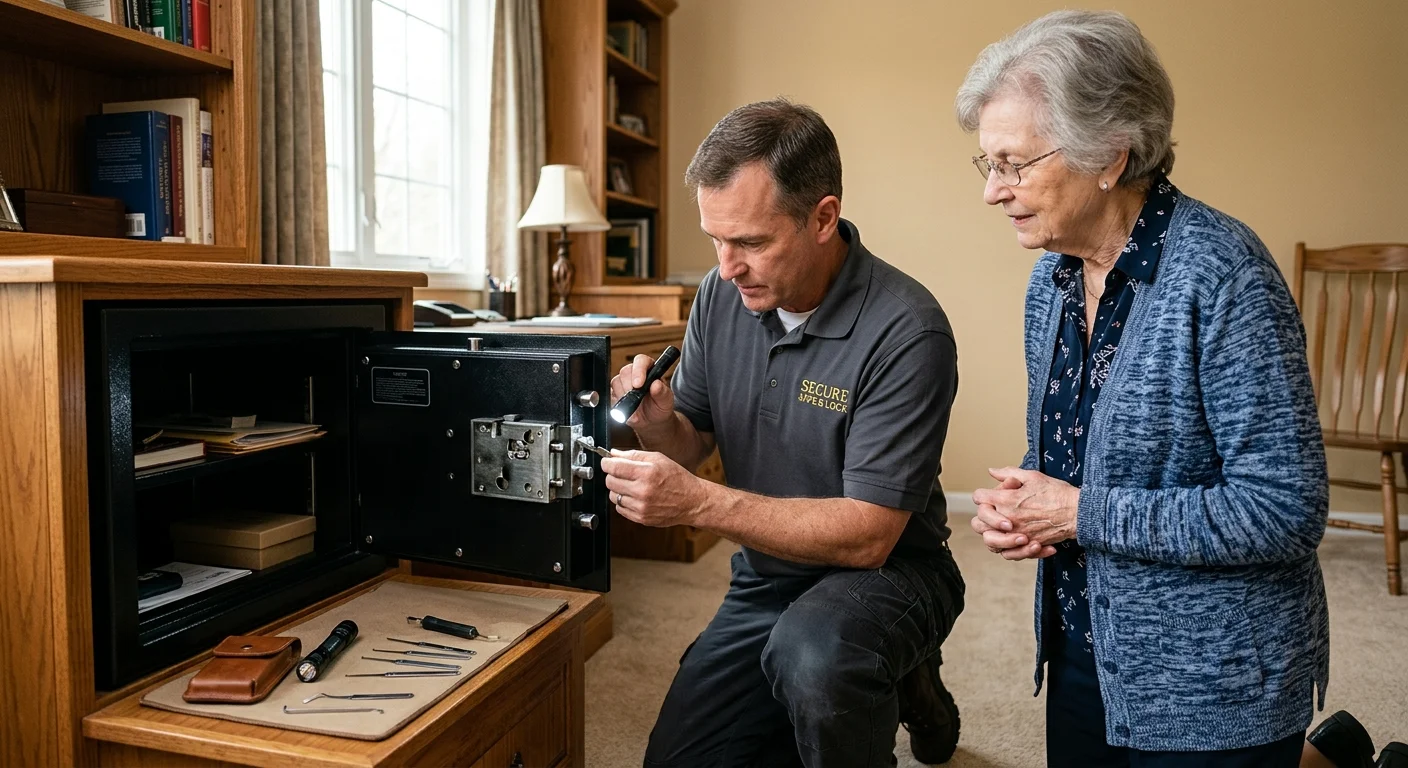
Why the opening method depends on the safe
“Open without damage” can mean several different things. One owner may want the door and finish left untouched. Another may accept replacing the lock if the safe body remains usable. Make your definition clear before approving any work.
The safe itself gives the locksmith a starting point. Share any visible brand, model, labels, keyways, dial, keypad, handles, and warning lights. Also explain what happened before the lockout. A forgotten combination presents a different question from a keypad that stopped responding or a key that no longer turns.
Location matters to the working plan too. Tell the provider whether the safe is freestanding, mounted, enclosed, or surrounded by finished surfaces. A safe inside a Chula Vista condo may involve gates, stairs, or shared hallways. A garage safe in Escondido may offer a different working area. These details help the locksmith understand access before arriving.
Your goal also changes the discussion. You may only need the contents retrieved. You may instead want the safe returned to regular use. If the container will be retired, say that as well. The locksmith can then explain which proposed options fit that goal.
If you don’t know what kind of safe you have, start with our guide to types of home safes. Don’t choose an opening method from appearance alone. Give the licensed locksmith enough information to identify the safe and explain the options.
What a locksmith checks before starting
Good preparation begins before anyone touches the lock. Take clear photos of the complete safe, its door, the locking area, and every readable label. Include a wider photo showing the space around it. Don’t send the combination through a general contact form.
Write down the exact symptoms while they’re fresh. Note what the keypad, dial, key, handle, or door does when used normally. Tell the locksmith about any recent move, impact, battery change, repair attempt, or change in behavior. If someone already tried an opening method, disclose that too.
Leave the safe in its current condition when practical. An altered keypad, removed panel, damaged keyway, or forced handle may change the assessment. The locksmith needs an accurate account of what happened and what was attempted.
Be ready to establish your authority to access the safe. Ask the selected provider what identification or ownership documents it wants to review. For a rental, workplace, inherited property, or managed building, additional authorization may be relevant. Don’t assume one document works for every situation.
California locksmiths are regulated by the Bureau of Security and Investigative Services. You can check a company license or employee registration through the state’s DCA license search. Confirm the current status before authorizing work.
Swift Key San Diego is a referral service. We match callers with licensed, independent local locksmiths. We don’t open the safe, employ the locksmith, set the price, or provide a warranty. Your agreement is directly with the professional you select.
Non-destructive methods and their limits
A non-destructive plan starts with a clear boundary. Ask whether the proposed attempt is intended to avoid drilling, cutting, prying, and changes to the safe’s visible surfaces. Also ask whether the lock could still require service or replacement afterward.
Depending on the safe and reported problem, a locksmith may discuss diagnostic checks, manufacturer-supported recovery, or manipulation. Those are method categories, not promises. A method that may be considered for one lock might be unavailable or unsuitable for another.
The locksmith should identify what can and can’t be determined before work begins. Some information may come from photos and model details. Other questions may remain open until the safe and lock are examined in person. Ask the professional to separate confirmed findings from possibilities.
Set an approval point before work starts. You can authorize an initial approach while requiring another conversation before any method changes. That prevents “try non-destructive first” from becoming an open-ended approval for drilling or other permanent changes.
Avoid asking for a guarantee that no mark will appear. Instead, request a specific description of the intended work and its limits. Ask what parts might be handled, removed, replaced, or altered. If the locksmith can’t yet answer, ask when that decision can be made.
Our safe opening service connects San Diego County callers with licensed local locksmiths. The matched professional evaluates the safe and discusses the proposed approach with you directly. Damage, repair, pricing, and warranty terms must come from that professional.
When drilling may be discussed
Drilling may enter the conversation when the locksmith doesn’t recommend continuing with a non-destructive attempt. It may also be presented as one option among several. The important point is informed approval, not a blanket assumption that drilling is always necessary or always avoidable.
Ask the locksmith what led to that recommendation. Request a plain description of the planned opening and the parts it may affect. You should also ask whether the proposal changes the safe door, lock, body, finish, surrounding cabinet, wall, or floor.
The word “drilling” doesn’t answer the repair question. Ask whether the locksmith expects a repair step, a replacement part, or a recommendation to retire the safe. If the result can’t be predicted before opening, have the professional say that clearly.
Decide what happens if the original plan doesn’t work. The locksmith should contact you before moving to a method outside the approved scope. That conversation can address further damage, repair choices, and any change in price.
Don’t authorize work based only on a vague total. Ask what the price covers and what could change it. Our guide to safe opening cost in San Diego explains how to approach the pricing conversation without assuming a figure for your safe.
Swift Key San Diego doesn’t set the locksmith’s price or warranty. Get those terms from the independent professional before work begins. If the safe has manufacturer terms you want to preserve, share them and ask how the proposed work relates to them.
Questions to ask about damage and repair
A short written checklist keeps the conversation focused. Start by asking what the locksmith believes the safe and lock are. Ask which details are confirmed from labels or records, and which remain uncertain.
Then cover the proposed method:
- What method do you recommend trying first?
- Is that attempt intended to avoid visible or permanent changes?
- What would cause you to stop or change methods?
- Will you contact me before drilling, cutting, or replacing anything?
- Which parts of the safe could be affected?
- Could the area around the safe be affected?
- What repair, replacement, or follow-up work might be discussed?
- Is returning the safe to regular use part of the proposed scope?
- What remains unknown until you inspect or open it?
Ask for the scope, price, authorization process, payment terms, and any warranty directly from the matched locksmith. If something isn’t confirmed, get that uncertainty written into the scope. A clear “not known yet” is more useful than an unsupported promise.
For a condo, rental, storage space, or business, ask the owner or property manager about site access and authorization. Tell the locksmith about elevators, stairs, gates, parking limits, finished cabinetry, or tight rooms. Those practical details matter across San Diego County, from Oceanside and Encinitas to El Cajon and Chula Vista.
Keep photos, identifying information, the written scope, and the locksmith’s license details together. Confirm any changes before work continues. This gives both sides the same record of what was requested and approved.
When to call us
Call when a safe won’t open and you need a licensed locksmith pro to explain the available methods, possible damage, and approval points. Call us at (858) 400-4082 and we’ll connect you with a licensed local locksmith.