A locked car or failed key can leave you choosing between several providers. A mobile car locksmith may fit the job, but the right call depends on the vehicle, key, problem, and location.
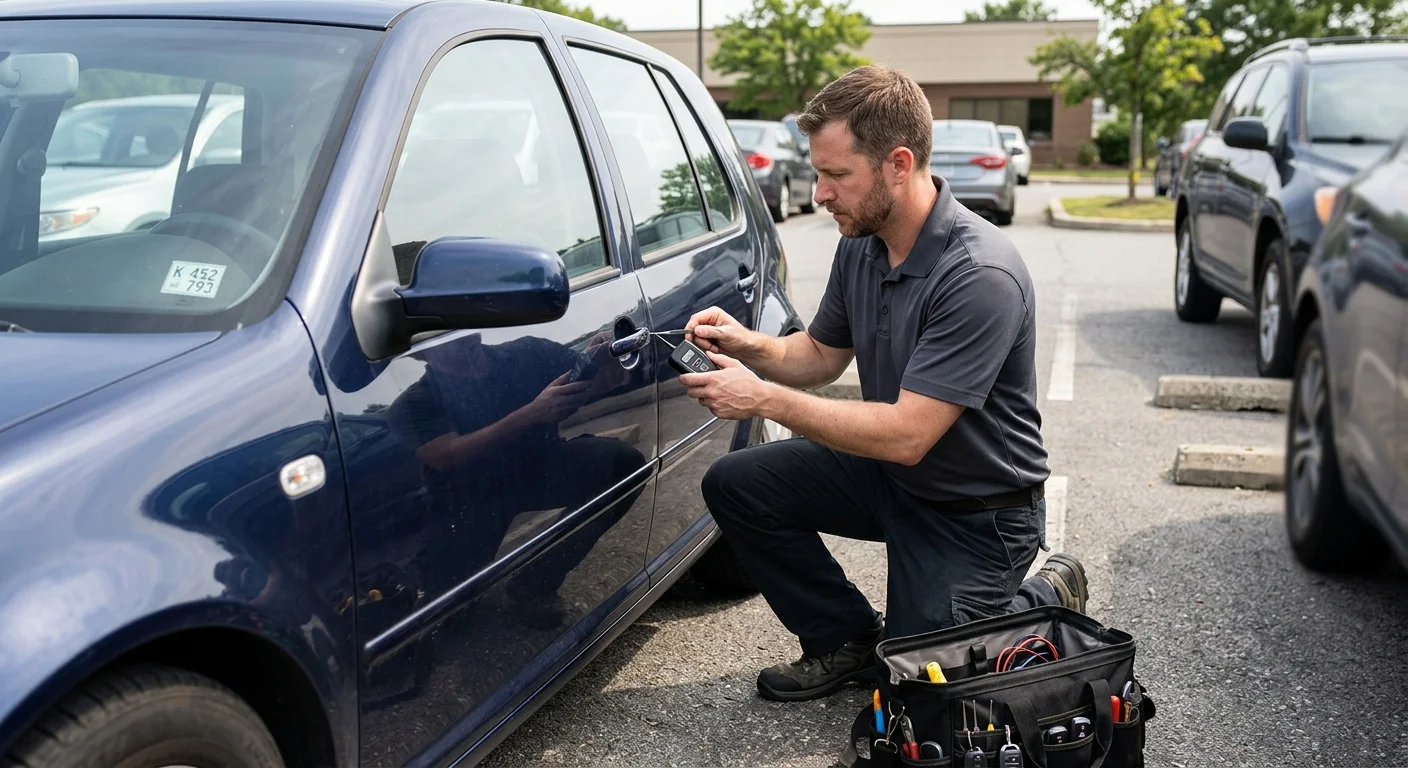
Problems a mobile car locksmith can assess
A mobile automotive locksmith may be a sensible first call when the vehicle can’t be accessed or the key no longer works. The independent locksmith still needs to confirm that the vehicle and problem fall within their scope.
Common reasons to seek help include:
- The keys are locked inside the passenger compartment.
- The keys are locked inside the trunk.
- Every working key has been lost.
- A key is bent, cracked, or otherwise damaged.
- A key has broken inside a lock or ignition.
- A door lock or ignition won’t accept or turn the key.
- An electronic key or operating device may need programming.
California’s legal definition of locksmith work includes opening locks, originating keys, and programming automotive keys. It also covers electronic operating devices used with doors and ignitions. That doesn’t mean every locksmith handles every make, model, or key system.
For keys locked inside, start with the car lockout service page. Our car lockout decision guide also explains what to do while arranging help. If no usable key remains, review the car key replacement service instead.
Location changes the practical details. A vehicle inside a Mission Valley garage presents different access conditions than one at a Chula Vista home. A car parked in Oceanside may have different nearby landmarks than one near I-5. Tell the provider exactly where the vehicle sits and whether access is restricted.
If anyone faces immediate danger, contact emergency services. Don’t treat a dangerous situation as a routine locksmith request.
What vehicle details to share before matching
Good information helps determine whether a specific automotive locksmith can assess the job. Start with the vehicle’s year, make, model, and trim, if known. Explain whether you have any working key.
Describe what happened in plain terms. “The key is inside the locked trunk” is more useful than “my key doesn’t work.” If the key is damaged, say whether part of it remains in the lock or ignition. If an electronic key has stopped working, explain what still works and what doesn’t.
You should also describe the key itself. It may be a traditional metal key, a key with buttons, a separate remote, or another electronic device. Don’t guess at the technical name. A clear description or photo may be enough for the matched locksmith to decide whether they handle it.
Share the vehicle’s setting within San Diego County. Include the city, nearby cross streets, lot or garage name, and parking level when relevant. Mention gates, garage clearance, valet control, military access, or property rules that could affect entry to the vehicle.
A search for “car locksmith near me” may return providers with different capabilities. Confirm these points before treating the match as complete:
- Does the locksmith work on that vehicle?
- Can they assess the specific lock or key problem?
- Do they need the vehicle identification number?
- What ownership documents should you have ready?
- Who will explain the price and work terms?
Swift Key San Diego matches callers with licensed, independent local locksmiths. We don’t perform the work, choose the repair method, or set the locksmith’s price.
When a dealer or roadside provider may be the better call
A mobile car locksmith isn’t automatically the right provider for every vehicle problem. The best choice is the one that confirms it can handle the exact vehicle and requested work.
A dealership may be the better call when the independent locksmith can’t confirm support for the vehicle. The same applies if the locksmith identifies a process that must go through the vehicle’s dealer. Ask the dealer what identification, ownership records, and vehicle access they require before making plans.
Roadside assistance may fit a basic lockout when that service appears in your membership, insurance, rental, or vehicle plan. Coverage and limits depend on the plan. Check your current documents or contact the plan administrator rather than assuming the service is included.
Roadside help may also be the clearer choice when the vehicle has a non-lock problem. A dead battery, flat tire, collision, or mechanical failure isn’t automatically a locksmith issue. If the key turns but the vehicle won’t operate, describe that distinction before requesting a locksmith.
Some situations can involve more than one provider. A locksmith may be able to assess a key problem without handling towing or mechanical work. A roadside provider may help with transportation without creating or programming a key. A dealer may support the vehicle but not solve the problem where it sits.
When searching for an “automotive locksmith near me,” ask about scope before authorizing anything. Don’t compare providers only by how quickly they claim they can appear. Confirm that the provider understands the vehicle, location, and requested service.
Why ownership details are requested
Opening a vehicle or creating a working key gives someone control over private property. The independent locksmith may therefore ask you to show that you’re authorized to access the vehicle.
There isn’t one document list that can be confirmed for every provider or situation. Ask the matched locksmith what they require. Possible documents may include a photo ID, vehicle registration, rental agreement, or written fleet authorization. The acceptable combination is for that locksmith to explain.
Tell the provider early if the names on your documents differ. This can happen with rentals, employer-owned vehicles, recently purchased vehicles, family cars, and estates. Don’t wait until work is about to begin to mention it. Ask what additional authorization the locksmith will accept.
Your identity check is separate from checking the locksmith. In California, BSIS regulates locksmith licensing. You can use the state Department of Consumer Affairs license search to check a locksmith company or employee registration. Search the information given by the provider and review the current result.
Swift Key San Diego doesn’t hold a locksmith license or perform locksmith work. The customer contracts with and pays the matched independent professional directly. Ask who will arrive, what company they represent, and which credential applies to the person doing the work.
Don’t send unrelated personal records without first knowing who will receive them. Ask how documents will be reviewed and whether they need to be retained.
What to confirm before authorizing work
Before work begins, make sure the independent locksmith has identified the vehicle and problem correctly. A lockout, lost key, damaged key, and programming request can lead to different scopes.
Start by confirming the provider’s name and current BSIS record. Then ask the locksmith to describe the proposed work in clear terms. If they can’t yet determine the method, ask what must be inspected before that decision can be made.
Price terms should come directly from the independent locksmith. Swift Key San Diego doesn’t set prices, collect payment for the work, or promise a particular rate. Ask what you would owe under the proposed scope and what could cause that amount to change. If the scope changes, pause and approve the revised terms before more work continues.
Also confirm:
- Which vehicle and key are covered by the authorization.
- Whether the locksmith supports that year, make, and model.
- Whether parts, programming, or additional work may be involved.
- What happens to any damaged or replaced key components.
- Which payment methods the independent provider accepts.
- Whether the provider offers written warranty terms.
- What record or receipt you’ll receive after payment.
Don’t assume a warranty applies. Swift Key San Diego doesn’t provide one. Any warranty must come from the independent locksmith and should be reviewed before relying on it.
Keep the focus on the service you requested. If a provider recommends unrelated work, ask why it’s needed and whether it can be declined. You can stop and reconsider before authorizing a changed scope.
When to call us
A vehicle lockout, lost last key, damaged key, or programming request is a reason to speak with a licensed locksmith pro. Call us at (858) 400-4082 and we’ll connect you with a licensed local locksmith.