A stuck car door lock can turn a simple errand into a major hassle. Whether you’re trying to get into your car for your morning commute or heading out for a day at Balboa Park, an unresponsive lock is frustrating. Before panic sets in, there are several things you can try right here in San Diego to get your door working again.
Is your car door lock stuck or jammed?
A car door lock stuck mid-cycle won’t turn with the key and may feel gritty or stiff. A car door lock jammed completely often has a frozen actuator or broken internal linkage, meaning neither the key nor the power button does anything. Both problems have different root causes, but the troubleshooting steps below cover both.
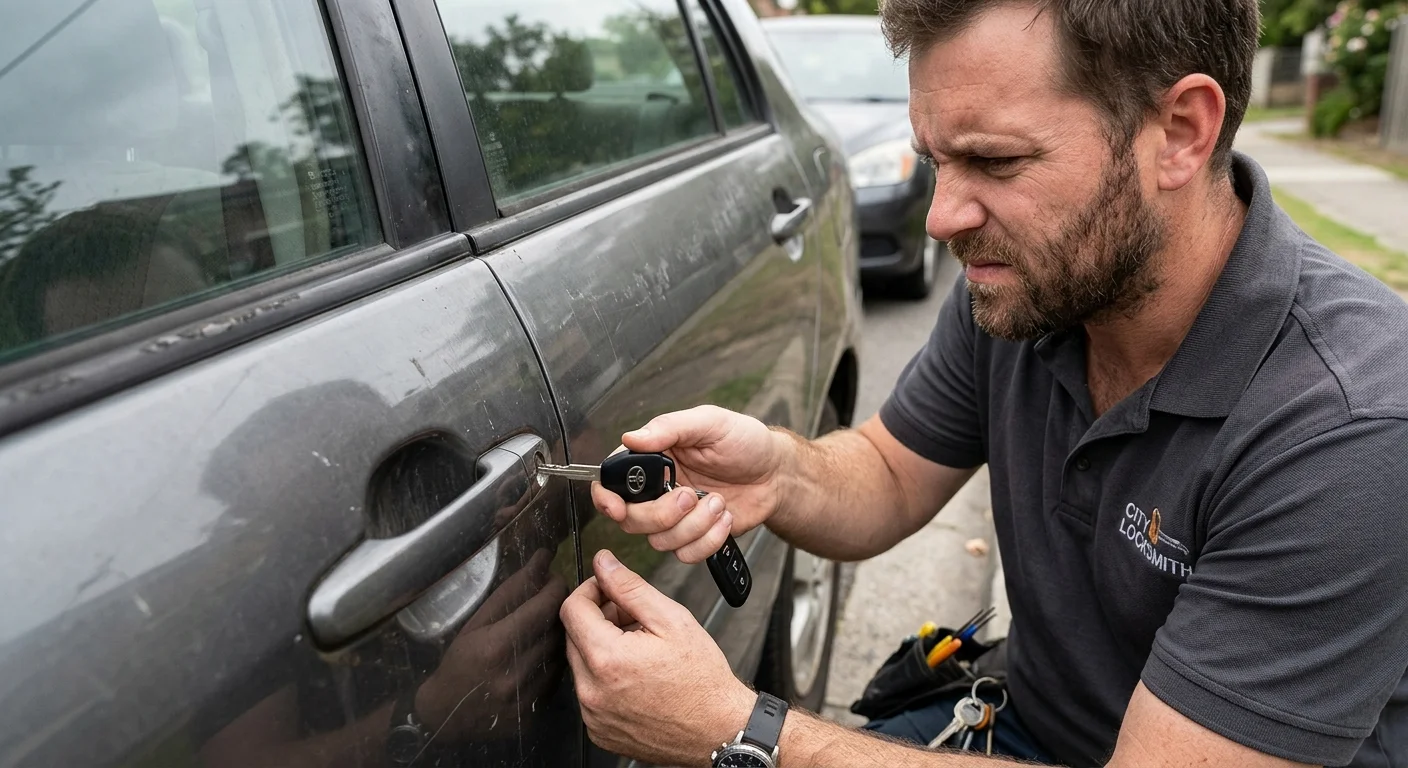
Why car door locks get stuck (common causes)
Your car door lock is a complex mechanism, prone to issues over time. Understanding common culprits helps diagnosis. One frequent cause is dirt and grime buildup. Over years, tiny particles of dust and debris accumulate inside the keyway or internal lock mechanism. This creates friction, making it difficult for the key to turn or the lock to engage. Given San Diego’s often dusty climate, environmental factors constantly expose your lock to fine particulates.
Another significant factor is general wear and tear. Constant use degrades metal components within the lock cylinder or internal linkage. Tumblers get worn, springs lose tension, or gears in the actuator strip. This is common in older vehicles as components reach their lifespan. Corrosion, though less common in our mild San Diego weather, can also play a role if water enters the lock assembly.
Beyond mechanical issues, electrical problems can cause a stuck car door lock, especially in modern vehicles with power locks and key fobs. A dead key fob battery is a prime example, preventing remote lock/unlock. Sometimes, it’s not the fob but the car’s electrical system, like a blown fuse or faulty wiring to the door lock actuator. These glitches can make the lock seem stuck when the real issue lies elsewhere, often a wiring fault. Don’t underestimate simple electrical faults causing frustrating lock problems.
What to try first: simple fixes with your key fob
Before assuming the worst, try several easy troubleshooting steps, especially if your car uses a key fob. The first and most common issue is a dead or dying key fob battery. If your fob isn’t working consistently, try replacing the battery first. Most key fobs use small coin-cell batteries, readily available at drugstores or electronics shops throughout San Diego. It’s a quick, inexpensive fix that often resolves the problem entirely.
Even with a dead fob battery, almost all modern vehicles have a manual key slot on the driver’s door handle. This is your backup. If the key fob isn’t working, physically insert your key and try to turn it to unlock the door. This manual turn can sometimes “reset” a sticky electronic mechanism or force a slightly jammed physical tumbler. Gently jiggle the key while turning, but avoid excessive force that could break the key. If your car key is worn, this might exacerbate the issue; you can find more information about car key replacement on our blog.
If the fob still isn’t responding after a battery change, and the manual key isn’t turning, try using the fob from different angles or closer to the car. Sometimes interference or a weak signal is the culprit. Check your owner’s manual for specific emergency unlock procedures. These simple steps often save you a service call and get you back on the road, whether you’re heading to La Jolla Shores or a Padres game.
Troubleshooting a manual lock that won’t turn
When your key fob isn’t the problem and you’re dealing with a mechanical lock that won’t turn, it’s time for direct intervention. The most common fix for a stiff or stuck manual lock is lubrication. Over time, internal components of the lock cylinder become dry and resistant to movement. Grab a can of graphite lubricant or a silicone-based spray (avoid oil-based lubricants as they attract more dirt). Gently spray a small amount directly into the keyway, being careful not to over-apply.
After applying lubricant, insert your car key and slowly try to turn it back and forth. Do this several times, wiggling the key gently, to help distribute the lubricant throughout the mechanism. You might feel resistance initially, but with patience, it often loosens up. If the key still won’t turn, remove it, spray a bit more, and repeat. Sometimes, a blast of compressed air into the keyway before lubrication can help clear loose debris. This often frees sticky tumblers or a corroded internal pin.
Also, inspect the condition of your key itself. A bent, worn, or damaged key can be the sole reason the lock isn’t working. Compare it to a spare key. If the original key looks compromised, using the spare might solve the issue immediately. If you only have one key and suspect it’s the problem, forcing it could break it off inside the lock, leading to a much more complicated repair. For problematic keys, it’s often best to consult an expert to accurately diagnose if it’s the key or the lock mechanism.
Is it the lock, the key, or the actuator?
Pinpointing the exact source of your stuck car door lock can be tricky, but understanding the main components helps. We’re primarily looking at three potential culprits: the lock cylinder, the key, or the door lock actuator.
The lock cylinder is where you insert your key. If your key goes in but won’t turn, or turns only partially, the problem likely lies within this cylinder. It could be worn tumblers, debris inside, or a broken internal component. If you see metal fragments or excessive wear on your key, and the lock feels gritty, the cylinder is a strong candidate. This often requires specialized tools and knowledge to repair or replace.
The key itself is often overlooked. As mentioned, a bent, worn, or improperly cut key won’t operate the lock smoothly. Trying a spare key is the quickest way to rule out your primary key as the issue. If the spare works perfectly, your main key is likely the problem, and you’ll need a new one cut and potentially programmed. Swift Key San Diego specializes in car key replacement and can provide you with a fresh, accurate key.
The door lock actuator electronically locks and unlocks your car doors via key fob or internal power lock button. If your power locks aren’t working on a specific door, but other doors lock and unlock fine, that door’s actuator is likely failing. You might hear a weak whirring sound or no sound at all. This internal component is located within the door panel and requires disassembly to access and replace. For most San Diego drivers, this isn’t a DIY job.
When to stop and call a professional locksmith
While simple troubleshooting is good, there’s a point where continuing DIY can do more harm than good. Knowing when to stop and call a professional is crucial for your car’s integrity and your wallet. If you’ve tried the basic fixes, replacing the key fob battery, lubricating the lock, checking your key for damage, and the door lock is still stubbornly stuck, it’s time to step back.
Forcing a key into a resistant lock or trying to jimmy the mechanism can easily break the key inside the cylinder, creating a much more complex and expensive problem. Similarly, attempting to pry open a door panel without the right tools and knowledge can damage clips, wiring, or the panel itself. These repairs often cost more than the original locksmith service would have.
A professional automotive locksmith has specialized diagnostic tools and equipment unavailable to the average car owner. They can accurately identify whether the issue is a faulty lock cylinder, a malfunctioning actuator, or a deeper electrical problem. They also have the specific parts and expertise to perform repairs or replacements cleanly and efficiently, often on-site. When you’re locked out of your car in San Diego, or your lock simply isn’t working, relying on a trusted local expert ensures the job gets done right without causing further damage. For immediate help, especially with a car lockout, a professional locksmith is your fastest and safest bet.
How a locksmith fixes stuck car locks across San Diego County
At Swift Key San Diego, we understand how inconvenient a stuck car door lock can be. That’s why we connect you with fast, reliable, professional automotive locksmiths throughout San Diego County. When you call us, our approach is always thorough and efficient.
The experienced locksmiths in our network arrive equipped with comprehensive diagnostic tools. They carefully inspect your car’s lock system, checking both mechanical and electronic components. This allows them to accurately pinpoint whether the problem is with the lock cylinder, internal linkage, door lock actuator, or the key itself. They don’t guess; they diagnose. If the lock cylinder is beyond repair due to wear or damage, they replace it with a new, matching cylinder re-keyed to your existing ignition key, ensuring smooth operation.
If the issue is electronic, like a faulty door lock actuator, the locksmith safely removes your door panel, replaces the component, and reassembles everything correctly. Locksmiths in our network use high-quality replacement parts for lasting repairs. If your key is the problem, broken, bent, or worn out, a locksmith can cut and program a brand-new car key on the spot, often faster and more affordably than a dealership. We connect you with mobile locksmiths who come directly to your location, whether you’re in North Park, downtown, or Chula Vista. Our goal is to get your car door working smoothly again, so you can get back to enjoying San Diego. Before hiring any locksmith, you can check their credentials at bsis.ca.gov.
Frequently asked questions
How much does it cost to fix a stuck car door lock in San Diego?
A stuck car door lock repair typically runs $85 to $175 in San Diego, depending on whether the fix is a lubrication and cylinder adjustment or a full actuator replacement. If the lock just needs lubrication and minor work, you’re on the lower end. Replacing a failed door lock actuator inside the door panel is more involved and costs $150 to $250, including parts and labor.
Can I use WD-40 on a stuck car door lock?
It’ll loosen the lock temporarily, but it’s not a good long-term fix. WD-40 is a solvent that leaves an oily residue, which attracts dirt and eventually makes the lock stickier than before. Use a dry graphite lubricant or a silicone-based spray instead. Both work inside the keyway without the buildup problem.
How do I know if it’s the key or the lock causing the problem?
Try a spare key if you have one. If the spare works normally, the original key is the issue, likely worn down or slightly bent. If neither key works, or if the power lock button also fails on that door while other doors work fine, the problem is mechanical or electrical inside the door itself. A mobile locksmith can diagnose both in a single visit.
How long does it take to replace a car door lock actuator?
Replacing a door lock actuator is a more involved job than a basic lock fix, and how long it takes depends on the vehicle. The technician needs to remove the door panel, disconnect the old actuator, and install and test the new one. Most mobile locksmiths carry common actuators for popular San Diego vehicles like Toyotas, Hondas, and Fords, so they usually have what’s needed without having to order parts.
Is a stuck car door lock covered by auto insurance?
Comprehensive coverage sometimes pays for lock repairs caused by vandalism or attempted theft. Standard mechanical wear is generally not covered. If the lock was damaged during a break-in attempt, file a police report first and then check with your insurer. A locksmith receipt documenting the cause of failure helps support the claim.
When to call us
When you’ve exhausted your DIY options or suspect a complex mechanical or electrical issue, it’s time to contact Swift Key San Diego. The expert automotive locksmiths in our network are ready to provide quick, reliable service for any stuck car door lock across San Diego County. Call us at (858) 400-4082 for an estimate.