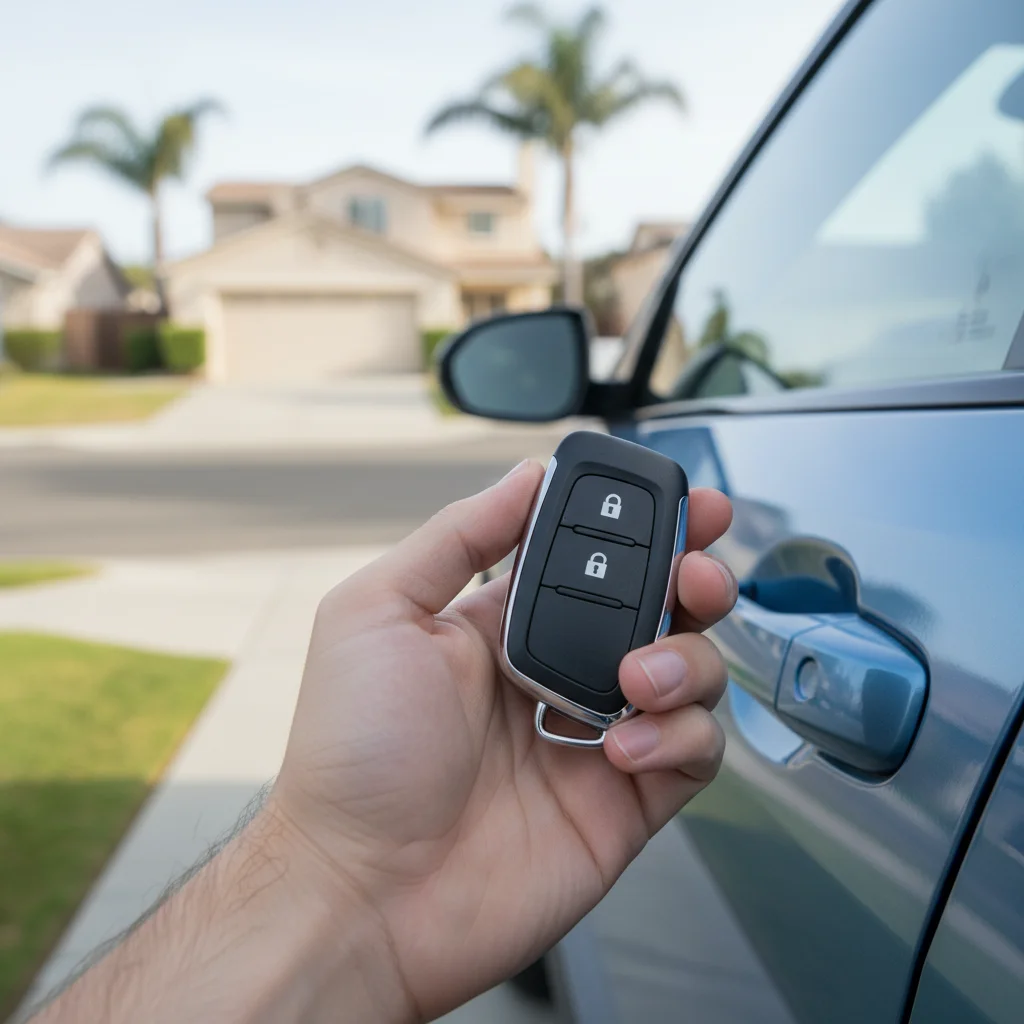
There’s nothing more frustrating than rushing out the door, pressing your car key fob, and getting no response. You’re stuck. Before panic sets in or you start searching for a new car dealer, take a deep breath. Many common key fob issues have surprisingly simple fixes you can try right from your San Diego driveway.
Quick checks: battery, range, and proximity
When your car remote isn’t working, the easiest and often most effective solution involves a quick check of the basics. Don’t underestimate these simple steps; they resolve the majority of key fob issues. First, consider the battery. Most modern key fobs use small coin-cell batteries, like a CR2032 or CR2016. These batteries typically last anywhere from two to four years, but heavy use or extreme temperatures, common in San Diego’s varied climate, can shorten their lifespan. If you’ve noticed the range decreasing over time, or if your fob has been completely dead, a new battery is likely the culprit. You can often open the fob casing with a small screwdriver or a coin, pop out the old battery, and insert a new one. Just make sure to note the battery type and orientation before you remove it.
Next, think about your distance from the car. While key fobs typically have a good range, various factors can interfere. Try moving closer to your vehicle, ideally within 10 to 20 feet. Sometimes, large buildings, power lines, or even other electronic devices can create interference, effectively blocking the signal between your fob and the car’s receiver. If you’re in a busy parking lot in downtown San Diego, try moving your car to a less congested spot. Also, consider the angle and any physical obstructions. If you’re trying to unlock your car from inside a building or if there’s a large metal object between you and your vehicle, the signal might not get through. A clear line of sight often helps. These small adjustments can save you a trip to the dealer or a call to a locksmith.
When it’s the fob vs. the car
Figuring out if the problem lies with your key fob or your car is a crucial diagnostic step. It helps narrow down the potential fixes and avoids unnecessary repairs. The first and most straightforward test is to grab your spare key fob. If you have a second key fob and it works perfectly, you’ve immediately confirmed the issue is with your primary fob, likely a dead battery, programming glitch, or internal damage. If both fobs are acting up, the problem points more strongly towards your vehicle.
Next, try manually locking or unlocking your car doors with the physical key blade usually hidden inside your fob. This simple act can rule out a dead car battery. If you can unlock the door manually, but the car won’t start or shows no response to the fob, then the car’s battery might be low, or there could be an issue with the vehicle’s immobilizer system. A completely dead car battery can prevent the remote locking system from receiving signals, even if the fob itself is working. Also, pay attention to any dashboard warning lights when you insert the key and turn the ignition. These lights can sometimes indicate a problem with the vehicle’s security system or engine, which might be preventing the key fob from interacting properly. Checking these basic car functions gives you valuable insight into whether your “key fob not working” is actually a symptom of a larger car problem.
Reprogramming basics for most vehicles
Sometimes, a key fob simply loses its connection with your car. This can happen after a battery replacement, a jump start, or even just random electronic interference. The good news is that many vehicles allow for a basic DIY reprogramming process. While the exact steps vary significantly by make, model, and year, the general principle involves a sequence of turning the ignition, opening and closing doors, and pressing buttons on the fob. For example, some common reprogramming methods might involve sitting in the driver’s seat, closing all doors, inserting the key into the ignition, and quickly cycling it from “Off” to “On” a specific number of times, then pressing a button on the fob within a short window.
Before you start, it’s essential to find the correct procedure for your specific car. You can often find these instructions in your vehicle’s owner’s manual, or with a quick online search for “[Your Car Make/Model/Year] key fob reprogramming instructions.” Be sure to follow the steps precisely, as even a small deviation can prevent the process from working. For some vehicles, you may need to have all key fobs present to reprogram them simultaneously. If you’re in San Diego and your car remote not working is due to a simple programming issue, these DIY steps can often save you a service call. However, if the process feels too complex or you’re unsure, it’s always best to consult a professional locksmith who specializes in key fob programming. They have the tools and expertise to handle a wide range of vehicles quickly and efficiently.
When the fob needs replacement, not repair
While many key fob issues are simple fixes like a battery change or reprogramming, some problems indicate deeper damage that makes repair impractical or impossible. If your key fob has suffered significant physical trauma, such as being run over by a car, dropping it repeatedly on hard surfaces, or getting crushed, its internal components likely have irreparable damage. Even if it looks okay from the outside, the delicate circuit board inside can crack or bend, severing crucial connections.
Water damage is another common culprit that often leads to total replacement. If your fob went through the washing machine, fell into the pool, or got soaked in a rainstorm, moisture can short-circuit the electronics and cause corrosion that permanently disables the device. While some attempt quick drying methods, the internal damage is frequently too extensive for a reliable repair. In these cases, even if you could fix it, the repair cost might outweigh the cost of a new unit. If your key fob isn’t responding after a battery replacement, thorough cleaning, and reprogramming attempts, it’s a strong sign that the internal electronics have failed. For San Diego residents facing a dead or damaged fob, recognizing when to replace rather than repair can save you time and frustration.
What a San Diego locksmith can do for you
When your key fob stops working and DIY fixes don’t cut it, a local San Diego locksmith is often your best and most convenient solution. Locksmiths in the Swift Key network specialize in vehicle security systems and can address a wide array of key fob problems on the spot. Their technicians carry advanced diagnostic tools that can quickly determine if the issue is with your key fob, the car’s receiver, or the immobilizer system. This precision means you don’t waste time on trial-and-error.
If it’s a battery issue, but the fob is difficult to open or requires a specific, hard-to-find battery, a locksmith in our network can handle the key fob battery replacement efficiently. More complexly, if your key fob has lost its programming or you have a new, unprogrammed fob, they have the specialized equipment to reprogram it for virtually any make and model of vehicle, including those with advanced transponder and smart key systems. They can also cut and program brand-new fobs if yours is lost, stolen, or damaged beyond repair. Unlike a dealership, locksmiths in our network offer mobile service, coming to your location anywhere in San Diego County and saving you the hassle and expense of towing your vehicle. Before hiring any locksmith, you can check their license status at the BSIS website (https://search.dca.ca.gov/).
Cost: dealer vs. local locksmith
When you need a new key fob or professional reprogramming, comparing the costs and convenience of a dealership versus a local locksmith can lead to significant savings. Dealerships often present themselves as the only option for complex car key issues, but that’s simply not true. While they certainly have the equipment, their pricing structure typically reflects higher overheads and less competition. This means a new key fob and programming from a dealer can often be substantially more expensive. They might also require you to schedule an appointment days or even weeks in advance and then bring your vehicle to their service center, adding inconvenience and potentially towing costs.
A local locksmith, on the other hand, usually offers a more cost-effective and convenient solution. Locksmiths specializing in automotive keys, including those in the Swift Key network, have invested in the same sophisticated programming equipment as dealerships, allowing them to handle the vast majority of car makes and models. The key difference is often their mobile service. Locksmiths in our network come directly to your home, office, or wherever your car is located in San Diego, eliminating the need for towing. This convenience, combined with generally lower labor rates and part markups, means you can often save a significant amount of money. For a deeper dive into these options, you might find our article on lost car keys: dealer vs. locksmith helpful. Choosing a local, certified locksmith not only supports a San Diego business but also gets you back on the road faster and for less money.
When to call us
If you’ve tried the simple fixes, changed the battery, checked your range, and attempted basic reprogramming, and your key fob is still giving you trouble, it’s time to call in the professionals. Persistent issues often indicate more complex problems like internal fob damage, an unresponsive car receiver, or issues with your vehicle’s immobilizer or transponder system that a simple battery swap can’t fix. For reliable help right here in San Diego, trust Swift Key San Diego to connect you with the right locksmith. The locksmiths in our network have the expertise and equipment to diagnose and resolve even the trickiest key fob dilemmas. Call us at (858) 400-4082 for an estimate.
Frequently asked questions
Why is my car key fob not working?
A dead or weak battery is the cause in the majority of cases. CR2032 and CR2016 coin cells typically last 2-4 years; heat and heavy use shorten that. If a fresh battery doesn’t fix it, the fob may have lost its programming after a battery swap or jump start, or the internal circuit board may have been damaged by water or impact.
How much does it cost to fix a key fob?
A battery replacement runs about $5-$10 for the cell itself, or around $20 if a locksmith does it on-site. Reprogramming a fob that’s lost its sync costs $75-$250 depending on the vehicle. A full fob replacement with programming runs $150-$450 for most makes; luxury vehicles can run higher. A local locksmith is typically 30-50% less than a dealership for the same job.
Can I reprogram my key fob myself?
Some older vehicles allow a DIY sync sequence using the ignition and door switches, but this only restores the remote lock/unlock functions, not the transponder chip that starts the engine. Modern push-to-start systems need dealer-level OBD-II tools to program. Attempting it without the right equipment can sometimes deprogram your other keys.
Is it my fob or my car causing the problem?
Test with your spare fob. If the spare works, the problem is isolated to your primary fob. If both fobs fail, the issue is likely with the car, either a dead car battery preventing the receiver from responding, a failing antenna module, or an immobilizer fault. You can also try manually unlocking with the physical key blade hidden inside the fob to rule out a dead car battery.
How long does key fob repair or replacement take with a locksmith?
A battery swap is one of the quickest jobs a locksmith handles on-site. Reprogramming a fob that lost its sync takes a bit more time. A full replacement, where the locksmith supplies a new fob, cuts the blade, and programs the transponder, is the most involved of the three. Mobile service means the tech comes to your location anywhere in San Diego, so there’s no tow or dealership wait involved.