When a key opens your car but the engine won’t start, access and start authorization may be failing at different points. Don’t force the key or order a replacement from that single symptom. A working spare, the vehicle’s messages, and a compatibility check can narrow the next step.
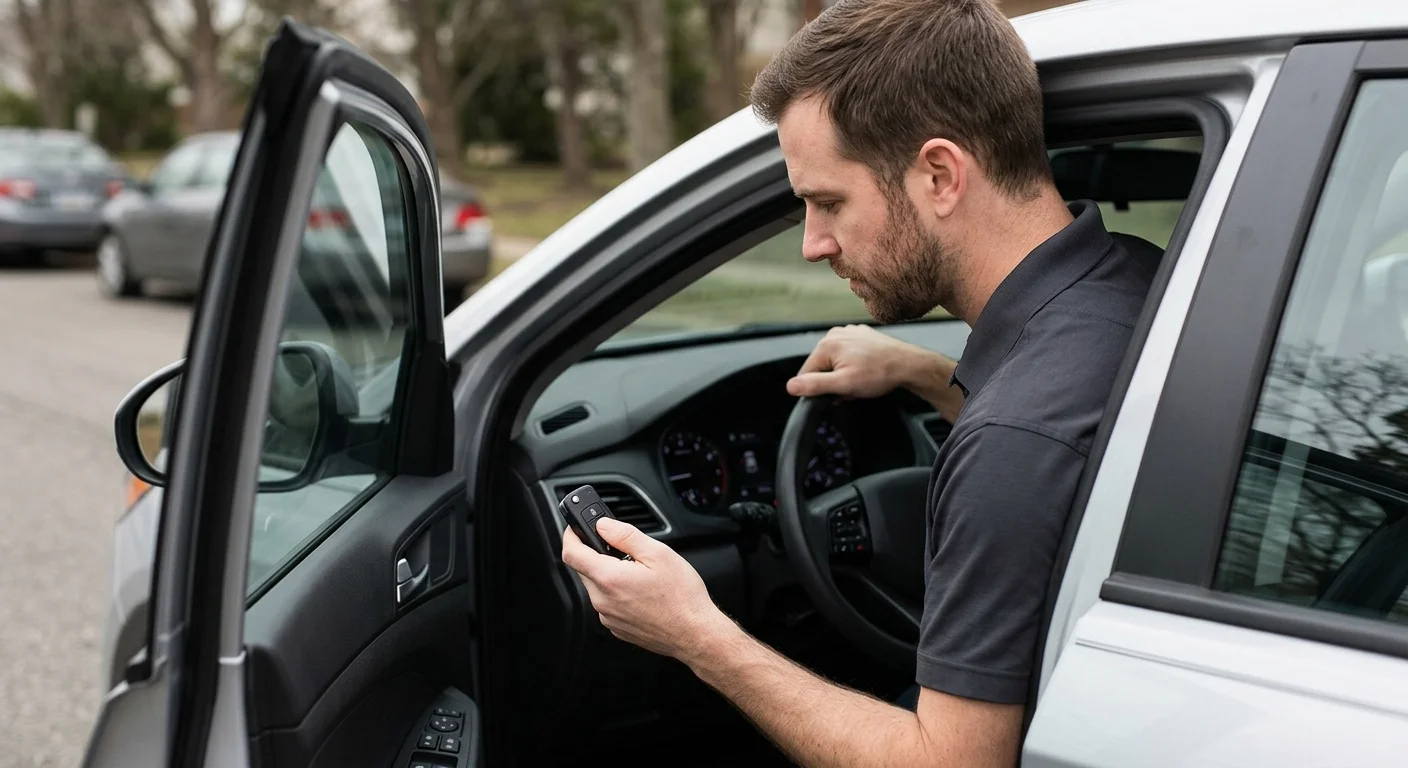
Confirm which key functions still work
Start by separating each function instead of saying the key is broken. Car key repair isn’t one fixed service. The useful details are what the key does, what it doesn’t do, and how the vehicle responds.
First, note how you unlocked the door. Did you turn a physical blade in the lock? Did a remote button unlock it? Did the vehicle respond when you touched the handle? These are different observations, even when each one ends with an open door.
Next, check the starting steps without forcing anything. Record whether the key enters the ignition, whether it turns, and whether the dashboard responds. For a push-button vehicle, note what happens when you follow the starting instructions in the owner’s manual. Copy any displayed message exactly. Don’t translate it into your own diagnosis.
Also check only the functions your key normally supports. Those may include lock, unlock, trunk access, or a removable physical blade. A cracked case, loose button, or missing piece is worth reporting. It still doesn’t confirm which service the vehicle needs.
This distinction matters across San Diego County. A caller in Oceanside, City Heights, El Cajon, or Chula Vista should be able to give the same clear summary: which key was used, how the door opened, and what happened during the start attempt.
That summary gives a locksmith or dealer something specific to evaluate. It also prevents a door-access problem from being confused with a starting problem.
Separate blade fit from electronic recognition
A key can have a physical function and an electronic function. The physical blade may fit a door or ignition. Modern vehicles can also use an electronic key system that requires programming. One working function doesn’t confirm that every other function is supported.
That explains why “the key opens the door” isn’t a complete diagnosis. It confirms access in that moment. It doesn’t prove that the vehicle accepted the key for starting. It also doesn’t tell you whether the key, ignition, vehicle, or another component needs attention.
Pay close attention to the physical starting action. If the blade enters the ignition but won’t turn, don’t treat that as confirmed electronic trouble. Our guide to a car key that won’t turn in the ignition covers the observations to make before requesting service.
If the key turns but the vehicle doesn’t start, report that exact sequence. The same applies when a push-button vehicle responds differently from its normal behavior. A provider needs the precise behavior before confirming compatibility or proposing work.
Key names can add confusion. A key may be described as a transponder key, remote key, smart key, or fob. Appearance alone isn’t enough for a remote diagnosis. Our comparison of a transponder key and smart key explains the practical questions to ask without guessing your vehicle’s system.
Use the current owner’s manual for model-specific instructions and message definitions. The manufacturer documentation for your exact vehicle should control those details. A matched locksmith or dealer must confirm the correct key type and supported procedure.
Check a working spare and vehicle messages
A working spare gives the provider a useful comparison. If you have one, use it only as the vehicle’s manual directs. Record whether it unlocks the door, operates its usual remote functions, and starts the vehicle.
Don’t turn that result into a final diagnosis. If the spare starts the vehicle, tell the provider that the spare worked while the other key didn’t. That comparison is more useful than saying the first key has a bad chip, battery, blade, or fob. None of those causes can be confirmed from the door-opening result alone.
If neither key starts the vehicle, report that too. The result doesn’t automatically prove both keys failed. It tells the provider that the issue wasn’t isolated through the spare-key comparison.
Vehicle messages deserve the same careful treatment. Write down the exact wording, symbols, or light behavior you see. Note whether the message appeared before the start attempt, during it, or afterward. Don’t rely on a remembered paraphrase if you can safely record the display.
Gather the vehicle’s year, make, model, and trim as shown in its documents. Share whether the key uses a blade, buttons, push-button starting, or another arrangement. Don’t assume two vehicles from the same manufacturer accept the same key or procedure. Current manufacturer documentation should confirm every model-specific statement.
This information helps a provider evaluate a possible car key recognition problem without pretending to diagnose it remotely. It also reduces the chance of discussing key fob programming when the provider hasn’t confirmed that programming is the required service.
Compare locksmith and dealer compatibility
An independent automotive locksmith and a dealership aren’t interchangeable for every vehicle. Neither option should be selected from the symptom alone. Ask each provider to confirm support for the exact year, make, model, trim, and key type.
Start with a direct compatibility question. Describe what works, what fails, and what the spare did. Then ask whether the provider can evaluate the existing key, supply a compatible key if needed, and verify every supported function afterward. Don’t accept a generic answer that ignores your vehicle details.
California regulates locksmith work through the Bureau of Security and Investigative Services. The state’s definition of locksmith work includes electronic programming of automotive keys. You can check a locksmith company or employee through the California Department of Consumer Affairs license search.
Swift Key San Diego is a referral service. We match callers with licensed, independent local locksmith professionals. We don’t perform repairs, employ technicians, hold a locksmith license, set the professional’s price, or provide a warranty. You contract with and pay the matched professional directly.
If you’re comparing providers, confirm the current charge before authorizing work. No verified market rate for this exact problem is available in our approved sources. The locksmith or dealer sets the price based on the vehicle and proposed service.
Ask what information is needed before the visit. Also ask what happens if the existing key can’t be supported. A provider should confirm those details for your vehicle rather than apply a broad rule.
If replacement becomes the recommended path, review our car key replacement service page. The matched professional still confirms compatibility and performs the work.
Verify every supported function after service
Don’t treat one successful button press as complete verification. Test every function the provider says the serviced key supports. Do this before considering the car key repair finished.
Begin with door access. Check the driver’s door and any other access method included with the key. If the key has remote buttons, test each supported button. If it includes a removable blade, confirm that the blade fits and performs its intended function.
Then test the starting sequence exactly as the vehicle’s manual describes. For a keyed ignition, confirm the key inserts, turns, and starts the vehicle. For a push-button system, follow the manufacturer’s instructions and confirm the normal response. Don’t add unsupported tests or assume an unfamiliar message is harmless.
Check a trunk or hatch function only when the key and vehicle support it. The same rule applies to passive entry or other model-specific features. The provider should identify which functions are included, so the verification matches the work performed.
Test any spare keys you plan to keep. Report if an existing spare behaves differently after service. That observation needs professional review, not a remote guess about what changed.
Ask for a clear description of the completed work. Was the existing key serviced, was another key supplied, or was programming performed? Keep the provider’s paperwork with your vehicle records. Any warranty terms must come directly from that independent provider because Swift Key San Diego doesn’t issue warranties.
Finally, repeat the original scenario. Unlock the vehicle using the method that worked before, then follow the proper starting sequence. The service should address the agreed problem while preserving every supported function the provider confirmed.
When to call us
Call when a key still unlocks the vehicle but won’t start it, especially when spare-key results or vehicle messages need professional review. A licensed local locksmith can confirm vehicle compatibility and determine whether key service is appropriate. Call us at (858) 400-4082 and we’ll connect you with a licensed local locksmith.