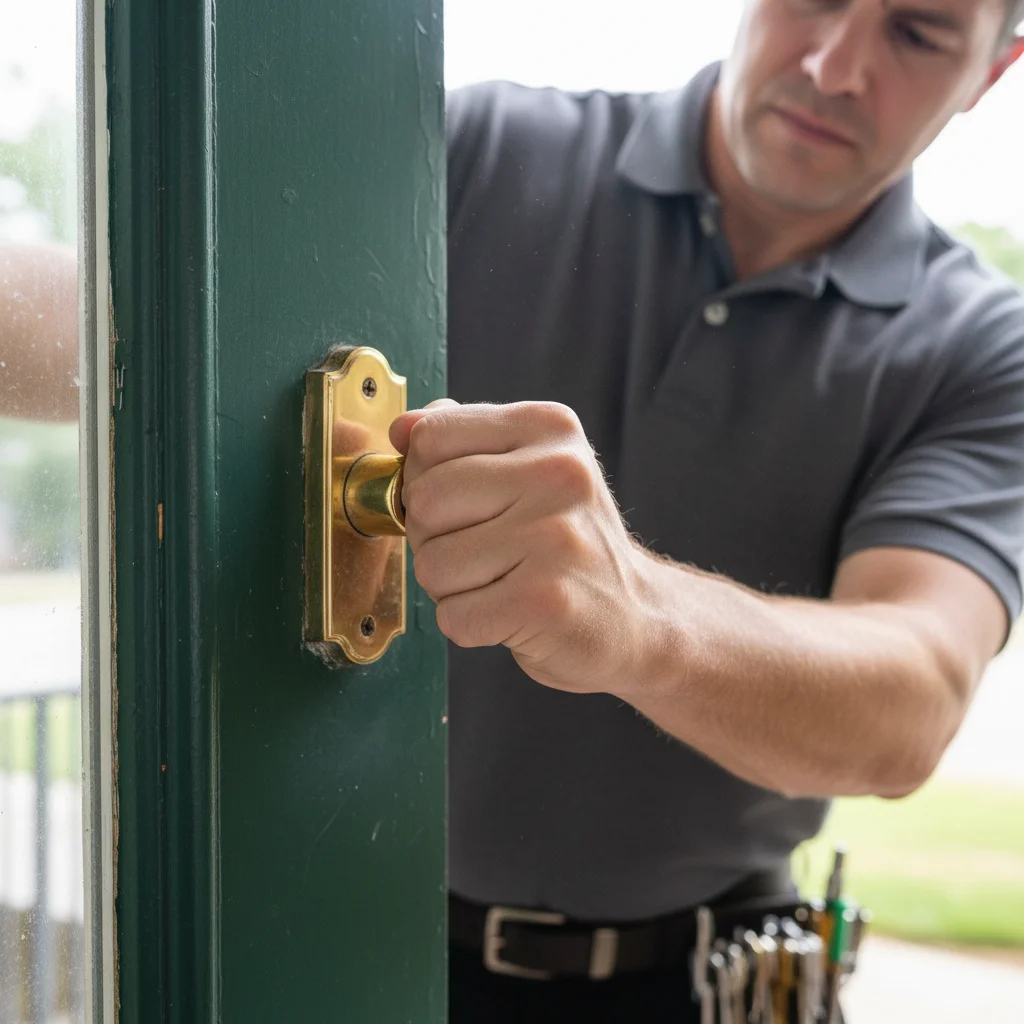
You go to lock up for the night, turn the key or thumbturn, and… nothing. The deadbolt is stuck, grinding to a halt before it can fully engage. A deadbolt that won’t lock is more than an annoyance; it’s a security risk.
Before you assume the lock is broken and start searching for a locksmith, take a deep breath. Many common deadbolt problems are caused by simple issues you can diagnose and fix yourself. We’ll walk you through the most common culprits, from simple alignment to proper lubrication.
Check the strike plate alignment first
The most frequent reason a deadbolt won’t lock is a simple misalignment between the bolt and the strike plate. The strike plate is the metal plate on your door frame with a hole where the deadbolt slides in. If they aren’t perfectly lined up, the bolt will hit the frame instead of sliding home.
Here’s a quick test to confirm if alignment is the problem:
- Open the door completely.
- Try to lock and unlock the deadbolt with the door open.
If the bolt extends and retracts smoothly while the door is open, you’ve found your culprit. The problem isn’t the lock itself; it’s the alignment.
To fix it, you need to see exactly where the bolt is hitting. You can rub some lipstick or chalk on the end of the bolt, then try to lock it. The color will transfer to the strike plate, showing you whether it’s hitting high, low, or to one side.
Filing the strike is optional DIY. Enlarging the opening can hide the original fit, which makes a later inspection harder. If you still want to try it, use a small metal file or a rotary tool and take off only a little metal where the bolt is making contact. Test it frequently so you don’t remove too much. If you would rather leave the strike alone, stop after the lipstick or chalk mark and have a locksmith look at the door.
For a more significant gap, you may need to reposition the strike plate. Unscrew it, fill the old screw holes with wood putty or a few toothpicks and wood glue, and let it dry. Then, hold the plate in the correct position and drill new pilot holes before reattaching it.
Door sag and seasonal swelling
So what causes a perfectly good door to become misaligned? In San Diego, two factors are usually at play: the slow pull of gravity and the subtle shifts from our coastal climate.
Door Sag: Over time, the weight of a door can pull on its hinges, causing it to sag. This is especially common with heavy, solid-core doors. The first place to check is the top hinge. Open the door and see if the screws are loose. Often, simply tightening all the hinge screws on both the door and the frame is enough to lift the door back into alignment.
If tightening doesn’t work, try the old carpenter’s trick. Remove one of the screws from the top hinge on the frame side, one of the ones closer to the center of the door jamb. Replace it with a 3-inch screw. This longer screw will bite into the solid wood of the wall stud behind the frame, pulling the whole jamb tighter and slightly lifting the door. It’s a surprisingly effective fix for a deadbolt hard to turn.
Seasonal Swelling: Wood doors are porous and react to changes in humidity. Here in San Diego County, the swing from dry Santa Ana winds to the damp air of “May Gray” and “June Gloom” can cause wooden doors and frames to swell and shrink. This movement is often just a millimeter or two, but it’s enough to throw off the precise alignment a deadbolt needs. If your deadbolt stuck issue only seems to happen during certain times of the year, this is likely the cause. The fix is the same as above, adjusting the strike plate to accommodate the door’s new position.
Lubrication: what to use and what not to
If your deadbolt works smoothly when the door is open, alignment is the problem. But if the key is hard to turn or the thumbturn feels gritty even with the door open, the issue is likely inside the lock mechanism itself. Your first instinct might be to grab a can of WD-40, but please don’t.
WD-40 is a solvent and water displacer, not a true lubricant. It can provide a temporary fix, but it leaves behind a sticky residue that attracts dust, dirt, and grime. Over time, this mixture creates a thick sludge that will gum up the delicate pins and springs inside your lock, making the problem much worse.
Instead, you need a lubricant designed for locks. The two best options are:
- Dry Graphite Powder: This is the classic locksmith’s choice. It’s a fine powder that coats the internal components without attracting dirt. To apply, just puff a small amount directly into the keyway.
- PTFE-Based Lubricant: This is a modern, clean alternative. PTFE (the generic term for Teflon) is an extremely slick material suspended in a spray that evaporates, leaving a dry film behind. Look for a product specifically marketed for locks.
To apply either lubricant, insert the nozzle or tube into the keyway and give it a short puff or spray. Then, insert your key all the way and work it in and out several times to spread the lubricant. Turn the key back and forth to work it into the cylinder. Wipe any excess off your key. This simple maintenance can solve many issues where a deadbolt won't lock due to internal friction.
Worn-out cylinder vs. a mechanical bind
After trying the steps above, you should have a good idea of what’s going on. It’s important to distinguish between a mechanical bind and a worn-out lock cylinder, because the solutions are very different.
A mechanical bind is an external problem. It means the lock itself is fine, but something is physically blocking the bolt from moving. This is almost always an alignment issue caused by door sag or swelling. The key symptom is that the lock works perfectly when the door is open. This is a problem you can usually fix with the adjustments we’ve discussed.
A worn-out cylinder is an internal problem. The pins, springs, and other components inside the lock have worn down from years of use. Symptoms of a failing cylinder include:
- The key feels loose or “wobbly” inside the keyway.
- You have to jiggle the key to get it to turn.
- The lock feels gritty or catches internally, even with the door open and after lubrication.
- The key is difficult to insert or remove.
If you’re experiencing these issues, no amount of alignment or lubrication will solve the problem. The lock mechanism itself has reached the end of its life. At this point, you’re looking at a professional deadbolt repair or, more commonly, a full replacement.
When repair beats replacement
Once you’ve determined the lock itself is the issue, you have two paths: repair or replace.
A repair might be possible if a single component has failed, but for most standard residential deadbolts, it’s not cost-effective. Labor costs can quickly approach the price of a brand new, higher-quality lock.
Replacement is usually the better option, especially if:
- The lock is worn: If lubrication did not help and the key still feels loose or gritty with the door open, the cylinder itself is the issue.
- The finish is corroded: In coastal San Diego communities, salt air can corrode lock finishes and internal mechanisms.
- You want different hardware: A worn lock is a chance to pick a stronger bolt and a better strike, not a reason to reuse the same bind.
If you decide to replace, a lock replacement visit is how you get new hardware on this door. A locksmith handling deadbolt installation can check that the new bolt actually meets this strike. That is an inspection of fit, not a guarantee.
Frequently asked questions
How much does deadbolt repair or replacement cost in San Diego?
A professional deadbolt adjustment or alignment fix, tightening hinges and checking the strike, is usually billed as part of a service call. A full deadbolt installation with new hardware follows the hardware you pick. Higher-security cylinders sit on the heavier end. Builder-grade hardware sits on the lighter end. Ask for adjustment versus new hardware as separate lines.
Can a door swell so much that the deadbolt genuinely won’t fit?
Yes. A wood door that has absorbed moisture during San Diego’s June Gloom season can expand enough to prevent the bolt from reaching the strike plate hole. The fix is usually to adjust the strike plate rather than replace the lock. If the swelling is severe, a carpenter may need to plane a small amount off the door edge. Deadbolt problems that appear in late spring or early fall in coastal neighborhoods are often seasonal swelling rather than a lock failure.
How do I know if my deadbolt needs lubrication or replacement?
Lubrication is the right first step if the key turns stiffly or the thumbturn feels gritty but the mechanism still works with effort. Replacement is the better call if the key feels loose or wobbly in the keyway, or you have to jiggle it to get it to engage. Lubrication fixes friction; it can’t fix worn-out pins and springs.
What’s the difference between a Grade 1 and Grade 2 deadbolt?
Ask the locksmith what grade the bolt is and what that means for this door. How to choose a Grade 1 deadbolt is a question list for that conversation, not a rating this page assigns. For a San Diego home near the coast, salt air is a reason to ask about finish and hardware quality.
Can a locksmith fix a deadbolt without a separate hardware trip?
Often, yes. Independent locksmiths typically carry common deadbolt hardware and cylinder components, so a straightforward adjustment can usually be handled in the same visit. If a specific lock you’ve already purchased needs to be installed, or if you want to review options first, a follow-up visit can be arranged.
When to call us
You’ve tightened the hinges, checked the strike plate, and properly lubricated the cylinder, but your deadbolt still won’t lock. If you’ve reached the end of your DIY troubleshooting and the problem persists, call a professional. A stubborn lock could have an internal mechanical failure.
A bolt that will not move is a different fault from a thumbturn that spins with no resistance at all, which points at a broken tailpiece: see a deadbolt that spins freely. Forcing a stuck lock can cause more damage, potentially breaking the key off in the cylinder or damaging your door frame. Swift Key San Diego is a referral service. We connect you with locksmiths across San Diego County. The matched locksmith inspects the door, names what they found, and quotes repair or replacement. Before hiring any locksmith, you can verify their license on the California BSIS website.
Call (858) 400-4082 to connect with a licensed independent locksmith. That locksmith quotes. Swift Key does not quote.