An electromagnetic lock on a San Diego storefront is a magnet on the header and an armature on the door. Power holds the door. Power loss is the question that gets people in trouble. This page is that hardware conversation. Swift Key San Diego is a referral service. We match you with licensed independent locksmiths. We do not install maglocks, wire panels, or inspect fire doors. The matched commercial locksmith works the lock hardware. The building owner, the fire inspector, and the listed hardware decide what is legal on that opening.
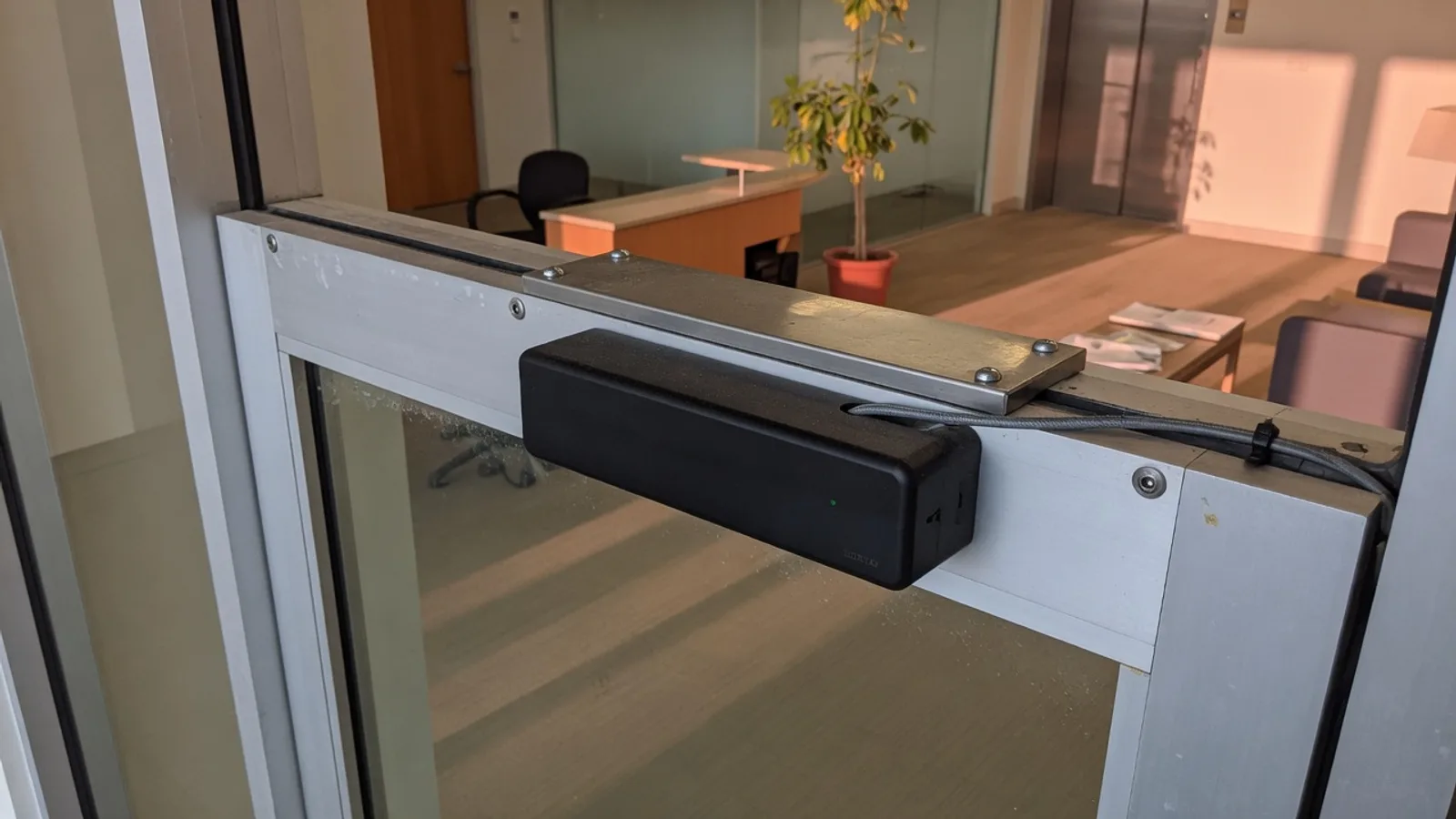
Magnet, armature, and power
A maglock is not a deadbolt. There is no latch to throw. A coil in the housing creates a magnetic field. The armature plate on the door sticks to it while current flows. Release the current and the door can open. That is why glass aluminum storefronts in Rancho Bernardo, Sorrento Valley, and Downtown medical suites use them: the door is glass, the frame is thin, and a reader on the mullion already controls power.
Name the failure. The magnet holds after hours when it should have released. The magnet never holds. The reader beeps and the door stays stuck. The override key in the cylinder next to it will not turn. The door opens when the fire alarm tests, or it does not. Those are different jobs. Some live at the lock. Some live at the panel, the power supply, or the alarm contractor.
Our Rancho Bernardo access control note already flags maglocks on campus offices. This page is the county-wide hardware primer: what the magnet is, how it fails, and who owns the fire question. For readers and credentials, keep the access control systems guide next to this one.
Fail-safe versus fail-secure is the sentence to get in writing. A typical maglock is fail-safe: lose power, lose the hold, the door can open. That is the usual life-safety pattern on an egress door. Fail-secure hardware stays locked without power. Mixing those words on a glass exit is how a Monday fire-alarm test turns into a locked lobby. Do not take a vendor’s nickname for it. Ask whether this opening releases on power loss, and confirm that against the hardware listing and the fire inspector for that occupancy.
Swift Key San Diego does not publish fire-code section numbers from memory. The listed hardware, the occupancy, and the local fire inspector are the sources. If the matched locksmith or the building engineer cannot name those, stop the install.
What a locksmith can touch, and what they cannot claim
California Business and Professions Code section 6980(j) defines a locksmith. The work includes installing, repairing, opening, and modifying locks, and programming of electronic operating devices such as door devices. That is the legal box. It is not a promise that every independent locksmith wires every maglock brand, sets every timer, or warranties a reader on West Bernardo Drive.
Split the job on paper before anyone opens a ceiling tile:
- Lock hardware at the door: magnet, armature, housing, alignment, the mechanical override cylinder if one exists.
- Power and request-to-exit: transformer, backup, motion sensor, crash bar release.
- Panel and credentials: badge software, schedules, who is in the list.
- Fire alarm interface: who listed it, who last tested it.
A commercial locksmith is the trade for the first bullet. The second and third often involve the access-control vendor or the electrician. The fourth is the fire alarm contractor and the inspector. Swift Key San Diego matches locksmiths. We do not send electricians or fire inspectors, and we do not claim the brand performs licensed installation.
Ask who owns the door. In a multi-tenant glass building, the landlord often owns the maglock and the reader. Each suite thinks the fob list is theirs. That split is why a Monday failure turns into a two-hour argument before anyone touches a screw. Get the owner or the property manager on the call.
Price talk belongs in a written quote from the person doing the work. Swift Key San Diego does not set prices, waive fees, or publish a maglock menu. Ask the locksmith to line-item diagnosis at the door, hardware replacement if they will do it, and what they will not touch.
Check the company on the state’s license search. Ask to see the pocket license. The matched pro invoices you directly. Swift Key San Diego does not collect that payment and does not hold a locksmith license.
Inland heat and dust punish these openings. West-facing glass along I-15 cooks housings. Fine dirt works into the gap between magnet and armature until the hold feels weak. Coastal salt in Mission Valley and Downtown is a different kind of corrosion. Those are conditions. They are not a diagnosis.
What to have ready on the call
Photograph the header, the magnet, the armature, the reader, and any override cylinder. Note whether the door is an egress door, a lobby door, or an interior suite door. Name the building, the suite, and the person who can authorize work. If a fire-alarm test is scheduled this week, say so.
Describe the failure in one sentence. “Magnet holds after the schedule should have released it.” “Reader beeps, door never releases.” “Alarm test, door stayed locked.” Those lines tell the locksmith whether to bring alignment tools or to stop and call the alarm vendor.
Ask who is coming: a BSIS-licensed locksmith employee, and which company name will be on the receipt. Stay until the door releases the way the quote described, and until someone on the fire-safety side has been named if this is an egress opening.
If the honest answer is “this is a fire-listed opening and I will not touch it without the inspector,” that is a good answer. Take it.
When to call us
Call when a San Diego maglock will not release, will not hold, or you need a licensed commercial locksmith to look at the hardware on the door. Swift Key San Diego matches you with licensed independent locksmiths who do that work. Call us at (858) 400-4082 and we’ll connect you with a licensed local locksmith.