A commercial locksmith in San Diego handles business locks, keys, door hardware, lockouts, and access planning. The right scope depends on your doors, occupants, and operating needs. That might mean one storefront, an office suite, or several county locations.
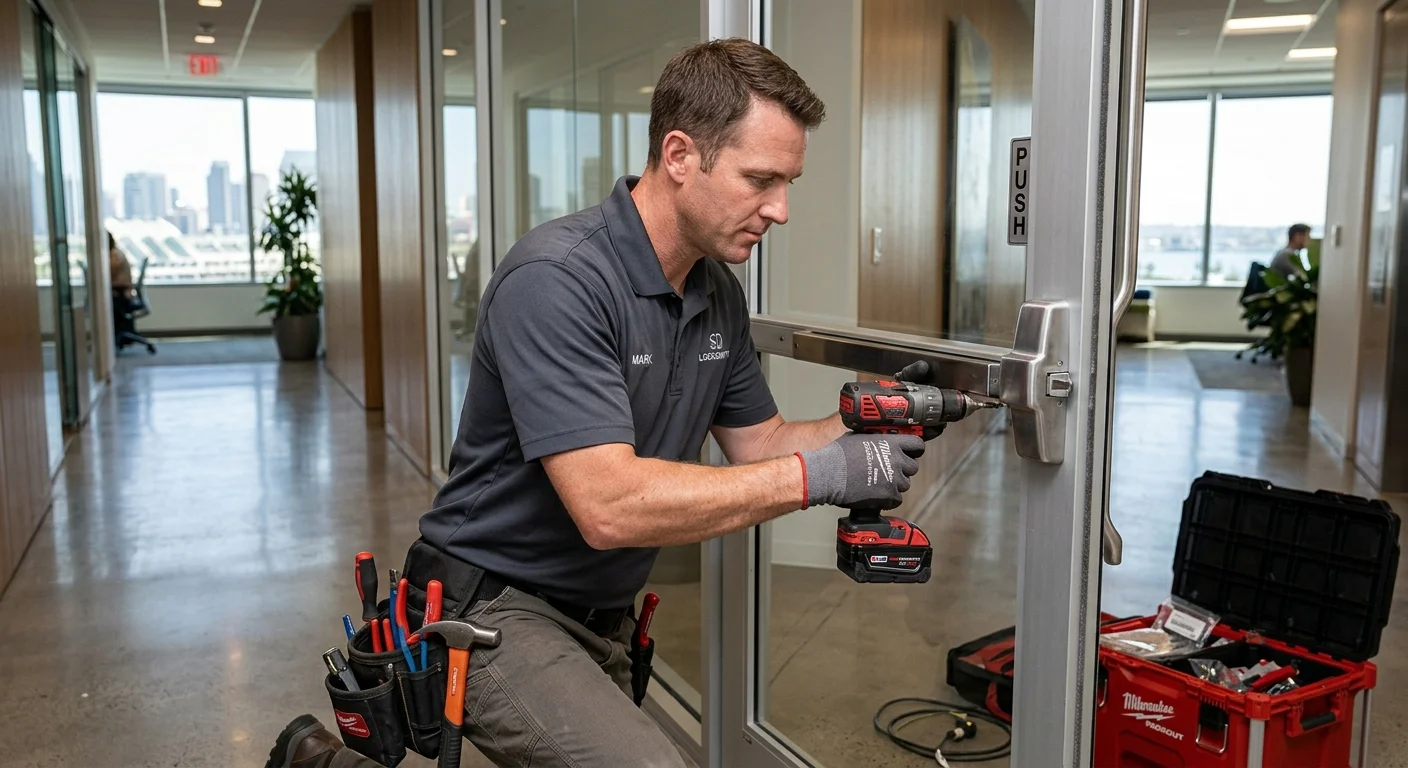
It’s more than just locks and keys
Commercial locksmith work starts with how people use a property. A business may have public entrances, staff doors, stockrooms, offices, gates, and shared spaces. Each opening can serve a different group. A Downtown office suite needs a different plan than a Miramar warehouse or Chula Vista storefront.
California’s legal definition of locksmith work includes rekeying, installing, repairing, opening, and modifying locks. It also includes originating keys for locks. That broad definition helps explain why commercial work can extend beyond copying keys.
A locksmith can inspect existing locks and discuss who needs access. The conversation should also cover employee turnover, vendor access, lost keys, and future tenant changes. Door condition matters too. A lock recommendation won’t address every problem if the door, frame, latch, or closer also needs attention.
Before approving work, define the immediate problem and the desired result. A lockout needs a different approach than planning access across several departments. A damaged storefront door also differs from changing access after a manager leaves.
Our commercial locksmith referral service connects San Diego County businesses with licensed, independent local professionals. Swift Key San Diego doesn’t perform the work, hold a locksmith license, or set prices. You’ll discuss the scope, price, and work terms directly with the matched locksmith.
Master key systems and access control
A master key plan organizes which keys open selected doors. The goal isn’t simply giving one person access everywhere. It’s creating a clear permission structure based on actual job duties.
Start by listing every controlled opening. Then identify the people who need each one. An owner might need broad access, while a vendor only needs a service entrance. Supervisors may need offices and storage areas without accessing every room. Document those decisions before hardware changes begin.
Our guide to master key systems for businesses explains the planning questions in more detail. A locksmith can review the current cylinders and discuss whether the requested key structure fits the existing hardware. Avoid ordering keys or cylinders before that review. Compatibility and condition need to be assessed at the property.
Electronic access control replaces or supplements certain physical keys with managed credentials. Depending on the selected system, credentials might include cards, key fobs, keypads, or mobile access. Ask how administrators add and remove users. Also ask what records are available, who controls the account, and what happens during a power or network problem.
San Diego businesses with multiple locations should plan each site together. A company with offices in Kearny Mesa and Chula Vista may want consistent access rules. However, each property can have different doors, existing hardware, landlords, and operating needs.
Keep an internal access record after the work. Note who received each key or credential and when access changed. That record gives the locksmith a clearer starting point during future rekeys or system updates.
High-security locks and commercial-grade hardware
“High security” can mean different things in sales copy. Ask the locksmith to identify the exact product, its intended use, and the documentation supporting the recommendation. A label alone doesn’t explain whether hardware fits your door or business.
Commercial openings can include storefront doors, solid doors, gates, interior offices, and restricted storage areas. The locksmith should assess each opening separately. Door material, frame alignment, existing preparation, and daily traffic can affect the appropriate choice. The answer may involve repairing current hardware, rekeying it, or replacing selected components.
For product comparisons, request the manufacturer name and model. You can also ask whether the hardware references an applicable ANSI/BHMA standard. ANSI publishes information about standards, which can help you check documented claims instead of relying on broad marketing terms.
Key control should be part of the discussion. Ask who can request duplicates, how authorized requests are recorded, and what happens when a key is lost. Don’t assume a stamped message on a key answers every control question. California rules concerning keys marked “do not duplicate” couldn’t be confirmed in the approved research for this page. Ask the locksmith and property owner about their current policies before authorizing copies.
For leased commercial space, involve the property manager when needed. The lease or building policy may limit hardware changes. Confirm approval before drilling, replacing shared hardware, or changing a system serving other occupants.
Emergency lockout and rekey services for businesses
A business lockout can involve an employee entrance, office, stockroom, gate, or storefront. Before calling, identify the exact opening and your connection to the property. Be ready to show identification and documents supporting your authority to request access.
Don’t force the door or pry at the frame. That can expand the problem beyond the lock. Tell the locksmith whether the key is missing, broken, turning without opening, or locked inside. Mention visible door or frame damage as well. Those details help the professional understand what needs assessment.
A rekey changes how an existing lock responds to keys. Replacement installs different hardware. The correct choice can’t be determined from a general article. The locksmith needs to inspect the opening, identify the hardware, and understand why access is changing.
Businesses often consider rekeying after a lost key, staffing change, or tenant turnover. Our guide to commercial lock rekeying after tenant turnover covers the planning steps for a changing space. It’s useful for landlords, property managers, and incoming tenants coordinating access.
There’s no verified market price or completion window approved for this page. Ask the matched locksmith for the full scope and price before authorizing work. Clarify whether the proposal covers each opening, requested keys, hardware, and any follow-up. Swift Key San Diego doesn’t set the price or provide a warranty. Those terms come directly from the independent professional.
Panic bars, door closers, and ADA compliance
Commercial door work can involve more than a keyed cylinder. Panic bars, exit devices, door closers, hinges, strikes, and latches work together at an opening. A locksmith can inspect lock-related hardware and explain which parts fall within the proposed scope.
A panic bar allows a door to unlatch when the bar is pushed. A door closer controls the door as it returns toward the frame. That basic function doesn’t prove that an opening meets every current building, fire, or accessibility requirement.
No single ADA, fire, or local code rule for every San Diego commercial property was confirmed in the approved claims ledger for this page. Don’t accept a blanket compliance promise based on this article. Requirements can depend on the property, occupancy, door, and planned change. Confirm the current rules with the city or county building official, the applicable fire authority, and a qualified accessibility professional.
When discussing hardware, describe how the door is used. Note whether it’s a public entrance, employee door, shared corridor, or marked exit. Mention problems such as difficult operation, incomplete latching, dragging, or damage. The professional can then inspect the actual opening instead of recommending parts from a short description.
Ask who is responsible for the final code determination. A locksmith may handle specific door hardware, while another professional or agency reviews broader compliance. Get required property approvals before work begins. Keep product documents, invoices, and inspection records after completion.
This step matters across San Diego County because one business may deal with several properties and different local authorities. Confirm the authority for each address rather than applying one location’s answer everywhere.
Choosing the right locksmith for your business
California requires locksmiths to be licensed through the Bureau of Security and Investigative Services. Swift Key San Diego matches callers with licensed, independent local locksmiths. You can check a company or individual through the state’s Department of Consumer Affairs license search.
Start with a written list of doors and concerns. Include the property address, door locations, current hardware, known damage, and the people who need access. For several locations, organize the list by site. Photos may help explain the request, but they don’t replace an onsite assessment.
Ask the locksmith to separate immediate work from optional changes. A jammed entrance may need attention before a wider master key project. Clear scopes make proposals easier to compare. They also reduce confusion about which doors, keys, credentials, and hardware are included.
Use these questions during the conversation:
- Which licensed company will perform the work?
- Who will assess the property and recommend hardware?
- Does the scope cover every listed opening?
- Will existing hardware be rekeyed, repaired, or replaced?
- Who manages new keys or electronic credentials?
- What product documentation will you receive?
- Who provides any warranty, and what are its written terms?
- Does the property owner need to approve the change?
Avoid choosing from a vague description. Ask for the proposed hardware and work to be identified before you agree. If code compliance is part of the project, confirm which professional or agency makes that determination.
The customer contracts with and pays the independent locksmith directly. Swift Key San Diego acts as the referral service. That distinction matters when discussing prices, warranties, scheduling, property access, and the final work order.
When to call us
Call when a business door won’t secure, access needs changing, or commercial hardware needs professional assessment. The licensed independent locksmith handles the work and sets the terms. Call us at (858) 400-4082 and we’ll connect you with a licensed local locksmith.