Break-in damage repair for businesses starts with documenting damage and dividing the job by component. After entry damage in San Diego, confirm what belongs to a locksmith, glass company, door contractor, or access-control provider before approving work.
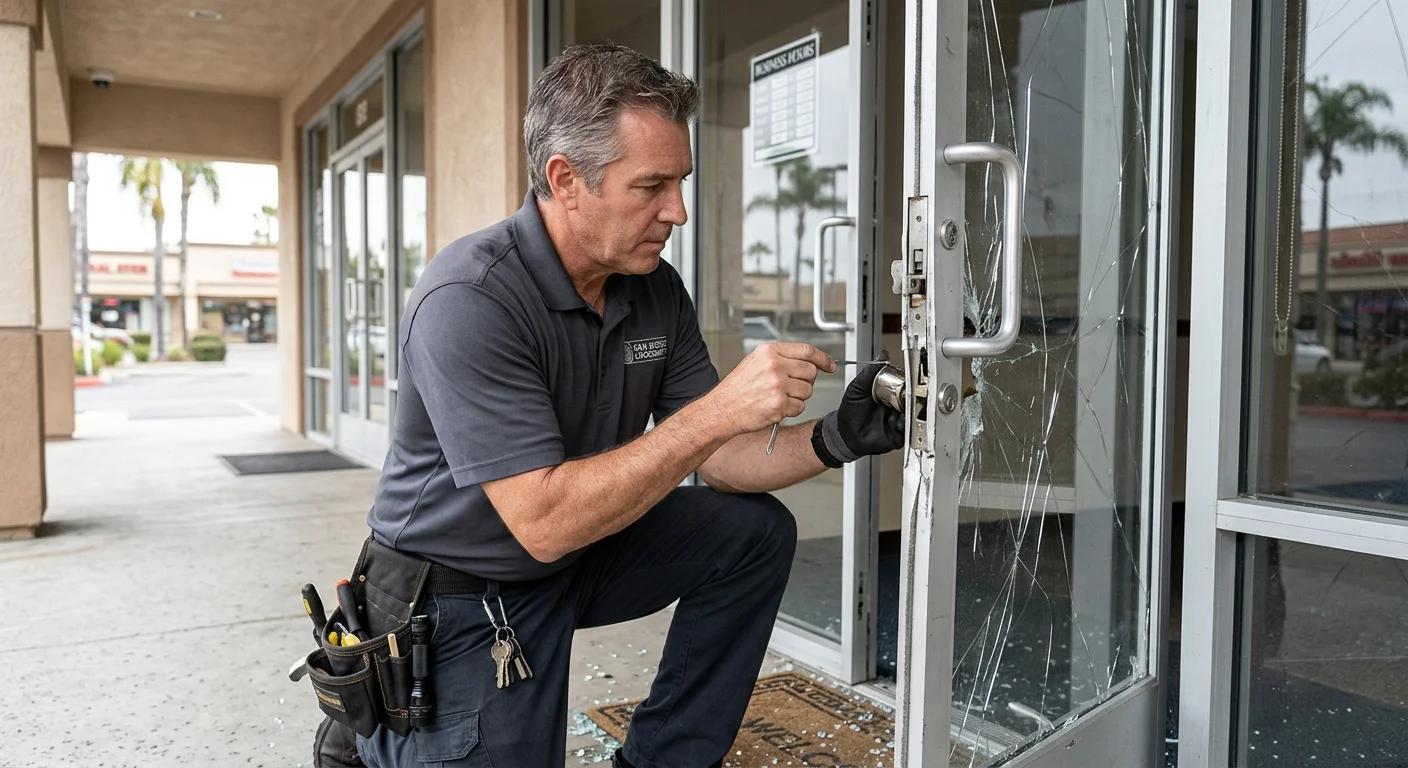
Document the door, frame, and lock damage
Begin with a clear record of the entire opening. Take one photo showing the full door from inside. Take another from outside. Then photograph the lock, cylinder, handle, strike, hinges, frame, threshold, and nearby glass.
Include close views and wider context. A close photo may show a cracked lock housing. A wider image shows where that part sits within the door. Capture loose pieces before moving them, unless an authority has given different instructions.
Write down what staff found when the damage was discovered. Note whether the door was open, partly closed, or still locked. Record which keys, cards, or codes may have been exposed. If there’s an incident or report number, place it with the photos and notes.
Test nothing that looks unstable or badly damaged. Instead, list what you can observe without forcing the hardware. Does the key enter? Does the handle move? Is the cylinder sitting straight? Does the door meet the frame evenly? Is the strike still attached? These observations help a professional understand the starting condition.
The opening also matters. A glass storefront on University Avenue in City Heights may need different providers than a metal service door at a Kearny Mesa shop. An office suite in Mission Valley may involve property management or a building access system.
Keep records from each provider separate. If you’ll share documentation with a property manager, insurer, or another party, ask that recipient what format it needs. Our broader guide to the first steps after a break-in covers the incident beyond the lock itself.
Separate locksmith work from glass and frame repairs
A damaged business entrance can involve several connected components. That doesn’t mean one provider handles them all. Divide the opening into clear work areas before requesting proposals.
The locksmith scope may involve the cylinder, lock body, keyed hardware, strike, latch, or related access hardware. A licensed professional can inspect those parts and explain which work falls within the offered locksmith service. Our commercial locksmith service connects San Diego County businesses with licensed, independent local locksmith professionals.
Treat glass as its own scope. Ask whether broken or shifted glass needs a separate glass company. Don’t assume glass removal, replacement, or cleanup appears in a locksmith proposal unless it’s written there.
Use the same approach for a bent door, separated frame, damaged storefront framing, hinges, closer, threshold, or surrounding wall. Ask the locksmith what’s included, then identify any remaining items. A door contractor, glass company, property manager, or another specialist may need to inspect those components.
Electronic access creates another boundary. The physical cylinder may be only one part of the opening. Readers, electric hardware, wiring, credentials, and management software can involve an access-control provider. Ask who will test each part and who will document the result.
This separation prevents a vague phrase like “repair the entrance” from hiding missing work. It also makes proposals easier to compare. One provider may quote only the lock. Another may include the strike or related adjustments.
For aluminum storefront doors, start with the exact components described in our San Diego storefront lock repair guide. Then confirm the scope for the actual door. Don’t assume every commercial opening uses the same hardware or repair sequence.
Compare rekeying with lock replacement
Rekeying and replacement solve different parts of the problem. Rekeying changes the lock so a different key operates it. Replacement installs different lock hardware. The right discussion starts with the condition of the existing components, not a blanket recommendation.
Ask the locksmith to identify each damaged part. Request plain answers about the cylinder, lock body, strike, latch, and surrounding mounting points. If rekeying is proposed, ask how visible damage outside the cylinder will be addressed. Rekeying alone isn’t a complete scope for a cracked housing, missing part, or damaged strike.
If replacement is proposed, ask why that hardware was selected. The written proposal should identify the product or product type, affected door, keying plan, and included labor. It should also state whether other providers must finish work around the lock.
Key control is a separate decision. Even when existing hardware remains usable, missing or exposed keys may change the business owner’s preferred plan. Tell the professional which keys were lost, who held them, and which doors they operated. Don’t assume changing one cylinder addresses every affected opening.
Avoid making the choice from appearance alone. A small visible mark may not explain how the lock operates. Dramatic damage around the opening may also extend beyond locksmith work. Ask the professional to show which observations support the proposed scope.
No approved San Diego price figure for this work was confirmed in the research ledger. The independent professional sets the price. Request a written total and ask what could change it before authorizing work. Compare the listed components, exclusions, hardware, and payment terms rather than relying on an unsupported market estimate.
Review keys, codes, and access after the incident
The door repair is only one part of restoring access control. Build a list of every credential connected to the affected opening. Include physical keys, keypad codes, cards, fobs, mobile credentials, and any shared access instructions.
Start with people and doors. Record who had access before the incident. Identify which doors each credential could operate. Include front entrances, rear service doors, offices, storage rooms, gates, and shared building areas. A key for one damaged door may also work elsewhere, so tell the locksmith what’s known about the keying arrangement.
For electronic systems, ask the responsible provider what the system records and what changes it supports. Don’t assume a code change removes every credential. Don’t assume a missing card can be disabled until the provider confirms it within the actual system.
Shared buildings need clear coordination. A tenant in Downtown San Diego may control its suite lock while a property manager controls the main entrance. A National City storefront may have a rear door shared with another business area. Write down who controls each opening before anyone changes hardware or credentials.
Update the access list after decisions are made. Record which physical keys remain active, which codes were changed, and which credentials were reviewed. Note who received replacements. Keep this operational record separate from photos of the damaged door.
If a master key, management key, or broadly shared credential is missing, say that at the start. Don’t bury it inside a general request for door repair. The professional needs the known access relationships to propose a relevant keying scope. Ask for any assumptions to appear in writing.
Confirm the repair scope before work begins
A clear proposal should name the exact door and the components being addressed. “Front door repair” leaves too much room for confusion. A better scope identifies the cylinder, lock body, strike, handle, closer, glass, frame, access hardware, and any excluded work.
Walk through the opening with the provider when possible. Match each damaged area to an action, an exclusion, or another specialist. Ask who removes damaged parts, who supplies replacements, and who checks operation after the work. If another provider must complete the opening, ask how the sequence will be coordinated.
Confirm these points in writing:
- The door or opening covered by the proposal
- The lock and access components included
- Hardware that will remain in place
- Work assigned to another provider
- The keying or credential changes requested
- The total price and payment terms
- Any conditions that could change the scope
- Any warranty terms offered by the professional
Swift Key San Diego doesn’t perform repairs, set prices, or provide warranties. We match callers with licensed, independent local locksmith professionals. The customer contracts with and pays the professional directly.
Before hiring, check the locksmith company or individual through California’s DCA license search. BSIS regulates locksmiths in California. You can also ask the arriving locksmith to show the pocket version of the applicable license or registration.
The approved research doesn’t establish one permit rule for every damaged business door in San Diego County. Requirements can depend on the planned work and the authority responsible for that location. Ask the building department for the city where the business sits. For an unincorporated location, ask the applicable county office. Describe the exact proposed work and request current guidance.
Keep the final proposal with your original photos and access notes. If the scope changes, request the revision before approving added work. That creates one record of what was observed, what was authorized, and which provider handled each component.
When to call us
A licensed locksmith is the right contact when the lock, cylinder, strike, keyed hardware, or related access hardware needs professional assessment after a break-in. Swift Key San Diego will refer the work rather than perform it.
Call us at (858) 400-4082 and we’ll connect you with a licensed local locksmith.