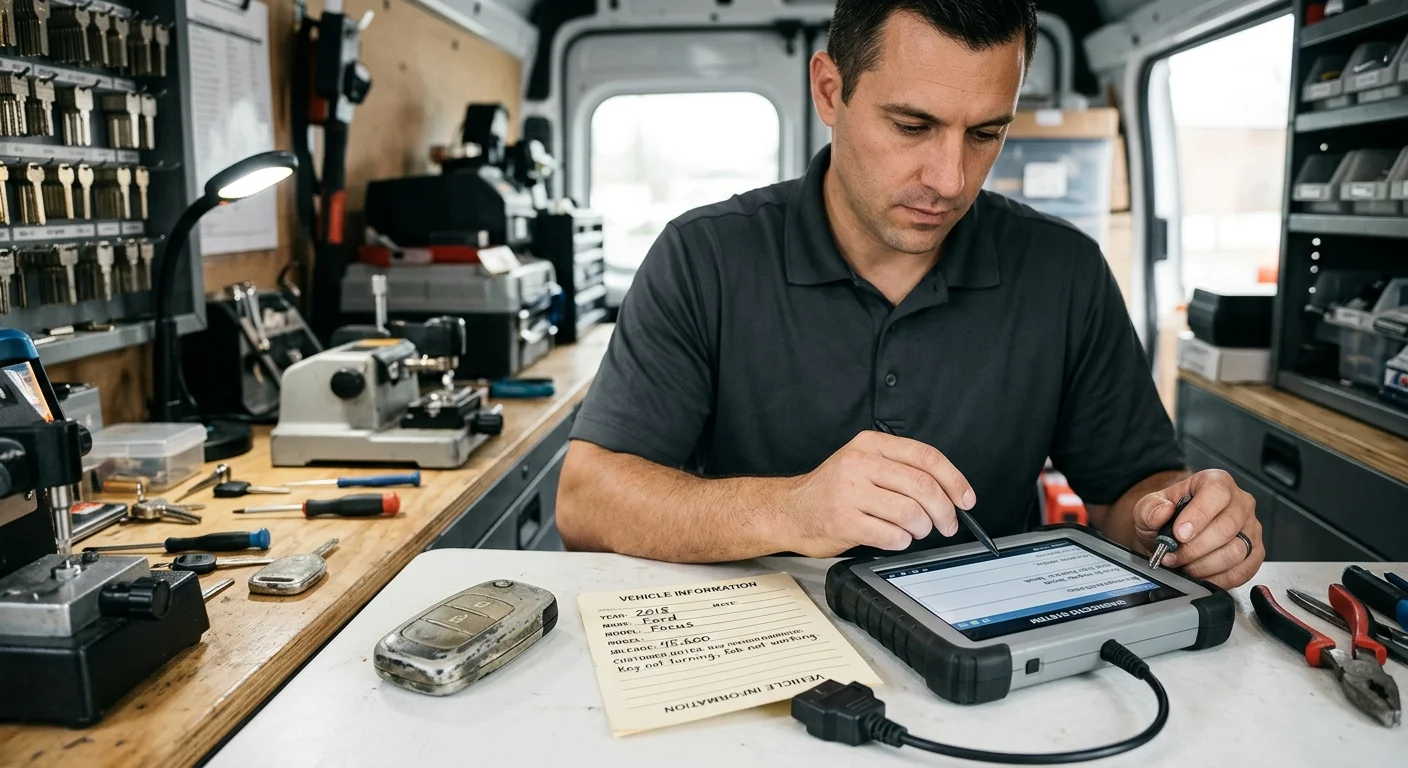
A locksmith may be able to program a used key fob. The answer depends on the exact vehicle, the exact fob, and whether that previously paired fob can be accepted again. Confirm compatibility before paying for the fob or scheduling key fob programming.
Why compatibility depends on the exact vehicle
Two fobs can look identical and still receive different compatibility decisions. Button count, case shape, and logo placement aren’t enough. The provider needs to evaluate the vehicle and the fob as a specific pair.
Start with the vehicle’s year, make, model, and trim. Provide the vehicle identification number if the locksmith or dealer requests it. Then share clear photos of the used fob, including every visible label and identifier. Don’t assume a seller’s short description settles the question.
A listing that says “fits many models” leaves important details unresolved. Ask the provider to confirm whether that exact unit is supported before anyone attempts programming. If the answer is conditional, ask what remains unknown. You may need another identifier, a physical inspection, or confirmation from a dealer.
Location doesn’t change compatibility, but it changes how much effort a wrong purchase creates. A driver in Chula Vista shouldn’t cross San Diego County to meet a seller in Oceanside without checking the available details first. Send photos and vehicle information before making the trip.
Our key fob programming referral service connects San Diego County callers with licensed, independent local locksmiths. Swift Key San Diego doesn’t perform programming or decide whether a particular fob will work. The matched locksmith evaluates the job and explains the available options.
If the original key is missing, tell the provider immediately. That can change the service request from adding a fob to replacing a car key. Our car key replacement service can connect you with a licensed local professional for that separate need.
Check the part number and prior vehicle pairing
The part number or other visible identifier should be checked before programming begins. Ask the seller for sharp photos of the complete fob. Include the front, back, button layout, key blade if present, and every readable label. A typed identifier alone can contain a simple transcription error.
Compare the seller’s photos with the unit you actually receive. Don’t rely on the online listing after delivery. A returned item, mixed package, or similar-looking case could leave you holding a different fob. The locksmith or dealer should evaluate the physical item that will be programmed.
Ask whether the fob was previously paired with another vehicle. Don’t accept “it should reset” as proof. Some used units may not be accepted for reuse with a particular vehicle. A locksmith or dealer must confirm the answer for that exact combination.
Use a short checklist when speaking with a provider:
- What vehicle details do you need before the appointment?
- Which identifiers should appear on the fob?
- Does prior pairing affect this specific unit?
- Can you confirm support before attempting programming?
- What happens if the vehicle rejects the used fob?
- Which functions will be tested afterward?
Get those answers before buying when possible. If the seller can’t provide clear identifiers, treat compatibility as unconfirmed. A low asking price doesn’t make an unknown fob useful.
California treats programming electronic vehicle operating devices as locksmith work. You can check a locksmith company or registration through the state’s Department of Consumer Affairs license search. Swift Key San Diego is a referral service, and the customer contracts with the matched independent professional directly.
Used, aftermarket, and new fobs are not identical
“Used,” “aftermarket,” and “new” describe different purchasing situations. None of those labels proves that a fob matches your vehicle. Each unit still needs an individual compatibility check.
A used fob has a history. Ask which vehicle it came from and whether that information can be documented. Then ask whether its prior pairing affects reuse. Don’t let a matching case replace that conversation.
An aftermarket fob may use different packaging or identifiers from the vehicle-maker-branded option. Before buying, send the listing and product photos to the provider. Ask whether they support that exact item, not merely aftermarket fobs in general.
A new fob can also be the wrong fob. New condition doesn’t establish compatibility. The part or identifier still needs to match the provider’s requirements for your vehicle.
The safest comparison focuses on confirmation, not labels. Ask each seller for the same information. Then give the same vehicle details to the locksmith or dealer. That produces a cleaner answer than comparing vague phrases such as “universal,” “replacement,” or “dealer compatible.”
Price should come after compatibility. Our guide to key fob programming cost in San Diego explains which questions to ask about the proposed work. Confirm the current amount directly with the professional before approving service. Swift Key San Diego doesn’t set the price.
Keep the seller’s return terms available while seeking confirmation. If those terms are unclear, ask the seller before paying. A provider’s refusal to program an unsupported fob doesn’t establish that the fob is defective. It may only mean the unit hasn’t been confirmed for your vehicle.
When a dealer may need to confirm support
A licensed locksmith may determine that the available information isn’t enough. That isn’t a failed diagnosis. It’s a useful stopping point that keeps an uncertain programming attempt from becoming your only plan.
Ask a dealer to confirm support when the locksmith directs you there, when the identifiers conflict, or when the used fob’s history can’t be established. Give the dealer the same vehicle details and clear fob photos. Ask for an answer about that exact unit.
Keep the question narrow: “Can this identified used fob be supported for this identified vehicle?” Avoid turning a conditional response into a guarantee. If the dealer needs to inspect the vehicle or fob, ask what documents and items to bring.
A dealer may also recommend a different fob. Ask why the used option wasn’t confirmed. The reason may help you avoid buying another unsuitable unit. Record the identifier the dealer says to look for, then compare it against the actual item before purchase.
If the locksmith and dealer give different answers, don’t choose based on convenience alone. Ask each provider what information supports the answer. There may be a missing vehicle detail, an unreadable label, or a difference between the pictured item and the delivered one.
Don’t authorize repeated attempts merely because you already bought the fob. Pause and identify the uncertainty. The next sensible step might be better documentation, a different unit, or a dealer inspection. The provider doing the work should explain the proposed step and its price before you approve it.
Test every supported function before approval
Successful key fob programming isn’t just a spoken confirmation. Test every function that the provider says the fob and vehicle support. Do this while the locksmith or dealer is present.
Create the test list before the appointment. Depending on the fob, that list may include lock, unlock, trunk or liftgate release, panic control, remote start, proximity access, or vehicle starting. Only test functions that the provider confirms apply to your setup.
Check each button separately. Try the fob from more than one normal position around the vehicle. If a function doesn’t respond, show the provider immediately. Don’t assume it will correct itself later.
Also compare the result with any working fob you already have. The goal isn’t to prove that both units are identical. The comparison simply helps identify which supported functions should be checked. Keep the working fob separate during the appointment so the test results don’t get confused.
If the fob stops working after programming, begin with basic observations. Note which functions fail, whether the vehicle responds at all, and whether another fob still works. Our key fob troubleshooting guide can help you organize those details before contacting the provider.
Ask for the professional’s terms before approving the work. Swift Key San Diego doesn’t provide warranties, and it doesn’t set the matched locksmith’s policies. Questions about the programming attempt, the fob, and any follow-up belong with the professional who performed the work.
Don’t leave with an untested assumption. A clear pass-or-fail result for each supported function gives you useful information. It also separates a compatibility question from a later battery, button, or vehicle-response concern that still needs diagnosis.
When to call us
Call when you have the vehicle details and used-fob identifiers, but still need a licensed professional to assess compatibility. The matched locksmith will confirm whether they can evaluate and perform the requested work.
Call us at (858) 400-4082 and we’ll connect you with a licensed local locksmith.