The movers set the unit down in a Clairemont garage, a Chula Vista spare room, or a Carlsbad closet, and the door will not open the way it did at the old house. That is a safe locksmith problem, not a pry-bar problem. Stop, record what changed, and keep the door intact until a licensed locksmith inspects it.
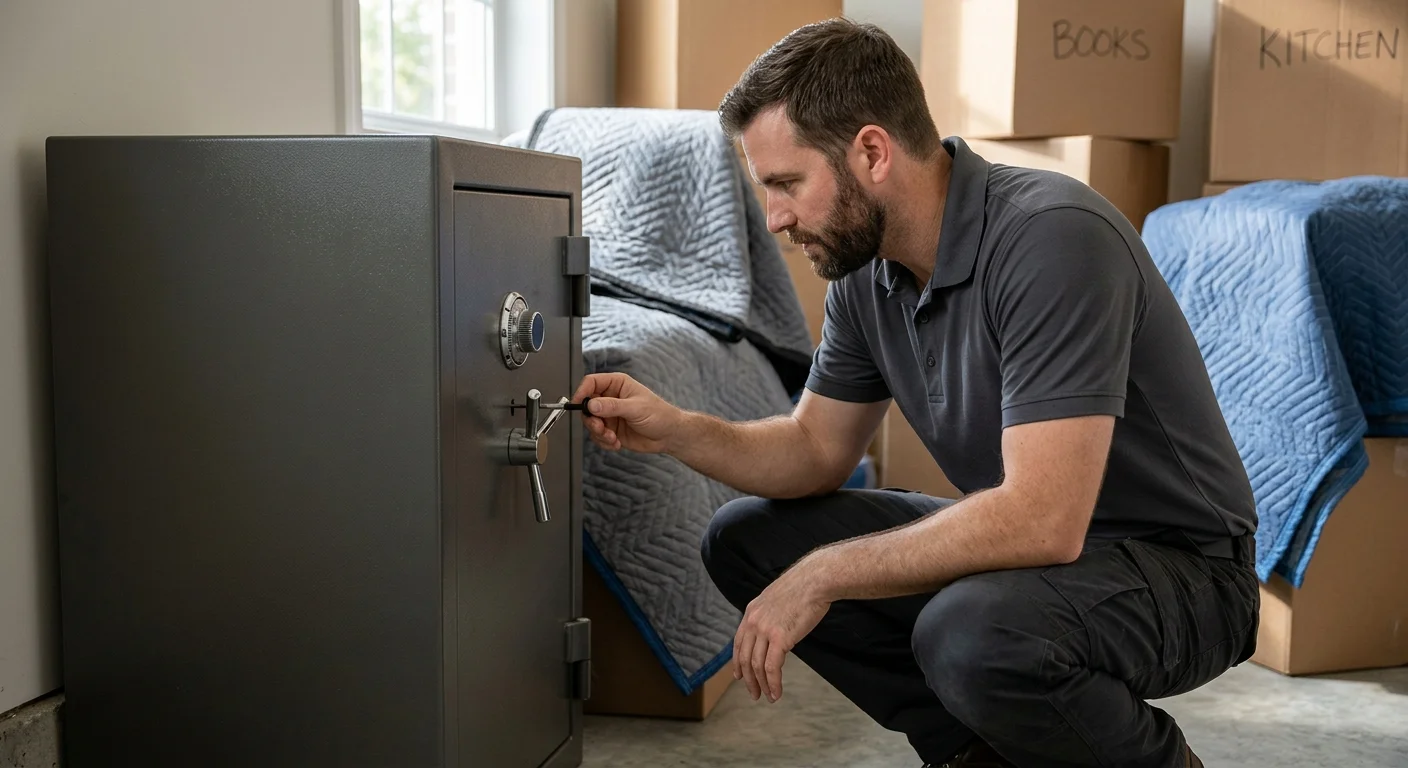
Stop and record what changed during the move
Do not assume the move caused the failure. Safes fail on quiet weekdays too. A move still leaves a trail of facts, and those facts help the locksmith who inspects the lock.
Write down the last time the door opened cleanly. Note whether it was locked for the trip. Note who moved it: a moving crew, friends with a pickup, or both. Note whether it rode upright. A box laid on its back in a truck on I-15 in August heat is a different record from one that rolled on its wheels down a Mission Valley dock.
San Diego County is not one climate or one housing stock. Coastal homes in Encinitas sit in salt air, often in condos with tight elevator reservations. East County houses in El Cajon sit on slabs, in dry heat, with wider garages. South Bay units in National City often mean stairwells. Inside the city of San Diego, about 49.6% of homes were built before 1978. That stock means plaster, narrow turns, and no elevator. How the box traveled through those spaces is worth writing down.
Photograph every side before anyone wipes off dust. Capture scuffs, a shifted door, a crumpled keypad bezel, a missing bolt-down bracket, and the floor it now sits on. If it sat in a driveway in Imperial Beach overnight, say so. If batteries were pulled so it would stay quiet in the truck, say so.
Stop cycling the handle once it feels bound. A safe handle stuck after move is a symptom to record, not a cue to lean harder. Repeated force can turn a stuck bolt into a bent one. Skip pounding the door, oil in a keypad, or a drill hole from a video. Those steps are not diagnosis. They are damage.
Keep the moving notes if you still have them. Our guide to moving a safe in San Diego covers the logistics side. This page is only about the locked-out moment after the box is already in the new rooms.
Identify the safe without guessing the model
Guessing the brand is how people pull the wrong battery story and the wrong override story. Find the maker’s name, the model, and any serial or listing mark on the body. Those marks often sit on the door edge, the back, or a plate you can see without opening.
Take a square photo of the brand line, the serial, the lock face, the handle, and any door gap. Keep codes out of the frame. Photograph the owner’s manual if you still have it.
A small document chest from a Kearny Mesa store is not a commercial unit in a Mission Valley office. You do not need the rating decoded. You need the label photographed so the locksmith is not guessing either.
Do not scrape paint to hunt a number. Do not peel a data plate. If the plate is gone, say that. A used safe from an Oceanside sale with no paperwork can still be identified by shape, lock type, and remaining stamps. The locksmith confirms type on site. You just stop the guessing.
If a factory override key came with the unit, keep that key in view. Do not force it. If the combination lives on a note in a kitchen drawer, find the note. If you bought a house in North Park and the previous owner left the safe, that is an ownership question first. Do not treat a leftover safe as yours until the paperwork says it is.
Separate keypad, key, handle, and door symptoms
Name what the lock is doing. Do not name what you fear it is doing. A moved safe locked out can look like a dead pad, a key that stops halfway, a handle that will not finish its throw, or a door that no longer lines up.
On the keypad, note lights, beeps, error flashes, or a dead face. A dead pad after a move can be a battery, a loose connection, or a lock that has already shut down further tries. You cannot tell which from the hallway. Do not keep entering codes until the pad locks you out, unless the current manual for that model says the wait is normal.
On the key, note whether it enters, turns partway, turns fully with no bolt, or will not enter at all. Do not add a hardware-store blank. A safe keyway is not a house deadbolt.
On the handle, note firm, spongy, spinning, or stopping short of the usual throw. If the keypad appears to accept a code and the handle still will not turn, that split has its own page: safe keypad works but the handle will not turn.
On the door, look at the gap. A door that sat on its face in a truck can look racked even when the lock is fine. A door that still lines up, with a lock that will not release, is a lock problem. Coastal humidity in Pacific Beach is not El Cajon heat. Either can show up as sticky electronics or tight steel. Neither proves a cause. Record the symptom. Let the inspection name the cause.
People ask whether a locksmith can get into a safe. California law defines locksmith work to include opening locks. That is Business and Professions Code section 6980(j). It does not mean every licensed locksmith opens every safe. It does not mean entry is always possible without damage. Some units open with the lock still usable. Some do not. Anyone who promises a no-damage opening before seeing the box is guessing.
If you lost the key, do not pick at the keyway. Do not order a so-called universal safe key. Gather the model photos and the ownership papers, then have a licensed locksmith inspect the unit. Opening methods are their call, not a blog’s.
Check current manufacturer guidance
Pull the current documentation for the exact model. Skip a forum thread from 2014. Maker sites change. Battery trays move. Override steps get rewritten. If you cannot confirm a step in the current PDF or the current support page, do not do the step.
What you can usually confirm without opening the door is simple. Battery type, and whether the tray is external. Whether a factory override key exists for that model. Whether the maker tells you to stop after a failed entry count. Whether the page warns you away from drilling.
What this page will not invent: how many times a lock can be recoded, how long an opening takes, what it should cost, or whether your door will survive a drill. Those figures are not in our verified records. They vary by unit.
If the maker’s current page shows an outside battery tray, and the steps are clear, follow that page. If the tray is inside, you are already locked out, so skip DIY. If the page is silent, treat the step as unconfirmed and wait for the inspection.
Save the page you used, with the date. The locksmith should see the same document you saw. That is how you avoid two people working from two different manuals.
Prepare ownership and access details for inspection
A safe locksmith visit is not a house-lockout call. The person who arrives has to confirm you have the right to open that box. Have photo ID ready. Have a bill of sale, a moving inventory, an insurance rider, or dated photos of the safe in your last place. If you are a tenant in Clairemont and the safe is yours, say so. If it came with a house in La Mesa, say that too, and bring the closing papers if you have them.
Who you call is a locksmith licensed by the Bureau of Security and Investigative Services, not a random opener from an ad. You can verify a license before anyone works. Ask to see the pocket license on site. Unlicensed locksmith work in California is a misdemeanor. The statute allows a fine of up to $10,000, county jail of up to one year, or both. That is Business and Professions Code section 6980.10. Fake badges and ads that claim a license sit under the same rule.
How much a locksmith will charge to open a safe is not a number we can publish. Swift Key San Diego does not set prices. No verified typical figure for this job is on our books. Treat any dollar amount in an ad as unconfirmed until the independent locksmith sees the safe type, the lock, and the condition.
Swift Key San Diego is a referral service. We match you with licensed, independent local locksmiths. We do not open safes, own trucks, hold a BSIS license, or warrant the work. The pro you are connected with confirms ownership, names the safe type, and explains the methods that are actually available on that unit. Safe opening is the service path for that visit. The pros we connect you with are licensed and insured.
Bring the move notes, the photos, the manual, and the keys you still have. Our prepare for a safe locksmith checklist walks through the same packet. The call is recorded. A notice plays first. California is an all-party consent state, so that notice is the point.
Do not ask for a no-drill promise before the lock is seen. Do not ask us for a brand warranty. The independent locksmith’s own terms cover the work they perform.
When to call us
Call when the door will not open after a move, you have identified the unit as far as you can, and you need a licensed locksmith to inspect the lock rather than force it. Call us at (858) 400-4082 and we’ll connect you with a licensed local locksmith.