A Schlage key and a Kwikset key aren’t automatically interchangeable. The answer depends on the exact keyways and cylinders inside your locks. A locksmith must identify both before recommending rekeying or replacement.
Why the keyway matters more than the key shape
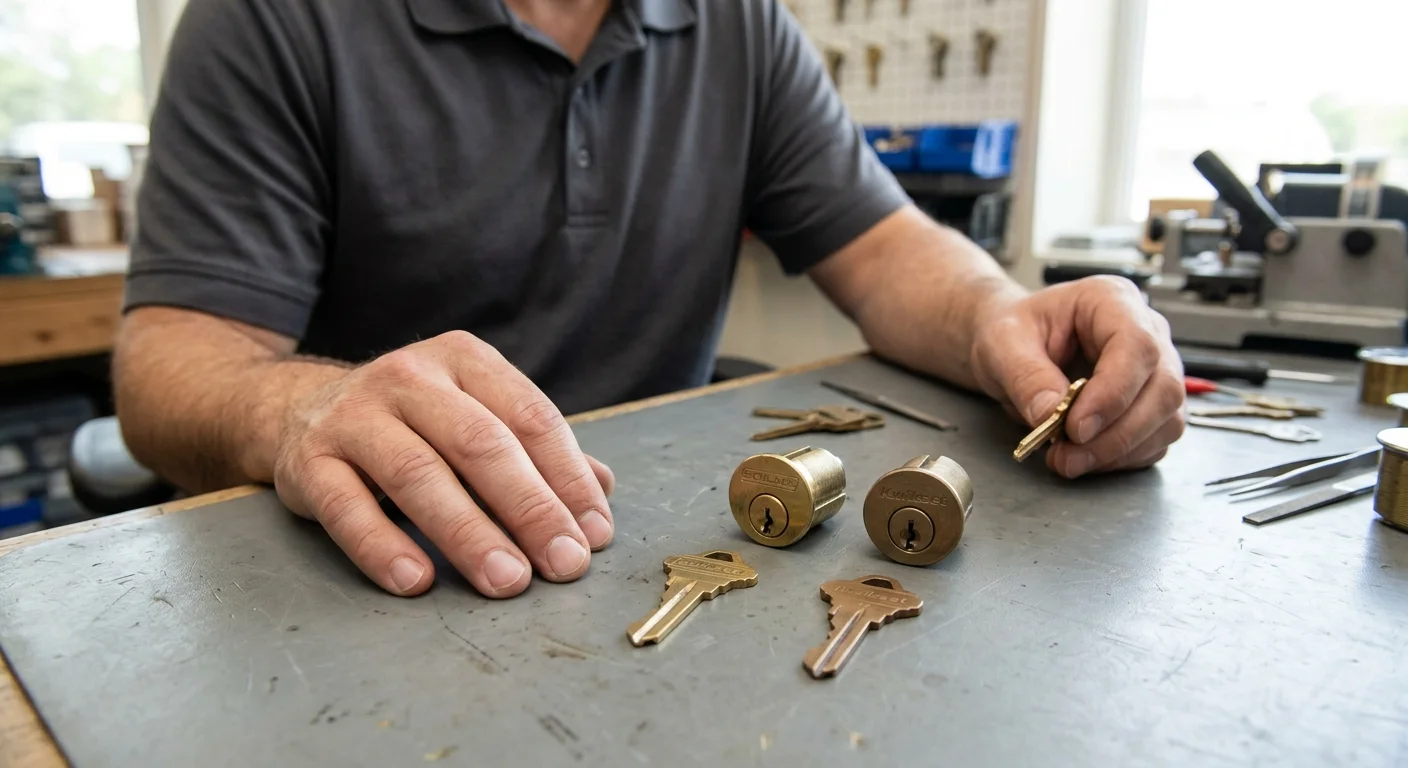
The keyway is the opening and internal profile that accepts a specific key. The broad shape of a key’s head doesn’t establish compatibility. Neither does the brand name printed on the lock.
Current manufacturer details show why model names matter. A residential Schlage B60 single-cylinder deadbolt ships with a standard five-pin C keyway. Schlage also offers a six-pin cylinder for that model. The standard package includes two brass keys.
Kwikset’s Halo and Halo Select use a SmartKey Security KW1 cylinder. That cylinder isn’t an SC1 cylinder. Based on those documented configurations, a standard Schlage B60 C key and a Kwikset Halo KW1 cylinder don’t provide a shared factory keyway.
That example doesn’t cover every product sold under either brand. Product lines, replacement cylinders, and previously modified locks can differ. A brand-level answer would miss those details.
Don’t judge compatibility by holding two keys together. Similar length or visible cuts don’t confirm anything about the cylinder. For a broader hardware comparison, see our guide to Schlage versus Kwikset locks. That guide covers the buying decision, while this article focuses on key compatibility.
The safest answer to “Schlage vs Kwikset keys” is model-specific. Start with the keyway, not the logo.
Keyed alike and interchangeable aren’t the same
“Keyed alike” describes locks prepared to accept the same working key. “Interchangeable” is less precise. It might refer to keys, key blanks, cylinders, or complete locks.
That difference matters when someone wants one key for several doors. The desired result is usually a keyed-alike setup. It isn’t permission to insert one brand’s key into every cylinder and test it by force.
A locksmith first needs to confirm which key each cylinder accepts. The professional can then determine whether the existing cylinders support the requested setup. If they don’t, reaching one-key operation may require changing a cylinder or replacing hardware.
Rekeying changes the internal pins or tumblers so the lock accepts a selected compatible key. It doesn’t automatically change one keyway family into another. Replacement installs different hardware, which may provide another route when the existing cylinders don’t match.
This distinction also prevents a common misunderstanding about copies. Making another copy of an existing key doesn’t change the cylinder it fits. Our key duplication guide explains what to check before requesting extra copies.
Ask for the outcome in plain language: “I want one key for these doors.” Then let the locksmith identify what each opening requires. That produces a clearer answer than asking whether two brands are universally interchangeable.
What the cylinder reveals about compatibility
The cylinder gives the locksmith the useful details. Its keyway, configuration, and condition matter more than the name on the exterior trim.
Exact model identification is important within Schlage’s own catalog. The residential Schlage B60 isn’t the same product as the commercial Schlage B600. Schlage lists a standard five-pin C keyway for the residential B60. The commercial B600 defaults to the patented Everest 29 S123 keyway. Those names shouldn’t be combined or treated as one cylinder.
Kwikset also requires model-specific checking. The documented Halo and Halo Select cylinder uses SmartKey Security KW1. A different lock carrying the Kwikset name shouldn’t be identified from the Halo specification alone.
A San Diego home may contain hardware installed during several separate projects. Picture an older front door, a newer side entry, and a smart lock added later. The visible finishes might match while the cylinders don’t.
About 49.6% of homes in the city of San Diego were built before 1978. That figure doesn’t reveal the age or keyway of any particular lock. It does show why citywide assumptions can’t replace an inspection. Homes across the central city, coastal North County, East County, and South Bay must be checked individually.
Bring every working key you have. Clear photos of the cylinder face and any model markings also help. The final compatibility decision should still follow an inspection of the actual hardware.
What a locksmith needs to inspect
Start by showing the locksmith every door you want on one key. Include gates, detached garages, side doors, and interior keyed locks when they belong in the plan. Don’t assume matching finishes mean matching cylinders.
The locksmith needs to identify the model and keyway at each opening. The professional may also need to examine the cylinder itself. A worn label, replaced cylinder, or missing package information can make the exterior brand name inconclusive.
Explain which key you want to keep, if any. That key becomes part of the compatibility check. If no existing key must remain, say that clearly. It may change the options the professional presents.
The inspection should answer three separate questions:
- Which cylinders already accept the same key?
- Which cylinders can support the selected keyed-alike arrangement?
- Which openings need a different cylinder or complete replacement?
Those answers should be tied to each door, not the property as a whole. A front deadbolt may have a different answer from a garage entry lock.
Our lock rekey referral service can connect you with an independent local professional for this evaluation. Swift Key San Diego doesn’t inspect, rekey, or replace locks. The customer contracts with and pays the matched locksmith directly.
California locksmith licensing is administered by the Bureau of Security and Investigative Services. You can check a company or professional through the state’s license search. Confirm the current license status before authorizing work.
When rekeying or replacement is the better path
Rekeying is the narrower change. It alters the cylinder’s internal pins or tumblers while retaining compatible hardware. Replacement installs new hardware.
The better path depends on what the inspection finds. If the locksmith confirms that the cylinders support one compatible key system, rekeying may meet the goal. If the keyways or cylinders don’t support that arrangement, a different cylinder or replacement hardware may be needed.
Don’t replace every lock based only on the words Schlage and Kwikset. First identify which openings are already compatible. One door might need a change while another can remain as it is. The correct scope comes from the actual cylinders.
Also decide whether one key is truly the goal for every opening. A homeowner may want one key for exterior doors but a separate key for a rental area, office, or storage room. Tell the locksmith how access should be divided before work begins.
There isn’t a verified universal price for combining Schlage and Kwikset hardware. The cost depends on the selected professional and the work they recommend. Swift Key San Diego doesn’t set prices or provide warranties. Confirm the full price and any warranty terms with the independent locksmith before approving service.
If you’re still choosing new hardware, compare keyway compatibility before buying. The model documentation matters more than a general brand comparison. That step can reduce the chance of purchasing a lock that doesn’t fit your intended one-key plan.
When to call us
Call when the cylinder markings aren’t clear, the keys don’t match, or several doors need one keyed-alike plan. The independent locksmith we match you with can inspect the hardware and explain whether rekeying or replacement fits each opening.
Call us at (858) 400-4082 and we’ll connect you with a licensed local locksmith.