It might. Programming needs vary by vehicle and key system. Check every expected function instead of assuming a cut blade is ready.
Check what the spare key currently does
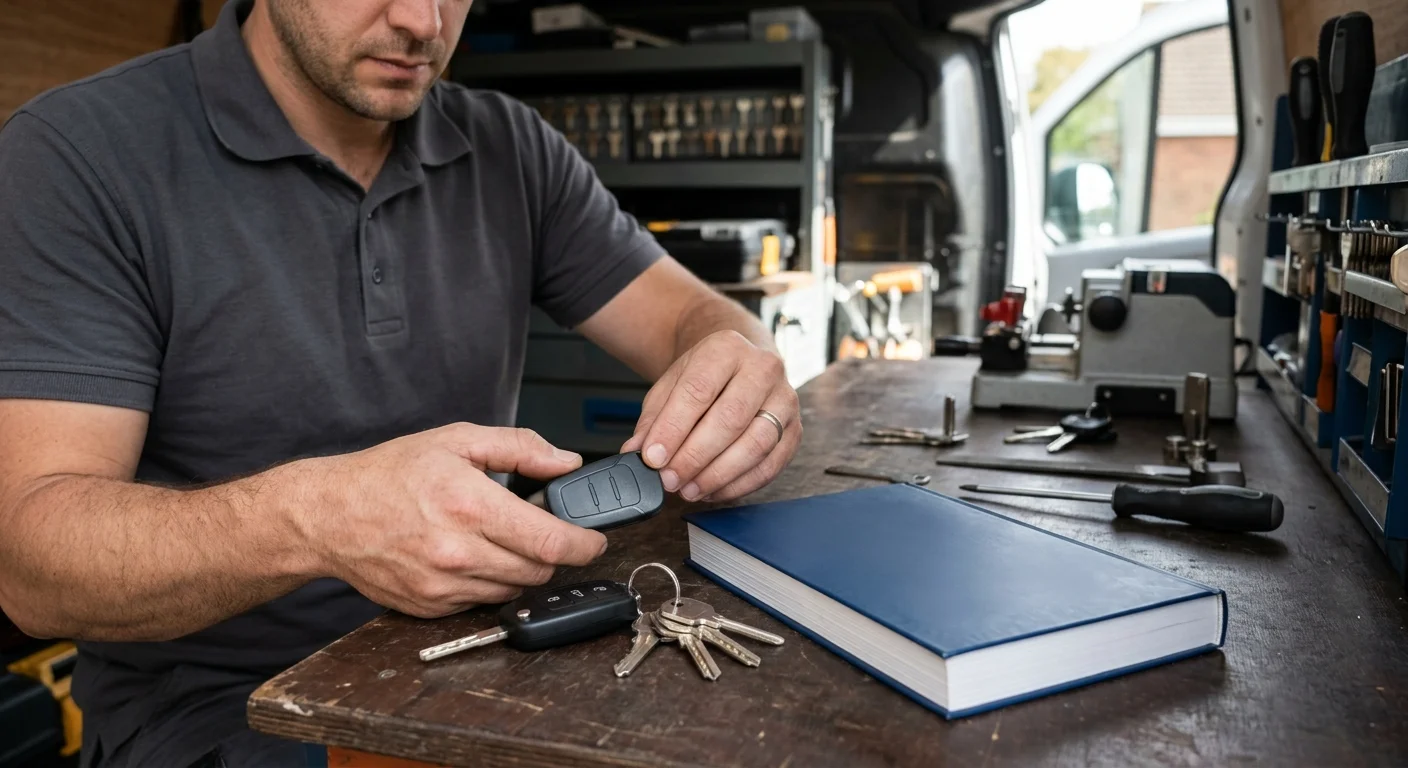
Start with the key you already have. Write down what happens during each normal use. That simple check gives a locksmith or dealer a clearer starting point.
Test only the functions your vehicle normally supports. These may include:
- Unlocking the driver’s door with the blade
- Locking or unlocking through remote buttons
- Opening the trunk through a button
- Starting the engine
- Activating the vehicle’s ready mode
- Working with any normal proximity-entry feature
Follow the vehicle manufacturer’s instructions during this check. Keep the vehicle parked somewhere safe. Don’t force a blade that binds, and don’t keep repeating a failed starting attempt.
The results help define the actual request. A spare that has never been cut presents a different question from one that opens the door but doesn’t start the vehicle. A remote with buttons also needs each requested button checked separately.
Don’t describe the problem as only “the key doesn’t work.” Tell the provider exactly what you tested. For example, explain that the blade turns in the door, the buttons don’t respond, or the vehicle doesn’t start.
That information doesn’t diagnose the cause by itself. It does help the provider identify what must be confirmed. If the spare is missing, damaged, or completely unusable, ask about car key replacement based on the exact vehicle.
Keep your working key available when contacting a provider. Clear photos of its shape and buttons may help with initial identification. Avoid sharing personal documents or vehicle information publicly.
Why cutting the blade may not finish the job
Cutting and programming answer different parts of the spare-key question. A blade is shaped for the vehicle’s mechanical lock. An electronic key system may also require programming before the vehicle accepts the spare.
That’s why appearance isn’t enough. Two key shells can look alike while the provider still needs to confirm the correct unit. A blade that physically fits also doesn’t confirm every electronic function.
Ask the provider to separate the work into clear steps:
- Confirm the key’s compatibility with the vehicle.
- Confirm whether a blade needs cutting.
- Confirm whether electronic programming is required.
- Identify which buttons or starting functions will be tested.
- Test the completed spare with the vehicle present.
Use the same checklist when comparing a locksmith with a dealership. Don’t assume a dealer is always required. Don’t assume every locksmith supports every vehicle or key system either. The specific provider must confirm the job before you buy anything.
If your spare includes electronic functions, review the key fob programming service and explain exactly what you need. “Program my spare car key” can mean different things unless you name the desired functions.
California includes electronic automotive-key programming within its definition of locksmith activity. Locksmiths are regulated by the Bureau of Security and Investigative Services. You can check a company or individual through the California license search.
Swift Key San Diego is a referral service. We connect callers with licensed, independent local locksmiths. The matched professional confirms the vehicle, performs accepted work, and sets the price directly with the customer.
Identify the exact year, make, and model
Begin with the exact year, make, and model shown on your vehicle records. Don’t rely on a rough description such as “older Honda” or “newer Ford.” Give the provider the precise information you can verify.
The provider may request the vehicle identification number. Ask why it’s needed and how they want you to share it. Don’t post it in a public message, comment, or marketplace listing.
Next, describe every key currently available. Tell the provider whether you have:
- A working primary key
- A spare that only performs certain functions
- A loose blade or empty shell
- A remote purchased from another seller
- No working key available for comparison
Use plain descriptions rather than guessing the key type. If you aren’t sure whether you have a transponder key, remote key, or smart key, say that. Our guide to transponder keys and smart keys can help you organize the questions, but the vehicle-specific answer still needs confirmation.
The owner’s manual and the manufacturer’s current support material should be your first references. Look for the section covering keys, remotes, or vehicle access. Match the manual to your exact vehicle year and model.
Don’t copy a programming procedure from a different model year. Don’t rely on a video simply because the key looks similar. Ask the manufacturer, dealer, or matched locksmith whether those instructions apply to your vehicle.
A careful identification step can prevent an unnecessary purchase. It also helps the provider explain whether you need duplication, replacement, cutting, programming, or a combination.
Confirm compatibility before buying a key
A low purchase price doesn’t make an incompatible key useful. Before ordering a blank, shell, remote, or used unit, ask who will confirm compatibility. Get that confirmation for the exact vehicle and the exact item.
Send the seller or provider the listing details without rewriting them. Include any visible identifiers exactly as shown. Don’t remove letters, change spacing, or substitute a similar-looking reference.
Ask direct questions before paying:
- Is this exact item compatible with my confirmed vehicle?
- Which functions should this item support?
- Does it arrive cut, uncut, programmed, or unprogrammed?
- Can your shop cut and program an item bought elsewhere?
- What must I bring with the vehicle?
- How will each requested function be tested?
- What happens if the item isn’t compatible?
These questions don’t guarantee a particular result. They expose assumptions before the vehicle and key are in front of the provider.
If you’re comparing the full expense, read our guide to spare car key cost in San Diego. Confirm the current price directly with the locksmith, dealer, and key seller before paying. Swift Key San Diego doesn’t set provider prices.
Be especially careful with used keys and listings marked as universal. Ask whether that exact unit can be set up for your exact vehicle. Don’t treat the seller’s headline as vehicle-specific confirmation.
Also ask about proof of ownership and identification before the appointment. The provider can tell you what they require. Have the vehicle available unless the provider says otherwise.
Getting those answers in writing creates a useful checklist. Bring it when the key is cut or programmed. If the answers remain vague, pause the purchase until a qualified provider confirms the match.
Test starting, locking, and remote functions
A new spare isn’t finished until you’ve tested the functions you requested. Do this with the vehicle present and follow its manufacturer instructions. Ask the locksmith or dealer to remain available while you check the results.
Start with the mechanical functions. Test the blade only where the vehicle manual directs. It should be checked without forcing or twisting it beyond normal use.
Then test every requested electronic function individually. Press lock, unlock, trunk, or other supported buttons one at a time. Confirm the expected vehicle response after each press.
Next, test the normal starting process. If the vehicle uses a ready mode instead of a conventional ignition, follow the manual’s procedure. Don’t improvise around a warning message or failed attempt.
Record anything that doesn’t behave as expected. Useful details include the exact button pressed, the dashboard message, and whether the result changes between attempts. Don’t guess whether cutting, programming, the key itself, or another vehicle issue caused the failure.
Ask the provider to explain what was completed. Confirm whether the key was cut, programmed, or both. Also confirm which functions were tested in your presence.
Repeat the check after you return home. Keep the spare somewhere secure and separate from the primary key. Don’t leave it inside the vehicle.
San Diego County drivers often buy a spare to avoid relying on one working key. The practical goal is simple: know what the spare does before you need it. A labeled, tested spare is more useful than an unverified key sitting in a drawer.
When to call us
Call when you need a provider to confirm compatibility, cut a blade, or program an electronic spare. The matched professional will confirm whether they support your vehicle and requested functions. Call us at (858) 400-4082 and we’ll connect you with a licensed local locksmith.