A power lock that suddenly stops responding needs the right kind of repair. In many cases, that means an auto repair or electrical shop, not a locksmith.
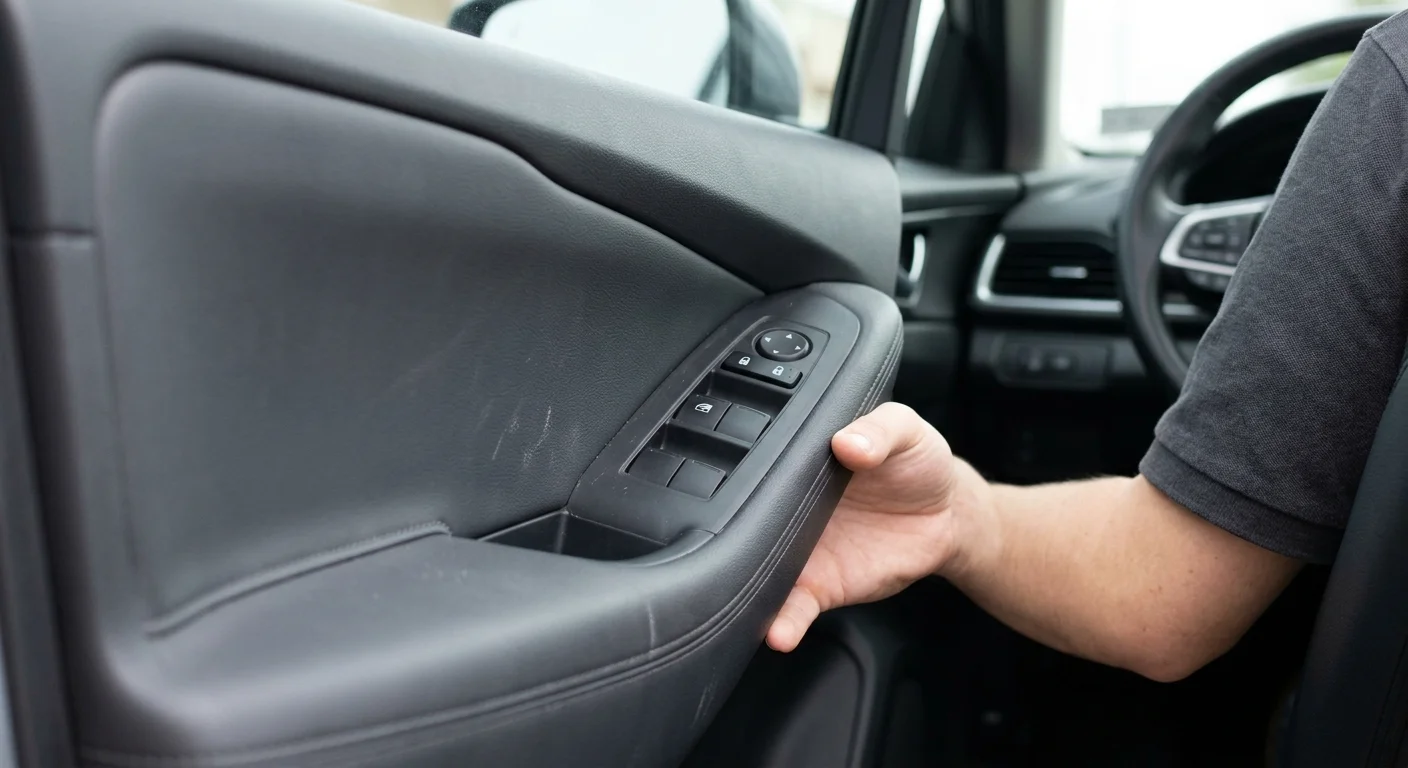
What actually moves a power lock
A power door lock combines an electrical command with a mechanical lock. The switch or key fob sends the command. An actuator inside the door moves the locking mechanism.
That distinction matters when choosing power door lock repair. A silent switch, a weak movement, and a jammed key cylinder aren’t the same problem. Each points the repair in a different direction.
The actuator is one possible trouble spot. The switch, fuse, wiring, connector, latch, or control system may also need attention. A qualified auto shop must test the vehicle before identifying the failed part. The symptom alone doesn’t prove which component needs repair.
Compare the power switch with the physical key, if your door has a key cylinder. A working key cylinder suggests the mechanical lock can still move. It doesn’t confirm that the electrical side works. A cylinder that won’t turn points toward a different issue.
Listen without forcing anything. A click inside the door means the system is attempting some movement. Complete silence gives a shop another observation to investigate. Neither result provides a final diagnosis.
A lock button that moves only partway may involve the actuator or a binding mechanism. If the door also resists manual locking, read our guide to a car door lock that’s mechanically stuck. That article covers binding and physical resistance rather than a dead power command.
The three failures behind most dead power locks
Actuator, fuse, and wiring problems are three useful categories to consider. This isn’t a ranked diagnosis. Your vehicle still needs testing before anyone replaces a part.
One door doesn’t respond
When one door fails but the others still work, the issue may be inside that door. The actuator, connector, wiring, latch, or switch can all remain possibilities. Don’t assume that an actuator must be replaced from this symptom alone.
Notice whether the failed door responds from more than one control. Try the driver’s switch, the switch on that door, and the fob. Record what happens, then share those details with the repair shop.
Every power lock is dead
When no door responds, the problem may involve a shared electrical component. A fuse is one possibility. A vehicle-specific control or wiring issue may produce a similar symptom.
Use only the fuse information printed in the owner’s manual. Don’t rely on a diagram for a different model or model year. If the correct fuse isn’t clearly identified, leave the electrical inspection to an auto shop.
The problem changes with door movement
A lock that responds only when a door is positioned a certain way may have a connection or wiring problem. Avoid pulling back boots, removing trim, or probing wires unless you’re qualified for that work.
These categories help you choose a service provider. They don’t establish which part failed. An auto repair, auto-electrical, or dealership service department can inspect the vehicle’s electrical system.
Quick checks you can do in the driveway
Start with observations that don’t require taking the door apart. These checks can make your call more useful without risking damaged trim or wiring.
Try the interior switch from the driver’s seat. Then test another interior lock switch, if one is available. Note which doors respond and whether any lock moves only partway.
Next, test the key fob. Stand near the vehicle and try both lock and unlock. If the interior switches work but the fob doesn’t, follow our key fob troubleshooting steps. That separates a fob problem from a broader power-lock failure.
If you have another working fob, compare it. Don’t buy or program a replacement based only on one failed button. The fault may be limited to the original fob, but that needs to be confirmed.
Try the physical key gently when a usable cylinder is present. Stop if the key won’t turn with light pressure. Forcing it can damage the key or leave part of it inside the cylinder.
Check whether the door opens normally from the inside and outside. Tell the shop if the handle, latch, manual lock, and power switch behave differently. Those details help separate an electrical complaint from a mechanically bound door.
For an Oceanside driveway check, the location doesn’t change the test. Whether you’re near Mission Avenue, Coast Highway, or the State Route 76 corridor, focus on the same clear observations:
- Which doors respond
- Which switches work
- Whether the fob works
- Whether the physical key turns
- Whether you hear a click
- Whether the lock moves partway
Don’t remove the door panel just to gather more information. Hidden fasteners, wiring connectors, and side-impact components can make that inspection more involved than it appears.
Why this is often not a locksmith job
A locksmith handles locks, keys, cylinders, vehicle entry, and certain electronic key work. A failed door actuator, fuse, connector, or wiring harness belongs on the auto-electrical side of the vehicle.
That boundary can save you an unnecessary service call. If every key and fob function is normal but one powered door stays silent, start with an auto repair or auto-electrical shop. A dealership service department is another option for vehicle-specific electrical diagnosis.
A locksmith becomes relevant when the physical key won’t operate the cylinder. The same applies when a key is broken, lost, or trapped. Locksmith help may also fit when the electronic key or fob needs authorized programming.
California defines automotive key programming as locksmith activity. Locksmith licensing is handled by the Bureau of Security and Investigative Services. You can check a company or professional through the state’s license search.
Swift Key San Diego is a referral service. We connect callers with licensed, independent local locksmiths. We don’t employ technicians, inspect vehicles, set prices, or perform repairs.
That means we’ll be direct when the symptom sounds electrical. Calling a locksmith for a wiring fault won’t turn it into locksmith work. An auto shop needs to test that system.
If a dead power lock leaves you unable to enter the vehicle, the immediate problem changes. A licensed locksmith may be able to address the car lockout, even when an auto shop must handle the underlying electrical repair.
Who to call for which symptom
For power lock repair in Oceanside, CA, choose the provider by symptom. Local search results may show locksmiths, general repair shops, auto-electric specialists, and dealerships. They don’t all handle the same work.
Call an auto repair or auto-electrical shop when:
- One or more doors ignore every power command
- A lock clicks but doesn’t complete its movement
- The problem changes as a door opens or closes
- A fuse or wiring problem is suspected
- The switches and fob produce inconsistent electrical behavior
Call a dealership service department when you want vehicle-specific electrical diagnosis or the issue appears tied to the vehicle’s control system. Ask the department whether it handles power door lock diagnosis for your exact year and model.
Call a licensed locksmith when:
- The physical key won’t turn in the cylinder
- The key is broken or stuck
- You’ve lost the working vehicle key
- You’re locked outside the car
- The fob needs testing or programming
Fob work deserves one extra check. A fob that fails while the interior switches work points away from the door actuator. A locksmith who offers key fob programming can tell you whether the vehicle and fob fall within that service.
Describe the symptom before arranging service. Say which doors fail, which controls you tested, and whether the physical key works. Also provide the vehicle’s year, make, and model. Don’t tell the provider that an actuator has failed unless a qualified shop already confirmed it.
If the lock issue follows collision damage, water entry, or other vehicle damage, mention that context. Let the shop decide what inspection is appropriate. Avoid promising yourself a simple part replacement before testing identifies the cause.
When to call us
Call when the physical cylinder won’t turn, the key is damaged, the fob needs programming, or you’re locked outside the vehicle. Call us at (858) 400-4082 and we’ll connect you with a licensed local locksmith.