A missing exterior key can put several business doors in question. For a National City shop or office, start by mapping every opening that key might fit. A commercial locksmith can inspect the locks and explain options, while Swift Key San Diego only connects you with an independent local professional.
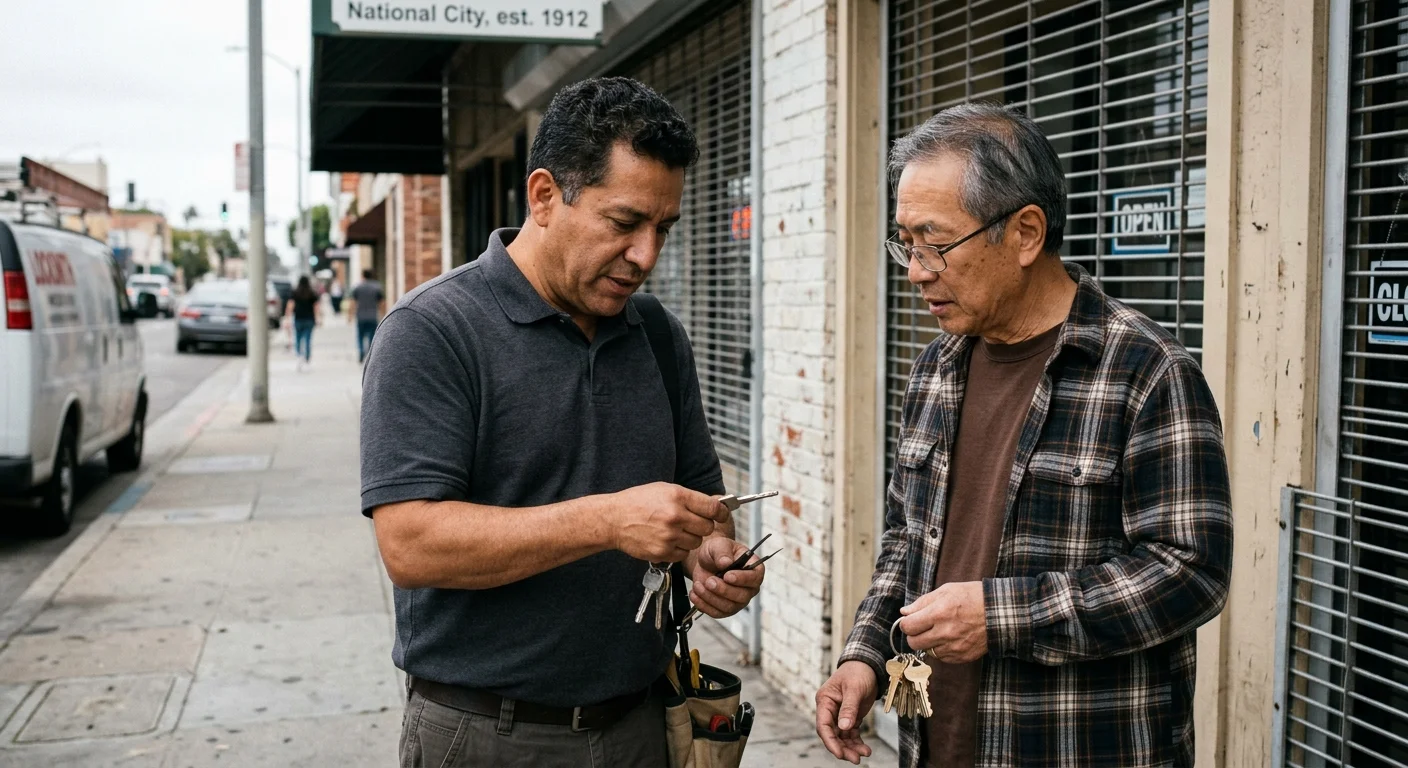
Identify every door the missing key may open
Treat the lost storefront key as an access-mapping problem. Begin with the National City address, suite number, and exact exterior door. Then identify every other opening where that key was normally used.
Make a working door list. Include the customer entrance, employee entrance, rear door, office, stockroom, gate, and shared corridor when those openings apply. Don’t add a door merely because its lock looks similar. Mark each opening as confirmed, possible, or unrelated.
For every confirmed door, record a plain description. Note whether the key turned a knob lock, deadbolt, cylinder, or another visible lock. You don’t need to identify the hardware model yourself. Photos can help the independent locksmith understand what needs inspection.
Next, trace the missing key’s last known use. Record who had it, where it was kept, and whether it had a tag. A key labeled with the store name, address, suite, or door deserves different consideration from an unmarked key. Tell the locksmith what was attached without guessing who found it.
Also separate business-controlled doors from shared property doors. A rear corridor, common gate, or building entrance might involve a property owner or manager. Confirm who can approve work before including that opening in the requested scope.
No National City-specific rule requiring rekeying after every lost storefront key is confirmed in the approved record for this page. The right response depends on the affected openings and the authority controlling them. Document the facts, then ask a licensed locksmith to assess the locks.
Separate a standard key from a master key
Determine how the business classified the missing key. Don’t rely only on its shape or color. Check the key tag, issue record, key cabinet, written access plan, or information from the person who assigned it.
A key assigned to one storefront door presents a narrower question. A key recorded as opening several doors requires a wider review. If the missing key belonged to a master-key arrangement, identify every opening listed under that key’s access level.
Write down what you know without filling gaps. Useful entries include:
- The key’s label or identifying mark
- The person or role assigned to it
- The doors it was known to open
- Other doors it may have opened
- Whether another authorized key can be compared
- Whether the property manager controls part of the system
A missing master key doesn’t tell you, by itself, what work is required. The locksmith still needs to review the affected cylinders and the system’s current arrangement. Don’t promise staff that one service will solve every access issue before that assessment.
If the record confirms wider access, use the checklist in our missing business master key guide. It explains how to organize affected doors and access information before speaking with a professional.
If nobody can confirm the key level, say that directly. Ask the locksmith to distinguish the possible scopes during inspection. That is more useful than calling the key “standard” because it was used at the front door. A clear uncertainty can be reviewed. An incorrect assumption can leave an opening outside the approved work order.
Review authorized spares and access records
Check authorized spares before deciding what the missing key means. The goal isn’t simply to find another key that turns the lock. You need to understand which copies exist, who holds them, and how each copy is identified.
Start with the business key cabinet or other approved storage location. Compare physical keys with the issue log, return records, and current access list when those records exist. Note mismatches instead of correcting the list from memory.
An unlabeled spare doesn’t prove where it belongs. Set it aside for the locksmith to assess. Don’t test unknown keys across every business door. Record any visible markings and include them in the appointment details.
Review the people and roles connected to the affected key. Confirm whether it was assigned to one person, shared by a shift, stored at the storefront, or held by a manager. If a vendor or property representative had authorized access, verify that through the business’s own records.
Keep this review focused on access facts. Don’t include unrelated employee information in the locksmith request. The professional needs the address, affected openings, known key level, available authorized keys, and the person who can approve the scope.
If the storefront is leased, check the lease file or contact the property manager about approval procedures. No specific National City lease requirement for a lost business key could be confirmed from the approved facts for this page. The owner, manager, and tenant records should establish who controls each lock.
Finish with one clean list. Mark keys as accounted for, missing, unidentified, or outside the business’s control. That gives the locksmith a practical starting point without pretending the records answer the hardware question.
Compare rekeying with lock replacement
A lost storefront key doesn’t automatically require rekeying or replacement. Both options should begin with an inspection of the affected lock and a clear explanation from the licensed professional.
Rekeying changes the lock’s internal pins or tumblers so it works with a different key. Replacement installs new lock hardware. Those descriptions explain the difference, but they don’t establish which option fits your storefront.
For a commercial rekey in National City, ask whether the existing lock is a candidate for the proposed work. Show the locksmith the affected door list, authorized keys, and any master-key records. If several openings are involved, request an itemized scope for each one.
Use these questions to compare the recommendations:
- Which listed doors are included?
- What work is proposed for each lock?
- Which existing keys will stop working?
- Which authorized keys are expected to remain usable?
- Will the proposed work affect a master-key arrangement?
- Does any door need separate approval?
- Is damaged hardware outside the quoted scope?
- Who provides and controls the replacement keys?
Our commercial lock rekey service page explains how Swift Key San Diego can connect you with an independent professional. The locksmith, not Swift Key San Diego, decides whether the requested work is suitable after reviewing the locks.
Ask for price details directly from that professional before approving work. Swift Key San Diego doesn’t set prices, waive fees, or promise a particular rate. No verified National City market price for this situation appears in the approved claims record, so confirm the current amount with the locksmith.
Visible door damage may involve more than the lock. Don’t assume the locksmith will repair glass, structural framing, hinges, wiring, or access-control equipment. Describe every visible concern, then confirm which items are included and which require another provider.
Confirm the independent locksmith’s scope
Before work begins, confirm the requested scope with the independent commercial locksmith. A short written door list makes this conversation easier. Match each proposed task to an opening at the National City property.
The scope should identify the business address, suite, affected doors, requested lock work, and authorized contact. It should also separate shared building openings from tenant-controlled openings. If the property manager must approve part of the work, obtain that approval through the appropriate business channel.
Discuss exclusions plainly. A locksmith may be assessing only the lock or cylinder described in the request. Glass, door framing, structural damage, and unrelated access-control components shouldn’t be treated as included unless the professional specifically accepts them in the scope.
California locksmith activity is regulated by the Bureau of Security and Investigative Services, known as BSIS. Ask for the LCO and check a company or individual through the state’s license search.
Ask the arriving professional to identify the company and show credentials. Ask for the LCO and match that information to the professional named in the proposed work. Check the company at search.dca.ca.gov.
Swift Key San Diego is a referral service. We don’t perform the physical work, employ locksmiths, hold a BSIS locksmith license, set the price, or provide warranties. You contract with and pay the independent professional directly. Ask that professional about any warranty terms and get those terms in writing.
For more hiring context, review our commercial locksmith service and National City locksmith guide. Those pages can help you prepare, but the selected professional must confirm the final scope for this storefront.
When to call us
Call when a lost storefront key needs a licensed locksmith to assess affected locks, explain rekeying or replacement, or review a possible master-key issue. Swift Key San Diego will refer you to an independent professional, who will confirm the work and price with you directly. Call us at (858) 400-4082 and we’ll connect you with a licensed local locksmith.