A cabinet or desk key isn’t automatically a simple copy job. For a key copy in San Diego, the answer depends on the lock, the key, and whether a working key remains. When no key works, the request becomes an assessment for a new key or replacement hardware.
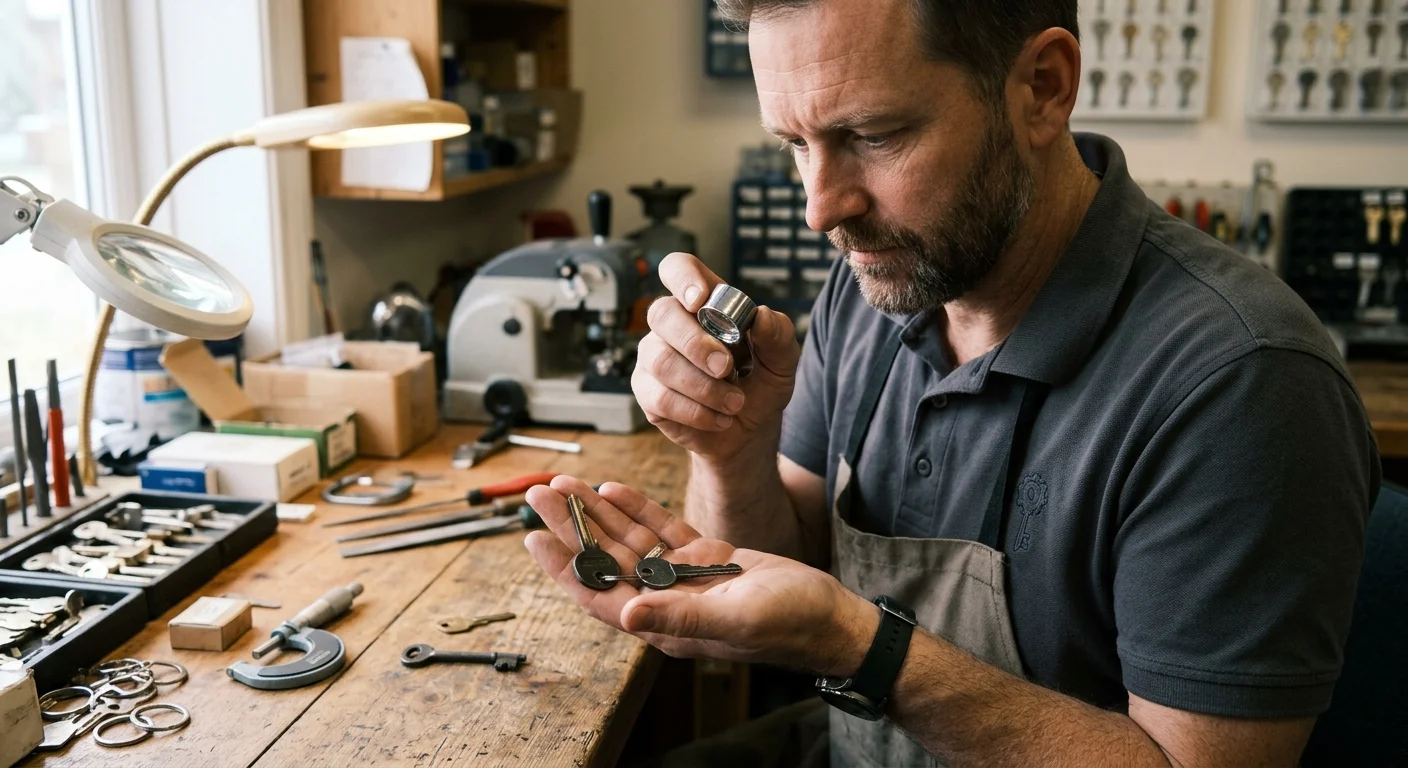
Identify what the key operates
Start with the furniture, not a guess about the key blank. A useful request names the item and the exact lock it operates. “Small silver key” won’t separate one cabinet or desk system from another.
Before calling, collect a few basic details:
- Photograph the full cabinet or desk.
- Photograph the lock face without blocking it.
- Photograph both sides of any remaining key.
- Record visible names, letters, or numbers accurately.
- Note every drawer or door the key operates.
A cabinet key might belong to a filing cabinet, built-in storage, display case, or separate lockbox. A desk key might control one drawer, several drawers, or a removable section. Report only what you’ve confirmed through normal use. Don’t assume similar-looking locks accept the same key.
Context matters too. A home-office desk in Chula Vista presents a different ownership trail than shared furniture in a Downtown San Diego office. Furniture moved into storage in Kearny Mesa may also have missing records or mixed keys. Explain where the item came from and who controls it.
If the key belongs to workplace furniture, review our guide to duplicating an office key. It covers the questions that can arise when an employee, tenant, manager, or property owner controls access.
Keep key markings private when sending photos. Share them directly with the professional assessing the request. Clear identification helps that professional evaluate the job, but it doesn’t prove copying is available.
Check whether any working key remains
The clearest dividing line is whether at least one key currently operates the lock. Confirm that before describing the job as a cabinet key copy or desk key copy.
Sort the situation into one of these categories:
- A key inserts and operates the lock.
- A key inserts but doesn’t operate the lock.
- A key is present, but you can’t confirm its purpose.
- No key remains for the furniture.
If a working key remains, ask whether that exact key can be evaluated for duplication. Bring or photograph the key as requested. Don’t assume a working key guarantees a copy. The professional still needs to identify what they’re looking at and decide whether they can accept the job.
If no working key remains, say that at the beginning. You aren’t requesting an ordinary duplicate at that point. You’re asking whether a key can be created for that particular lock or whether the hardware should be replaced. Our guide on whether a locksmith can make a key from a lock explains that distinction without promising that every lock qualifies.
Label multiple furniture items before sending photos. A simple note such as “reception desk, left drawer” prevents one key from being confused with another. That matters during office moves between places such as Sorrento Valley, Downtown San Diego, and Chula Vista.
Don’t test an unknown key in every nearby lock. Instead, describe what you’ve already confirmed and let the independent locksmith decide what needs inspection.
Separate copying from creating a new key
Copying and creating a key from a lock are different requests. Copying starts with an existing working key. Creating a key starts with the lock and requires an assessment of that specific hardware.
That practical split doesn’t establish whether your cabinet key can be copied. Accurate wording still matters when you call. “I have a working key and need another” describes duplication. “I have the locked cabinet but no key” describes a different service.
When no original remains, provide the locksmith with facts rather than a requested method. Explain whether the furniture is locked, whether it can be moved, and what identifying information is visible. Don’t ask for picking, bypass, or key-making instructions. The professional can decide what work they’re willing and able to assess.
Our key duplication service is the right starting point when a working key remains. Swift Key San Diego matches callers with licensed, independent local locksmiths. We don’t cut keys, inspect locks, own equipment, or decide whether a particular duplicate can be made.
The independent locksmith performs any accepted work. That professional also explains the scope and sets the price directly with you.
Confirm ownership and duplicate authorization
Authorization should be settled before anyone copies a cabinet or desk key. We couldn’t confirm one universal rule covering every furniture key and every ownership situation. Ask the professional what proof or approval they’ll require for your specific request.
For personally owned furniture, gather any receipt, order record, manual, or other record you already have. For workplace furniture, contact the person responsible for the desk, cabinet, office, or building. If the item belongs to an employer, landlord, tenant, school, or storage operator, get direction from that party instead of assuming you can approve a duplicate.
We also couldn’t confirm from approved sources how California treats restrictive wording stamped on a cabinet or desk key. Don’t treat the wording alone as a legal answer. Ask the key issuer, furniture provider, or independent locksmith what documentation and permission apply.
California locksmiths are regulated by the Bureau of Security and Investigative Services, which is part of the Department of Consumer Affairs. You can check a locksmith company or individual through the state’s license search. Swift Key San Diego itself is a referral service and doesn’t hold a locksmith license.
Be direct about anything uncertain. If ownership records are missing after an office move, say so. If the cabinet came with leased space, contact the responsible property representative. If several people claim control of the furniture, resolve that issue before arranging work.
A clear authorization trail protects the decision from being based on a guess. It also gives the professional the information needed to accept or decline the request.
Compare copying with lock replacement
Copying aims to produce another key for the existing lock. Replacement changes the lock hardware. Neither option should be chosen until the furniture, remaining key, and authorization are clear.
A copy may be the request to assess when a working key remains. Ask the professional to confirm that they can evaluate it. Also state how many authorized users need access, since that affects the number of copies you’re requesting.
Replacement may be the option to assess when no working key remains. It may also enter the discussion if the professional can’t accept the duplication request. That isn’t a promise that every cabinet or desk lock can be replaced. The hardware and furniture still need an individual assessment.
Compare the two proposals using the same questions:
- What work is included?
- Will the existing lock remain?
- How many keys are included?
- What information or authorization is required?
- Who sets the final price?
- Are there terms you should review before approving work?
We couldn’t confirm a reliable San Diego price for cabinet or desk key work from the approved sources. Swift Key San Diego doesn’t set the price. Ask the matched professional for the total quoted amount and scope before authorizing anything.
The right choice may differ between a personal desk in Mira Mesa and a bank of shared cabinets in National City. The neighborhood doesn’t decide the method. Ownership, the working-key status, the lock, and the professional’s assessment do.
Avoid replacing hardware solely because the original key is temporarily misplaced. First, confirm whether another working key exists and whether the authorized owner has records. Then compare the accepted options using written details instead of assumptions about cost or availability.
When to call us
A licensed locksmith should assess the job when no working key remains, the lock’s identity is unclear, or replacement is being considered. Swift Key San Diego is a referral service, and the independent professional performs the work and sets the price. Call us at (858) 400-4082 and we’ll connect you with a licensed local locksmith.