A locked filing cabinet in a San Diego office is not the same job as copying a desk key you still hold. Vertical cabinets, lateral cabinets, and pedestal files use small cam or plunger locks. Some still carry a stamped code a locksmith can work from. Some do not. Swift Key San Diego is a referral service. We match you with licensed independent locksmiths. The matched pro confirms ownership, then opening, origination, or replacement.
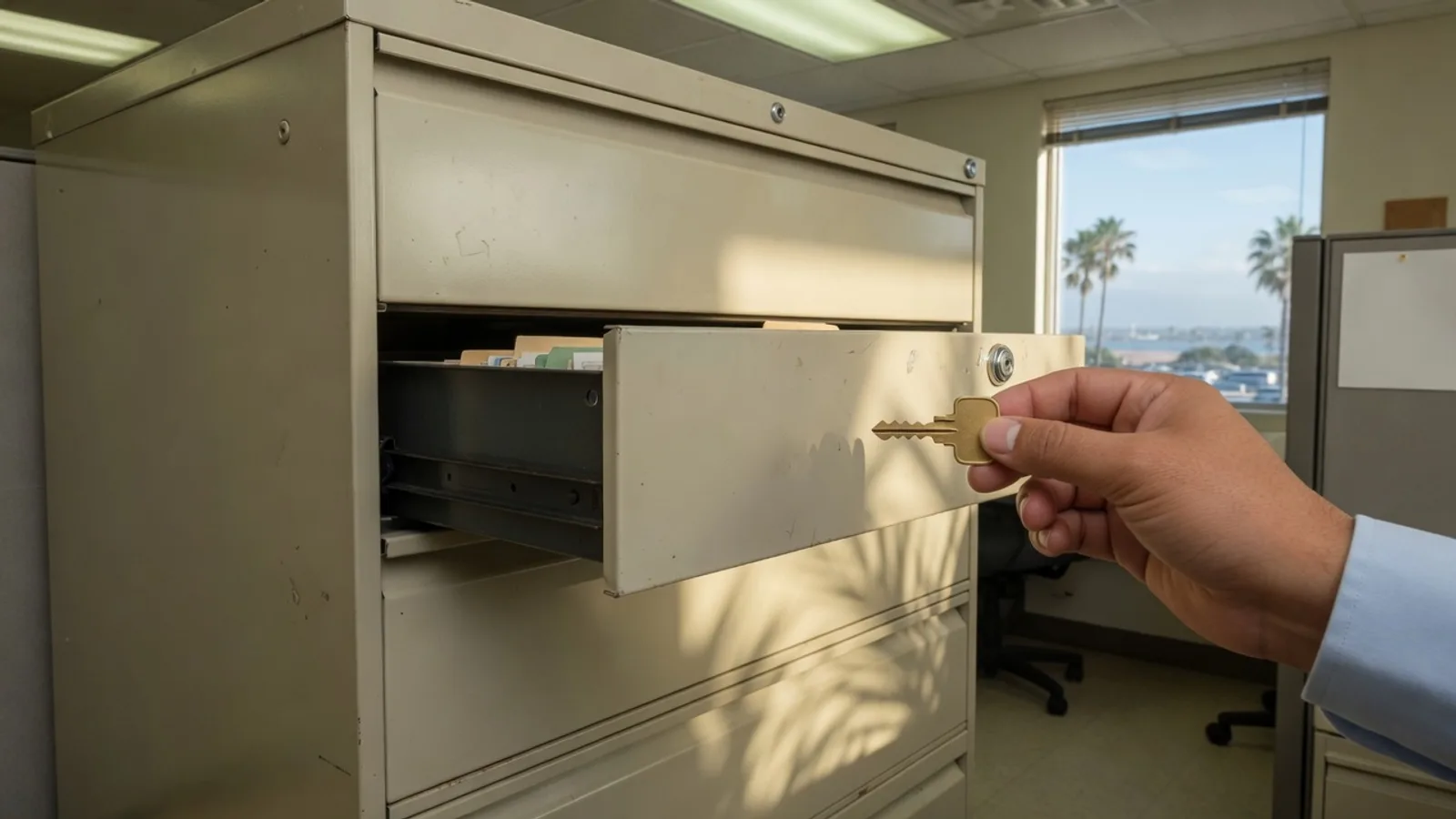
This is a lockout, not a souvenir key
Our cabinet or desk key copy page is for a working key you want duplicated. Use that page when a key still turns. Use this page when the cabinet will not open, the key is lost, the lock is stuck, or you only have a number stamped on the lock or on a remaining key.
Name the furniture. A four-drawer vertical file in a Downtown law office is one job. A five-drawer lateral against a Mission Valley cubicle wall is another. A fire-rated cabinet is a third. A pedestal under a desk is a fourth. Photograph the full cabinet, the lock face without covering the stamp, and both sides of any remaining key.
Look for a code. Some steel-cabinet locks have letters and numbers on the face, on a remaining key, or on a tag that used to hang from the ring. A locksmith may be able to originate from that code if the maker still supports it. Do not treat a code as a guarantee. The matched pro confirms whether that number still maps to a blank. Do not invent a brand or a series from memory. Read only what is stamped.
Ownership is the first filter. A cabinet in a home office in Chula Vista is yours if you own the furniture. A cabinet in a Downtown office usually belongs to the employer or the landlord. An employee calling without authorization is a stop, not a copy. Have the office manager, the owner, or a property manager on the call. Bring ID.
Say what failed. The key turns and the drawers stay locked. The key will not go in. No key remains. The plunger is stuck after a move from Kearny Mesa. Those are different openings. A safe opening is a different product. A fire-rated file can look like a safe. If you are not sure, photograph the label and let the locksmith say which it is.
Opening without making the cabinet worse
The first honest question is whether the lock can be picked, decoded, or originated without drilling. Many cam locks on ordinary steel files can be opened that way. Drilling is a last resort on cheap hardware and a problem on a fire-rated cabinet. Do not start with a drill because a video made it look easy. Let the matched locksmith choose the method after they see the lock.
California Business and Professions Code section 6980 treats originating keys and opening locks as locksmith work when someone does it for pay. Check the company on the state’s license search before anyone works in the office. Ask to see the pocket license. The matched pro invoices you directly. Swift Key San Diego does not collect that payment and does not hold a locksmith license.
If a working key remains for a matching cabinet in the same set, say so. Some offices keyed several files alike. A remaining key from the cabinet next to it may be the whole answer, plus a duplicate. That is key duplication, not a lock change.
If the lock is worn or the drawers rack after a move, replacement of the cam lock may be cleaner than origination. The locksmith confirms fit. A cam lock is not a house deadbolt. The wrong length or cam shape leaves the drawers unlocked or jammed.
Price talk belongs in a written quote from the person doing the work. Swift Key San Diego does not set prices, waive fees, or publish a filing-cabinet menu. Ask the locksmith to line-item opening, origination from a code, a new cam lock, and extra keys.
Do not ship the only remaining key to an internet cutter you have not verified. Office files often hold personnel records, medical charts, or client files. The person who opens the cabinet should be standing in the office with you.
What to have ready on the call
Photograph the cabinet, the lock face, and any stamped code. Note whether it is vertical, lateral, or a pedestal. Note the floor, the suite, and whether a building engineer has to unlock the suite first. Downtown high-rises and Kearny Mesa parks handle after-hours access differently. Name the person who can authorize the work.
If the contents are regulated, say so in general terms. “Personnel files” or “patient charts” is enough. The locksmith does not need the contents. They do need to know who may stand there while the cabinet is open.
Ask who is coming: a BSIS-licensed locksmith employee, and which company name will be on the receipt. Stay until every drawer that should open does open, and until you have at least one working key if origination was part of the quote. If a fire-rated cabinet still needs a specialist, get that in the same note.
Keep the old lock if it was replaced. The stamp on the old cylinder is still information if a matching cabinet in the next office fails next month.
For cluster mailboxes, suite doors, and tenant turnover, that is a commercial locksmith conversation, not a file cabinet. Keep those jobs separate on the call.
When to call us
Call when a San Diego filing cabinet will not open, the key is lost, or you have a stamped code and need a licensed locksmith to originate or replace the lock. Swift Key San Diego matches you with licensed independent locksmiths who do that work. Call us at (858) 400-4082 and we’ll connect you with a licensed local locksmith.