The stamp on a house key from a Mission Valley apartment or a Kensington bungalow does not, by itself, settle whether a spare can be cut. A do-not-duplicate mark is a warning on the bow. A licensed locksmith still has to read the keyway, confirm who controls the lock, and decide whether an authorized copy is possible.
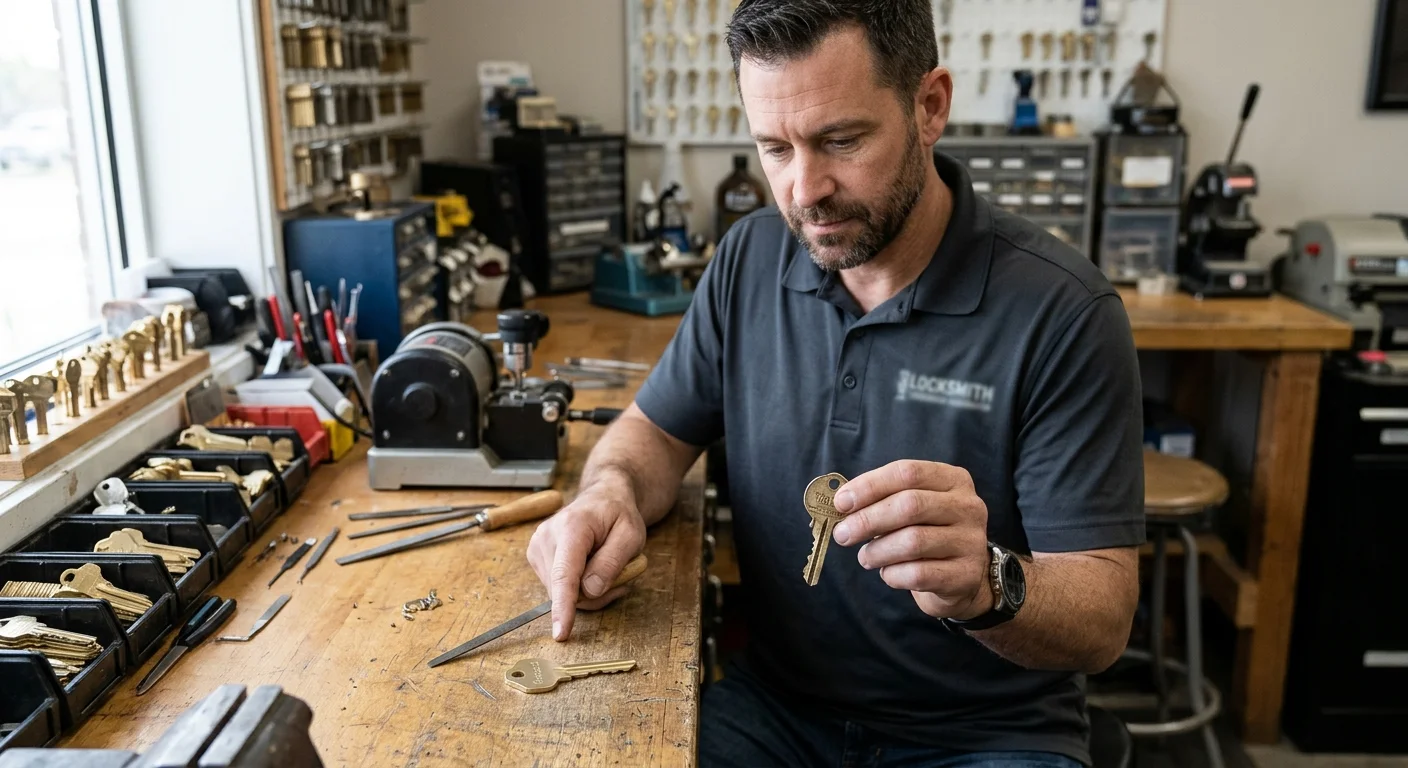
Read the key stamp without assuming the rule
Look at the bow before anyone loads a blank. The words may read “do not duplicate,” “do not copy,” or a property name. Property managers in City Heights, Logan Heights, National City, and Chula Vista stamp keys as a control habit after tenant turnover. Coastal condos in Pacific Beach and Mission Beach do the same on unit and common-area keys. The stamp is a signal to pause. It is not a complete rule.
California statutes that would give those words legal force on their own could not be confirmed in the primary sources this site relies on. Until a verified statute is on the record, do not treat the stamp as a statewide ban, and do not treat it as a green light. Hardware counters and grocery kiosks often refuse stamped keys as a store policy. That is a business choice. It is not a confirmed California law.
Read the rest of the head of the key. Some bows also carry a brand, a keyway code, or a serial. Some only carry the warning. In the city of San Diego, about 49.6% of homes were built before 1978. Those houses often use common residential keyways that a standard machine can cut. A manager can still stamp them. The stamp and the blank are two different facts.
Padlock keys follow the same split. A common padlock key copies when a matching blank exists and the person who controls the lock authorizes it. A restricted padlock does not copy at a big-box machine. Vehicle keys are a different job entirely. An auto-parts counter may cut some older mechanical car keys. Keys with electronics need programming by a locksmith or a dealer. That is not the same question as a stamped house key.
If you want the process for key duplication in San Diego, start with the key in hand and the person who actually controls the door. Swift Key San Diego does not cut keys. We match you with a licensed independent locksmith who confirms the keyway and performs authorized work.
Check who controls duplicate authorization
Who may authorize a do not duplicate key copy is the person or company that controls the lock system. For a house you own in North Park, Normal Heights, or El Cajon, that is usually you. Bring identification that ties you to the address. The locksmith is checking control of the lock, not collecting a story.
A tenant in Chula Vista, San Ysidro, or a Mission Valley complex often does not control building or unit keys. Those copies usually sit with the landlord or the property manager. If the key is for an apartment door, gate, or laundry room, get written authorization from the landlord or property manager before you ask a shop to cut one. The matched locksmith may decline without written authorization from the party that controls the hardware.
Condo and HOA keys on the coast work the same way. A Coronado or La Jolla association may keep common-area and garage keys on a controlled list. Your unit key and the lobby key can follow different rules. Downtown high-rises, Kearny Mesa offices, and East Village storefronts usually put copy control with building management. Restricted commercial systems go further: the account holder and the manufacturer’s authorized dealer both have to clear the copy.
The locksmith looking at the key is the one who confirms that chain. Swift Key San Diego does not set that policy and does not duplicate keys. California locksmiths who rekey, install, repair, or originate keys must hold a Bureau of Security and Investigative Services license. You can verify a company or employee on the Department of Consumer Affairs site before anyone touches the key.
A narrow exemption exists in California Business and Professions Code section 6980(j). A person whose only work is making a duplicate from an existing key is not, under that definition, acting as a locksmith. That is why a hardware aisle can copy a common house key. The exemption is narrow. Any extra locksmith work, including originating a key or changing a lock, requires a license. Restricted key duplication still depends on who owns the system and whether a legal blank exists.
Separate a stamp from a restricted keyway
This is the distinction most kiosk signs blur. A stamp is ink or stamping on the bow. A restricted keyway is the shape of the blade and the way blanks are sold. They can appear on the same key. They often do not.
An open residential keyway (the common Schlage and Kwikset families on older San Diego houses) can be cut on widely sold blanks. Stamping “do not duplicate” on that bow does not change the mill of the blank. Anyone with a matching blank and a machine can attempt a copy. That is why a stamp on a 1960s Clairemont or College Area house key is a weak control. The lock is still a common lock.
A restricted or patented keyway is different. Blanks are not sold at the grocery kiosk. The manufacturer sells them through authorized locksmiths, often against a card, a letter, or an account. High-security systems add extra cuts or side milling that a standard duplicator cannot follow. If that is the key in your hand, do not expect a hardware machine to accept it.
You cannot read restriction from the warning text alone. Two keys can both say “do not duplicate.” One is a common KW-style blank from a South Bay rental. The other is a controlled commercial key from a Sorrento Valley suite. Only the keyway, the blank supply, and the authorization file tell you which is which. A licensed locksmith confirms that on the bench. A photo of the stamp does not.
The sequence for any key duplication is the same: identify the keyway, confirm who controls copies, then cut only if a legal blank and an authorizing party are both in place. Restricted key duplication without that file is not a gray area for the locksmith. It is a no.
What a locksmith may request before copying
Expect questions. They are the job, not a delay tactic. The matched locksmith may ask for photo ID, proof you control the property, a lease, an HOA letter, or a factory authorization card. For a house you own, a matching address on your ID is the usual start. For a rental, office, or master-keyed building, written authorization from the party that controls the system is the usual start.
California locksmiths are required to carry a pocket license and show it on request. Ask to see it when they arrive. Then check the company or the employee on search.dca.ca.gov. BSIS also takes license questions at (800) 952-5210. That number is the state bureau, not this referral line.
The locksmith may also refuse. Common reasons: the keyway is restricted and you are not the account holder, the key is too worn to read, no legal blank is on hand, or the person standing there cannot show control of the lock. None of those is a confirmed statewide rule about the stamp. They are professional and manufacturer controls. Do not push for impressioning, decoding, or bypass. Those are not spare-key errands, and this page will not walk through them.
Price is set by the locksmith you are matched with, not by Swift Key San Diego. Ask what the blank and the cut will cost before any cutting starts. There is no published brand fee, waiver, or free-copy policy. There is also no arrival window this site can promise. A real person answers the phone. The locksmith on the other end confirms the work.
If you are comparing a hardware counter to a locksmith visit, remember the exemption above. A store that only copies from an existing common key is doing a narrower task. A licensed locksmith is the right call when the key is stamped, restricted, worn, or tied to a building you do not fully control.
When rekeying is the better path
A copy only adds a key. It does not retire the keys you cannot see. If a roommate left a Normal Heights duplex, a vendor still has a Santee shop key, or a lost ring from a Point Loma house never came back, another duplicate leaves the old keys live. In those cases, rekeying the lock is the cleaner path. The cylinders change to a new combination. Old copies stop working.
Rekeying is also the better path when the stamp exists because someone wanted control, but the keyway is common. Decades of copies may already be out on an older San Diego house. About half the homes in the city were built before 1978. Those locks have had a long time to collect extras. Cutting one more stamped key does not restore control.
Moving into a rental in Oceanside or a condo in Encinitas is the same logic. You do not know how many keys the last household made at a kiosk. A stamp on the bow does not tell you. Rekey when you take possession if the lease and the owner allow it. Copy only when you already control the combination and you need a spare for someone you trust.
The matched locksmith can look at the cylinders and say whether a rekey is possible on the hardware you have. Some locks rekey. Some are better replaced. This site does not publish times, pin-count limits, or price bands for that call. The locksmith on site makes it after seeing the door.
When to call us
Call when the key is stamped, the keyway is unclear, or you need a licensed locksmith to confirm who may authorize a copy or a rekey. Swift Key San Diego is a referral service. We do not cut keys, own a shop, or hold a locksmith license. Call us at (858) 400-4082 and we’ll connect you with a licensed local locksmith.