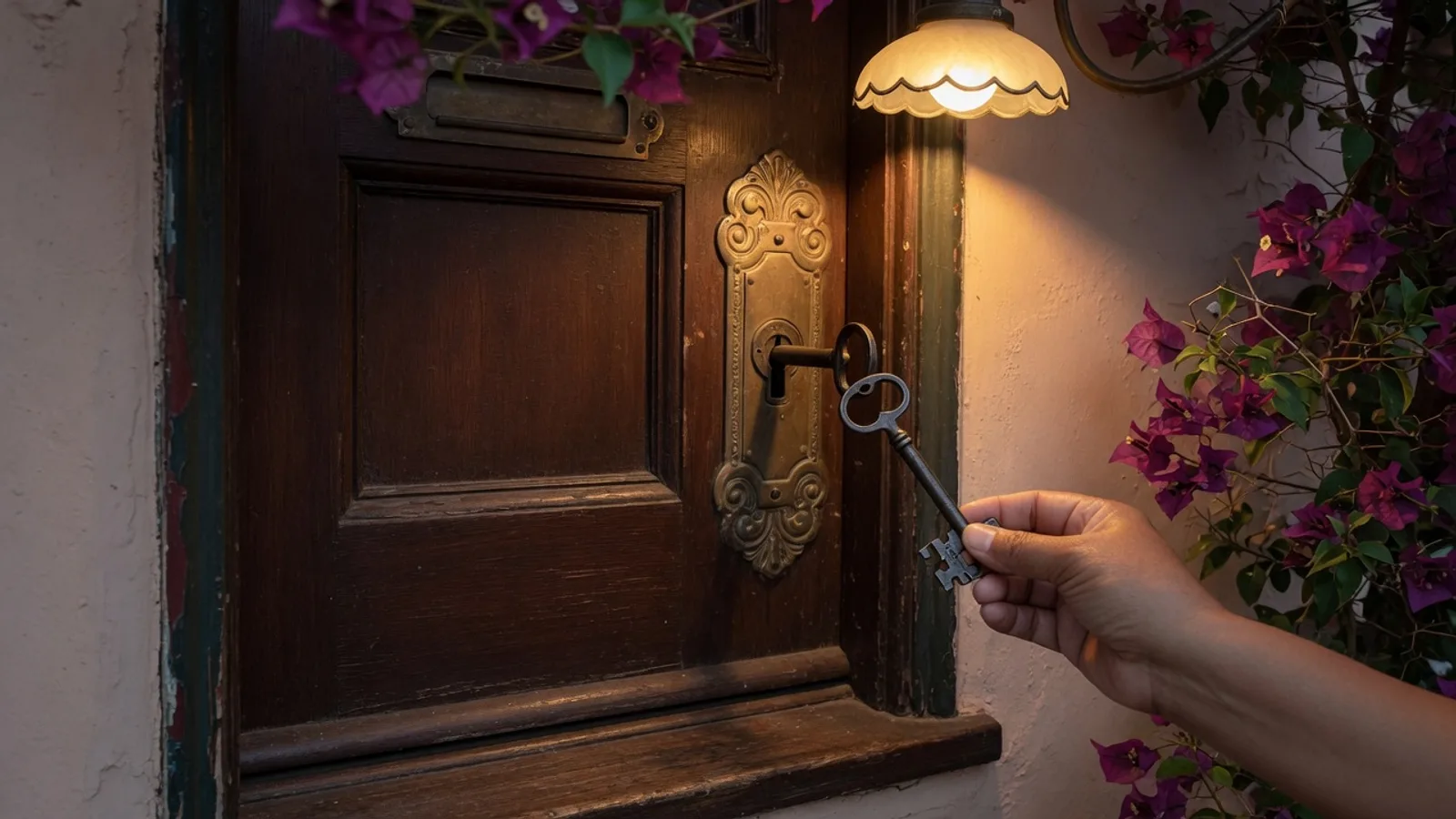
A skeleton key on an old San Diego door is not a hardware-store house key. Bit keys, barrel keys, and warded keys that still turn a mortise in North Park, South Park, or Golden Hill need a locksmith who can read the lock, not a kiosk that only cuts modern cylinders. Swift Key San Diego is a referral service. We match you with licensed independent locksmiths. The matched pro confirms whether this lock can be copied, originated, or should be rebuilt.
What you actually have in your hand
Start with the door, not a guess about the blank. Photograph the full door, the lock face, both sides of any remaining key, and the edge of the door where the mortise pocket sits. Record any name, number, or patent mark on the lock plate. Do not assume a long, thin key with a simple bit is “universal.” Skeleton key is a family of shapes, not a single blank that opens every old house in the county.
About 49.6% of homes in the city of San Diego were built before 1978. That Census figure, already used on this site’s San Diego city page, is why these locks still show up. Craftsman bungalows, pre-war apartments, and older cottages in Normal Heights and University Heights often kept original mortise hardware. A mortise lock repair call is the sister job when the lock itself is worn. This page is the key: copy, originate, or admit the blank is gone.
Sort the situation before you call:
- A working skeleton or bit key still turns the lock.
- A key exists but is bent, worn, or snapped at the bit.
- No key remains, and the lock is original.
- The lock was swapped to a modern cylinder and the old key is only a souvenir.
A working original is the easiest path. A licensed locksmith can often duplicate from that key when they stock or can cut the blank. A snapped bit is extraction plus origination. No key at all means the pro works from the lock. That is locksmith work, not a hardware-store copy.
Bring proof you control the door. A title, a lease, or a property-manager letter plus photo ID is the usual set. A licensed locksmith in California has to know who is asking for a new house key. If the house is in a sale, a rental, or still in a previous owner’s name, say so on the call.
Why the kiosk usually fails this lock
Modern house keys are cylinder keys. The cuts sit along a flat blade. A skeleton or bit key is a different geometry. The bit has to match wards or levers inside a mortise case. A kiosk that only traces SC1 and KW1 blanks cannot invent that geometry from a photo you texted.
California Business and Professions Code section 6980 defines a locksmith to include originating keys for locks. A person whose only activity is making a duplicate from an existing key sits in a narrower exemption. Originating a key from a mortise lock is locksmith work. Check the company on the state’s license search before anyone opens the case.
Do not force the old lock. A screwdriver in a warded keyway, graphite dumped into a dry case, and a hammer on a frozen bit all turn a copy job into a lock replacement. Original hardware on a craftsman door is often the part you cannot buy off a big-box wall the same afternoon. Let the matched locksmith decide whether to copy, rebuild, or convert the cylinder.
If you still want the original look, say that. Conversion to a modern deadbolt and knob is a different conversation, covered in our types of door locks guide. Some owners keep the mortise and add a Grade 1 deadbolt. Some convert the pocket. The fire-exit and insurance questions on double-cylinder hardware belong in that visit, not as a surprise after the old bit is gone.
Price talk belongs in a written quote from the person doing the work. Swift Key San Diego does not set prices, waive fees, or publish an antique-key menu. Ask the locksmith to line-item duplication from a working key, origination from the lock, case repair, and any conversion.
A restoration shop outside the county may rebuild museum hardware. That is a different trade from a local locksmith opening a Golden Hill rental on a Tuesday. If the matched pro says the lock needs a restorer, get that in writing and keep the original parts.
What to have ready on the call
Photograph the door, the lock face, and both sides of any remaining key. Note the neighborhood and whether the door is an original wood slab or a later replacement. Coastal salt in Ocean Beach and Point Loma eats old cases. Inland heat in El Cajon dries the same oil. Those are conditions to mention. They are not a diagnosis.
Say whether any working key remains. If the only key is in a relative’s house in Arizona, say that. A duplicate you can mail later is not the same as a lockout today. For a lockout on the same door, use home lockout first, then come back to the key.
Ask who is coming: a BSIS-licensed locksmith employee, and which company name will be on the receipt. The matched pro invoices you directly. Swift Key San Diego does not collect that payment and does not hold a locksmith license.
Stay at the door until you have tried every function the quote named. Latch, deadbolt if the mortise has one, and the matching door if the house was keyed alike. If a function still needs a restorer or a conversion, get that in the same note.
Keep the old key even if it is worn. A worn bit is still information. Do not grind it to “clean it up” before the locksmith sees it.
When to call us
Call when a skeleton or antique house key is lost, snapped, or will not copy at a kiosk, and you need a licensed locksmith to work from the key or the mortise. Swift Key San Diego matches you with licensed independent locksmiths who do that work. Call us at (858) 400-4082 and we’ll connect you with a licensed local locksmith.