A corroded pedestrian gate lock in Imperial Beach doesn’t automatically need replacement. A residential locksmith should inspect the hardware, gate alignment, cylinder, and latch before you approve the work.
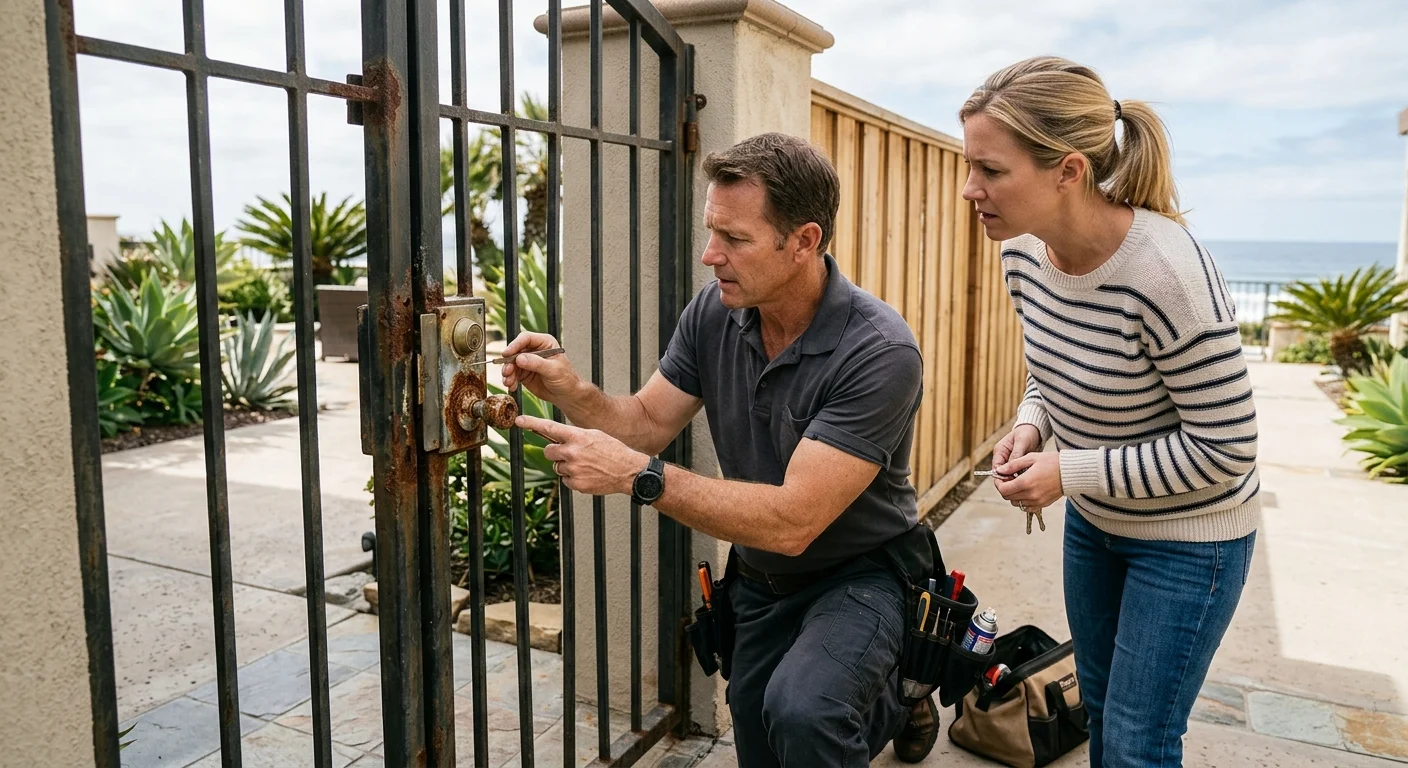
Visible corrosion is only one part of the decision. The right scope depends on what’s worn, what still operates, and whether compatible parts are available.
Identify the gate and lock material
Start by documenting what’s installed. Take clear photos of the lock’s inside and outside faces. Include the latch edge, strike area, hinges, fasteners, and any visible labels.
Don’t identify the base material from its color alone. Look for a manufacturer name, model number, or stamped marking. If those details aren’t visible, ask the locksmith to identify the hardware during inspection. The manufacturer may also have archived instructions for an older model.
Note how the lock is mounted. It might sit inside the gate frame, attach to its surface, or pass through a prepared opening. Record whether the gate has a keyed cylinder, thumb turn, lever, knob, or another operating part. These observations help the locksmith compare repair parts with the existing assembly.
The gate itself also needs attention. Photograph the frame, welds, hinges, and the point where the latch meets the strike. Describe any movement, scraping, loose pieces, or changing gaps you’ve noticed. Don’t label the cause before someone inspects it.
No verified material specification or product-life figure was available for this guide. Check the gate maker’s documentation and the lock manufacturer’s instructions before choosing replacement hardware. If you’re also evaluating electronic hardware, our coastal smart-lock guide covers that separate decision.
A complete hardware record gives the locksmith a better starting point. It also helps you compare the proposed work with the parts already on your Imperial Beach gate.
Check alignment before blaming corrosion
Test the gate gently without forcing the key, handle, or latch. First, observe how the lock behaves while the gate is open. Then close the gate normally and note whether the behavior changes.
If the key turns with the gate open but resists when closed, report that exact difference. Do the same if the latch moves freely when open but catches against the strike. Those observations don’t prove a cause. They help the locksmith inspect alignment separately from the lock’s internal condition.
Stand back and look at the gate within its frame. Note whether it appears level and whether the gaps look consistent. Watch the latch as the gate closes. It should be clear where contact occurs, but don’t loosen hinges or enlarge the strike opening before the inspection.
Check for visible movement at the posts, hinges, mounting screws, and lock case. Record what moves and when it happens. A short video can capture an intermittent bind better than a still photo.
Avoid repeatedly forcing a stiff key. Don’t strike the lock or bend the latch to make it close. Those actions change the condition that the locksmith needs to assess.
Ask the independent locksmith to describe the alignment findings before proposing work. The scope may concern the lock, the gate, the strike position, or more than one item. If gate fabrication or structural work falls outside the locksmith’s work, confirm who will handle that portion.
The Imperial Beach locksmith guide explains what information to prepare when requesting local help.
Separate surface wear from lock failure
Photograph each visible condition before cleaning anything. Note discoloration, flaking finish, rough areas, staining, loose fasteners, or material around the keyway. Also record what the lock actually does.
Useful operating notes include whether the key enters fully, turns in both directions, or becomes difficult at one position. Note whether the handle returns after use and whether the latch stays extended or retracted. Don’t force any part to complete the test.
Appearance alone doesn’t establish the repair scope. Ask the locksmith to identify which marks are limited to the exterior and which parts show mechanical trouble. The answer should address the cylinder, latch, strike, fasteners, and lock body separately.
Cleaning and lubrication instructions can vary by product. This guide couldn’t confirm a suitable product or procedure for every gate lock. Check the manufacturer’s written care instructions before applying a cleaner, abrasive, coating, or lubricant.
Rekeying and replacement also solve different problems. Rekeying changes the lock’s internal pins or tumblers so a different key operates it. It doesn’t replace the surrounding hardware. Our lock rekey service page explains how we connect homeowners with an independent locksmith for that work.
Replacement installs new hardware. It may be considered when the approved scope calls for removing the existing assembly. See our lock replacement service page for the referral process.
Ask for the finding behind each recommendation. “Corroded” is too broad by itself. A clear assessment should identify the affected component and the work being proposed.
Plan hardware for verified coastal exposure
Imperial Beach is the city focus for this gate inspection, but this guide couldn’t confirm a verified salt-air level, distance boundary, corrosion rate, or hardware lifespan for any address. Don’t apply a general coastal claim to one property without product-specific documentation.
Instead, document the conditions you can observe. Note whether the gate is fully exposed or sheltered. Photograph recurring residue, standing moisture, nearby irrigation, or direct weather exposure if you see it. These details describe the location without assigning an unsupported cause.
Ask the lock manufacturer whether the exact model is approved for the gate’s setting. Request written installation and care instructions. If the manufacturer lists required materials, fasteners, finishes, or maintenance steps, compare those instructions with the proposed hardware.
The locksmith should also confirm physical compatibility. Ask about the gate opening, frame dimensions, lock position, latch direction, strike location, and clearance around moving parts. Confirm whether the proposed assembly uses the existing preparation or requires changes.
Don’t choose a product from appearance alone. A matching finish doesn’t confirm material, fit, or suitability. Record the complete product name and model before approving the purchase.
If no manufacturer documentation can be found, say so plainly. Ask the independent locksmith what can be confirmed from the installed hardware and what remains uncertain. You can then decide whether a limited repair or replacement scope makes sense without relying on an invented service-life claim.
Keep the documentation after the work. The model information and written care instructions can guide later inspections.
Confirm repair or replacement scope
Ask for a written scope that names each affected component. It should distinguish inspection findings from optional changes. That makes it easier to see whether the proposal addresses the cylinder, latch, lock body, strike, fasteners, gate alignment, or complete assembly.
For a repair, confirm which existing parts will remain. Ask which parts will be adjusted, cleaned, or replaced. If a component can’t be identified or sourced, request that the uncertainty be stated before you approve the work.
For replacement, confirm the exact hardware proposed. Ask whether gate preparation must change and whether separate gate work is required. Also confirm the keying plan, the number of keys requested, and which party supplies the hardware.
Price must come directly from the independent locksmith. Swift Key San Diego doesn’t set prices, collect payment for the work, or decide the final scope. The customer contracts with and pays the matched professional directly.
California locksmith work is regulated by the Bureau of Security and Investigative Services. You can check a company license or employee registration through the state’s license search. Ask which licensed company will appear on your paperwork before authorizing work.
Don’t approve a vague instruction to “fix the gate lock.” The document should state what will be done and what won’t be done. If alignment and corrosion both need attention, assign each task to the appropriate professional.
That process gives you a grounded repair-or-replace decision. It also keeps visible wear, mechanical findings, compatibility, and price from being blended into one unclear recommendation.
When to call us
Call when an exterior gate lock binds, won’t latch, has loose parts, or needs professional inspection before repair or replacement. A licensed local locksmith can inspect the hardware and explain the proposed scope.
Call us at (858) 400-4082 and we’ll connect you with a licensed local locksmith.