A worn keyway or missing house key doesn’t always mean every lock part must go. A residential locksmith may discuss replacing only the cylinder, but the hardware must be identified first. Not every lock offers a separate cylinder-only option.
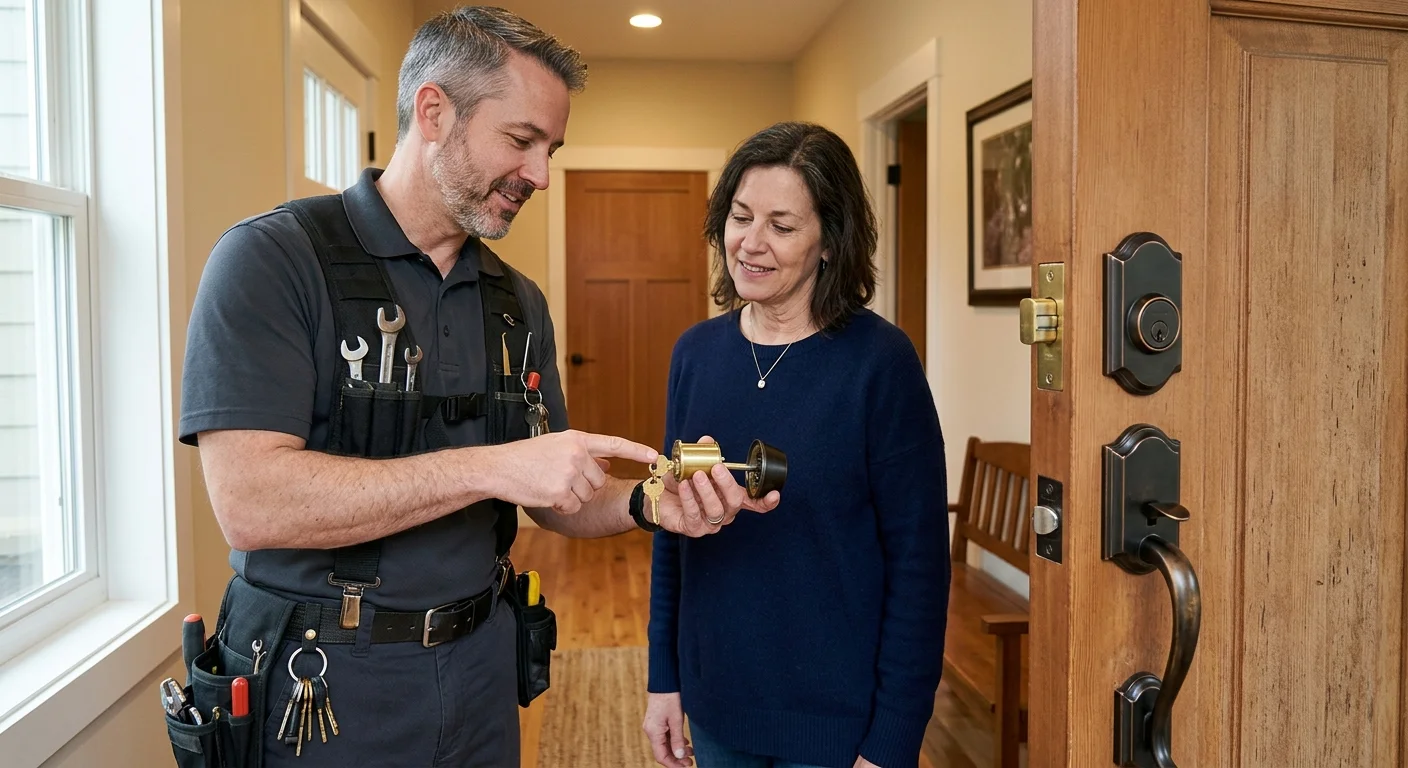
Separate the cylinder from the rest of the lock
For this decision, it helps to name the visible parts correctly. The cylinder is the part where the key enters. The complete assembly can also include the lock body, latch, exterior and interior trim, and strike. Those pieces shouldn’t be treated as one interchangeable unit.
A cylinder-only discussion concerns the keyed portion of compatible hardware. It doesn’t automatically include a new latch, strike, handleset, or surrounding trim. Ask the locksmith to identify exactly which component would remain. That keeps a limited repair from being confused with complete lock replacement.
The word “lock” can make estimates hard to compare. One professional may mean the cylinder. Another may mean everything mounted on the door. Request the manufacturer, model, keyway, and proposed replacement part in writing. If a model can’t be identified, ask how the professional confirmed compatibility.
The answer also depends on what “replace” means in your situation. A missing key, a key compatibility problem, and visibly damaged hardware are different starting points. Describe the symptom without diagnosing it. Say whether the key turns, catches, or no longer belongs in the property. The matched professional can then inspect the hardware and explain whether cylinder-only work is available.
Check the lock type and current condition
Start with the markings on the hardware, the key shape, and the parts mounted on both door faces. Don’t assume two locks are compatible because their finishes match. Manufacturer documentation should settle model-specific questions before parts are ordered or installed.
The Schlage B60 offers a useful example. Schlage identifies the residential B60 as a standard 5-pin C keyway, with a 6-pin cylinder available. The commercial B600 is different hardware. Its specifications shouldn’t be applied to a B60 simply because the names look similar. Schlage lists the B60 for doors from 1-3/8 inches to 1-7/8 inches thick.
Keyway differences matter too. Yale’s Assure Lock 2 specification identifies a KW1 5-pin keyway. Yale’s reference to rekeying that model to existing keys means existing KW1 keys. It doesn’t mean the lock can be keyed to a Schlage C house key.
Kwikset identifies the Halo and Halo Select cylinder as SmartKey Security KW1. That isn’t an SC1 cylinder. These examples show why a brand name alone doesn’t confirm which cylinder, key blank, or rekeying method applies. Our guide to door lock types in San Diego can help you describe the hardware before calling.
Local housing age doesn’t identify the installed lock. Census ACS data shows about 49.6% of homes in the city of San Diego were built before 1978. Treat that as housing context, not proof of any lock’s age or condition. The hardware still needs direct inspection.
When rekeying may address the key problem
Rekeying and cylinder replacement aren’t the same request. Rekeying changes the cylinder’s internal pins or tumblers so a different key operates it. Replacement removes existing hardware and installs another component. A locksmith should confirm which option the lock supports.
Rekeying may be discussed when the main concern is key control rather than a requested hardware change. Common situations include a lost key or uncertainty about who still has a copy. The cylinder, lock model, and desired key must still be checked for compatibility. Our lock rekey service page explains how we connect callers with independent professionals for that evaluation.
Tell the locksmith which doors you want one key to operate. Don’t assume every existing lock shares the same keyway. The Yale, Kwikset, and Schlage examples above show why that detail matters. A professional may need to inspect each lock before confirming whether a shared-key plan is possible.
Price shouldn’t decide the work until the scope is clear. We couldn’t confirm a current San Diego market figure for cylinder-only work from an approved primary source. The independent locksmith sets the price, and the customer pays that professional directly. Ask for the hardware, labor, and any separate charges before authorizing work. For broader context, read our guide to rekeying versus new locks, then confirm current pricing with the professional.
When cylinder replacement may be discussed
Lock cylinder replacement may be discussed when the requested change concerns the keyed component, not every part on the door. That still isn’t a promise that the cylinder separates from your particular lock. The professional must identify the assembly and verify an appropriate part.
Bring the working key if one exists. Share photos of both sides of the door and any model markings. Also explain whether you’re trying to preserve the existing trim, match another house key, or change the keyway. Those goals can lead to different recommendations.
Ask the professional to explain four points before work begins:
- Which exact cylinder is being removed
- Which components will remain installed
- Whether the replacement matches the existing keyway
- Whether a new key will operate any other doors
A cylinder swap shouldn’t be described as automatically safer than rekeying or complete replacement. The approved sources don’t support that blanket claim. Security labels also need care. For example, Schlage publishes the B60 against ANSI/BHMA A156.36-2010 Grade 1 and gives it a BHMA AAA rating. That published grade isn’t a resistance time, burglary rating, or guarantee.
California regulates locksmith work through the Bureau of Security and Investigative Services, known as BSIS, rather than CSLB. You can check a locksmith company or employee credential through the Department of Consumer Affairs before agreeing to work.
When the full lock needs separate consideration
A cylinder-only request shouldn’t hide problems elsewhere in the assembly. Tell the professional about loose trim, a latch that won’t move, a deadbolt that won’t line up, or visible damage around the door. Those observations help define whether the question reaches beyond the keyed component.
Keep the door and frame separate from the lock decision. Ask what the inspection found and which proposed work addresses each symptom. If the professional recommends complete replacement, request the exact model and included components. Our lock replacement service page explains how we connect San Diego County callers with licensed, independent local locksmiths.
A clear written scope should answer several practical points:
- Is the cylinder being rekeyed or replaced?
- Are the latch, strike, body, and trim staying?
- Which keys will work after the change?
- Which manufacturer documents confirm compatibility?
- Who sets the price and handles questions about the work?
Don’t approve a vague “new lock” description when only one part was discussed. Likewise, don’t insist on replacing the lock cylinder only before the hardware is identified. The inspection may reveal a compatible cylinder option, a rekeying option, or a reason to consider the complete assembly separately.
Swift Key San Diego is a referral service. We don’t perform locksmith work, set prices, or provide warranties. The customer contracts with and pays the matched independent professional directly. That distinction matters when reviewing the proposed hardware, final scope, and terms.
When to call us
Call when the cylinder, keyway, and full-lock choices aren’t clear from the hardware label. We match San Diego County callers with licensed, independent local professionals who can inspect the lock and confirm available options. Call us at (858) 400-4082 and we’ll connect you with a licensed local locksmith.