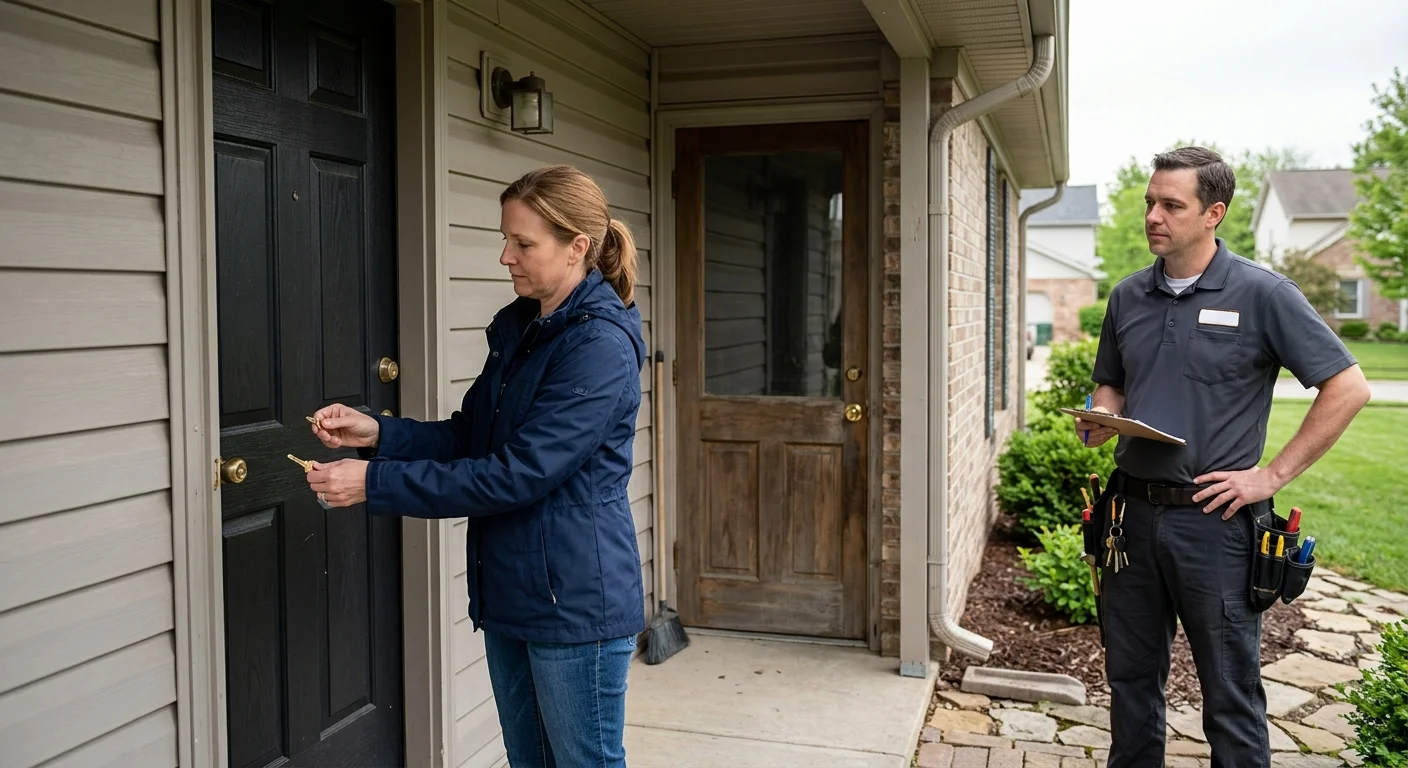
The same house key turns the front deadbolt and stops cold at the side door. That’s a common San Diego County call for a key locksmith, and it doesn’t always mean the lock failed. Those two doors may never have been meant to share one key.
Confirm which doors the key should operate
Start with a list, not with the lock. Write down every door that key is supposed to open: front deadbolt, front knob, side door, garage man-door, slider, gate, laundry, or an ADU. If you can’t name the set, you can’t tell a mismatch from a failure.
A lot of San Diego County houses were never built as one-key homes. About 49.6% of homes in the city of San Diego were built before 1978. A Point Loma bungalow may still have its original front cylinder and a later garage lock. A Chula Vista rental may use one key for the unit and another for a shared gate.
Keyed-alike is a choice someone made, not a default. The key on your ring may be the front-door key only. It may be a leftover from the last tenant that still works on one cylinder. If you just moved in, treat unknown keys as unknown. Walk the property and test only the doors you have the right to open. Note which ones turn, which ones enter but won’t turn, and which ones won’t take the blade.
HOA gates and cluster mailboxes are separate systems. If you rent, confirm with the owner which keys they issued. If a house key works on one door only, write that down as a clue, not a verdict.
Compare the working and nonworking locks
Stand at the door that works, then at the door that doesn’t. Look at the hardware, not just the key. Brand on the faceplate, shape of the keyhole, and deadbolt versus knob all matter. Two doors on the same wall can still be two lock families.
Watch what the key does. It may refuse to enter, slide in partway, go all the way in and refuse to turn, or turn a little and bind. A blade that won’t enter often means a different keyway. A blade that enters and won’t turn often means different pins, a worn key, or a cylinder swollen from weather. The same key won’t open another lock until you know those locks were keyed alike.
Salt air in Imperial Beach, Pacific Beach, and Encinitas can rough up a street-side cylinder so a key that still works on a sheltered door feels wrong at the front. Inland heat in El Cajon and Escondido can leave grit in the keyway. Don’t force the key, add pliers, or take the lock apart. You can snap a key in the plug.
If the two locks are different brands, stop assuming they should share a key. Different makers often use different keyways. We cover that brand problem in Schlage and Kwikset on one key. If both locks look like the same family and the key still fails on one, you’re closer to a pin mismatch or wear.
Check another authorized copy without forcing it
If you have a second key you’re allowed to use, try that one next. Try it in the door that already works, then in the door that doesn’t.
Three outcomes matter. The spare works where the daily key fails: the daily key is the weak link, often from wear or a sloppy copy. Neither key works on the second door, and both work on the first: that lock is probably keyed differently, or that cylinder has its own problem. The spare fails in both doors: you may be holding a bad copy of a copy.
Hardware-store copies drift. Each generation loses a little of the original cut. If you need another copy, start from the best original you still have. A worn house key can still open a loose lock and fail a tighter one on the same house.
California law treats simple duplication from an existing key differently from rekeying. Making a duplicate from a key you already hold can fall outside locksmith licensing when that’s the only work. Changing pins, opening a lock, or originating a key is locksmith work.
Bring every authorized copy. The locksmith we connect you with can compare the cuts. If key duplication is all you need, say so. If the spare also fails the second door, you’re not in duplication territory. Don’t test keys that aren’t yours.
Separate key wear from different keying
Wear and different keying feel similar in the hand. Wear is a key or a cylinder that used to match and no longer does. Different keying is a lock that was never on that combination.
The peaks between the cuts look rounded. The blade is thinner near the bow from years on a ring. The key works better if you lift or drop it in the slot. It works on the easy door and fails on a tighter one. A new-looking key that won’t enter a different brand’s keyway isn’t worn. It’s in the wrong lock.
Different keying is normal on one property. Front and deadbolt on one combination, garage on another, a gate on a third. A seller may rekey the front door and forget the side laundry. A landlord may rekey the unit and leave the building gate alone.
You can’t see pins from the outside. Key won’t enter: wrong keyway or a blocked slot. Key enters, won’t turn: wrong combination, wear, or a cylinder that needs service. Key turns, bolt won’t move: that’s a latch or alignment issue, not a key cut.
A Mira Mesa tract home from one builder may actually be keyed alike. A North Park Craftsman with four owners since the 1960s often isn’t.
If wear is the story, copying the worn key copies the problem. If different keying is the story, more copies of the front-door key will never open the side door. That fork decides whether you need a copy or a rekey.
When rekeying needs to be discussed
Rekeying is the conversation once you know which doors should share a key and the current key can’t do it. A locksmith changes the combination inside the existing cylinders so a new key works those doors, and the old keys don’t. That’s how you rekey doors to one key without replacing every lockset.
Ask about a rekey when you want one house key for a defined set of doors, after a move-in with unknown prior keys, or when a roommate or old spare is still out there. Don’t treat rekeying as a way to make two different keyways pretend they’re the same lock. That may mean replacement on one of the doors.
In California, rekeying is locksmith work. The Bureau of Security and Investigative Services licenses locksmith companies and registers employees. You can verify a license before anyone opens a cylinder. California Business and Professions Code section 6980 includes rekeying, installing, repairing, opening, and originating keys in the definition of a locksmith.
Swift Key San Diego is a referral service. We don’t hold a locksmith license, we don’t send our own trucks, and we don’t set the price. The independent locksmith you’re matched with inspects the keys and locks and performs authorized work. We don’t publish a house figure for a rekey. Ask for the quote after the locks are in front of the locksmith.
When you want those chosen doors on one key, start with lock rekey as the service to request. Bring the working key, the authorized spares, and your list of doors. The San Diego County Sheriff treats controlling keys as basic home security. You need a clear list of openings and proof you have the right to change them.
When to call us
When one authorized house key works on one door and fails on another, stop forcing the cylinder. Rekeying, originating a key, or opening a lock is work for a licensed locksmith, not a kiosk copy. Call us at (858) 400-4082 and we’ll connect you with a licensed local locksmith.