A worn house key isn’t automatically the right source for a duplicate. For key duplication in San Diego, compare every available key before anyone starts cutting. If the current key catches, bends, or needs a special angle, have both the key and lock checked.
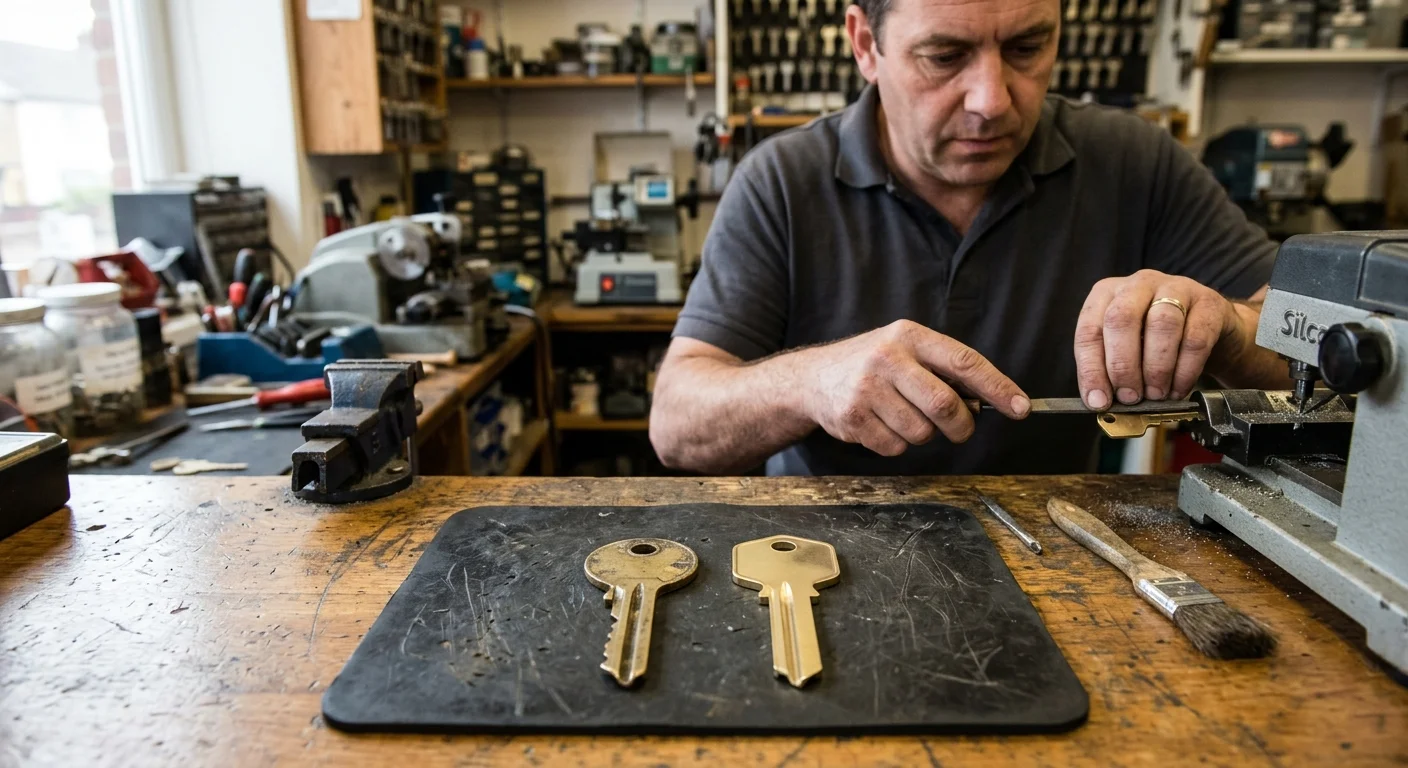
Check the original key for wear or damage
Start with what you can see and feel. Hold the key by its head and examine both sides under good light. Look for rounded cuts, flattened edges, chips, cracks, or an obvious bend. Compare its profile with another key for the same lock, if one is available.
Place the key on a flat surface without pressing it down. Notice whether the blade rests evenly. Then inspect the narrow area where the blade meets the head. A crack or sharp bend there deserves attention before the key goes into another machine or lock.
Think about how the key behaves during normal use. A working source should enter and leave the intended lock without an unusual routine. Make a note if you must lift, pull, wiggle, or change the angle. That behavior can help a locksmith decide whether the concern begins with the key, the lock, or both.
Don’t file the cuts or try to reshape the blade before duplication. That would change the source someone needs to inspect. Bring the key as it is, along with any other keys that operate the same lock.
This first check helps frame the decision. A worn key may still be usable as a reference, but its condition should guide the next step. Our key duplication referral service can connect you with a local professional when the source needs closer inspection.
Why copying a worn key may copy its problems
A duplicate is based on the key presented for copying. When that source has an altered profile, the new key may reflect those changes instead of the pattern the lock originally accepted. That doesn’t mean every worn key produces a bad copy. It means the result shouldn’t be assumed.
Pay attention to the difference between visible wear and poor operation. A key can look dull from years on a key ring yet still operate normally. Another key may look acceptable but catch at one point. Appearance gives useful clues, but movement inside the intended lock provides more context.
The lock also belongs in the discussion. If several keys hesitate in the same place, copying one of them may not address the underlying concern. If only one key behaves poorly while another works normally, the keys provide a useful comparison. A professional can inspect the available keys and the lock before recommending the next move.
Avoid treating a newly cut duplicate as proof that the source was sound. The real test happens in the lock it was meant to operate. A copy that needs the same special motion as the worn key hasn’t solved that practical problem.
The choice of provider doesn’t change this basic issue. Our guide to locksmith and hardware-store key duplication explains the questions to consider without claiming one option is right for every key.
When another original key is the better source
Bring every available key that operates the same lock. The best source may be a cleaner key kept in a drawer, with a property manager, or with another household member. Don’t choose by age alone. Compare condition and normal operation.
Ask how each key was obtained. A key supplied with the lock may offer a different reference than a later duplicate. If that history isn’t known, say so. The person making the copy can still compare the keys without pretending their origin is certain.
Use the lock itself to narrow the choice. With the door open, try each available key using its normal orientation. Notice which one inserts, turns, unlocks, and withdraws without extra handling. Don’t force a key that resists. Record which key worked most consistently so the cutter knows which source you preferred.
Sometimes there isn’t another original. In that case, don’t hide the worn key’s behavior from the person evaluating it. Explain exactly what happens and where. Bring the lock information you already have, but don’t guess at the brand, keyway, or hardware model.
San Diego County has many places offering copies, from the central city through the South Bay, East County, and North County. Location alone doesn’t answer whether a worn source is suitable. Our guide to where to get a key copied in San Diego can help you compare provider types before choosing.
What a locksmith needs to inspect
Bring the worn key, every alternate key, and access to the intended lock when practical. Explain whether the concern involves insertion, turning, unlocking, removal, or more than one step. Mention if the behavior is limited to one key.
A locksmith may need to compare the keys and observe the lock directly. That inspection can separate a straightforward duplication request from a job involving the lock itself. Don’t ask for a diagnosis based only on a phone description when the key bends, catches, or works at one angle.
California places locksmith licensing under the Bureau of Security and Investigative Services. Ask for the LCO. When the job expands beyond a simple copy, verify the professional’s status through the California Department of Consumer Affairs license search. Ask which independent professional will perform the work and confirm the scope directly with that person.
Swift Key San Diego is a referral service. We match callers with licensed, independent local locksmith professionals across San Diego County. We don’t inspect keys, cut copies, perform lock work, set prices, or provide warranties. The customer contracts with and pays the matched professional directly.
That distinction matters when a worn house key copy may not be the full answer. The professional doing the inspection should explain what they observed and what service, if any, they recommend.
Test the duplicate before relying on it
Test the new duplicate in the exact lock it was made for. Keep the door open during the first checks so an unsuccessful copy doesn’t leave you outside. Use the key’s normal orientation and ordinary pressure.
Insert the duplicate fully, turn it in both directions required by the lock, and remove it. Repeat the process more than once. The key should complete the same normal actions each time without a special angle, lift, pull, or wiggle.
Compare the duplicate with the cleaner source key, not only with the worn one. The goal isn’t a visual match you can judge by eye. The useful result is a key that operates the intended lock normally.
If the duplicate catches, stop and describe the exact point of resistance. Don’t file or reshape it before returning to the provider. Changing it yourself removes the original condition they need to assess.
Test every copy you receive. One working duplicate doesn’t establish that another copy will behave identically. Mark or separate tested keys so an unchecked spare doesn’t end up in a lockbox, rental handoff, or emergency key ring.
Keep the worn source until the new key has been evaluated. It may help the professional compare what changed. If the duplicate and other keys all show the same problem, ask whether the lock needs inspection rather than ordering another copy from the same source.
When to call us
Call when a worn key bends, catches, works only at an angle, or raises concern about the lock itself. Swift Key San Diego will refer you to an independent professional, and that locksmith performs any inspection, duplication, or lock work. Call us at (858) 400-4082 and we’ll connect you with a licensed local locksmith.