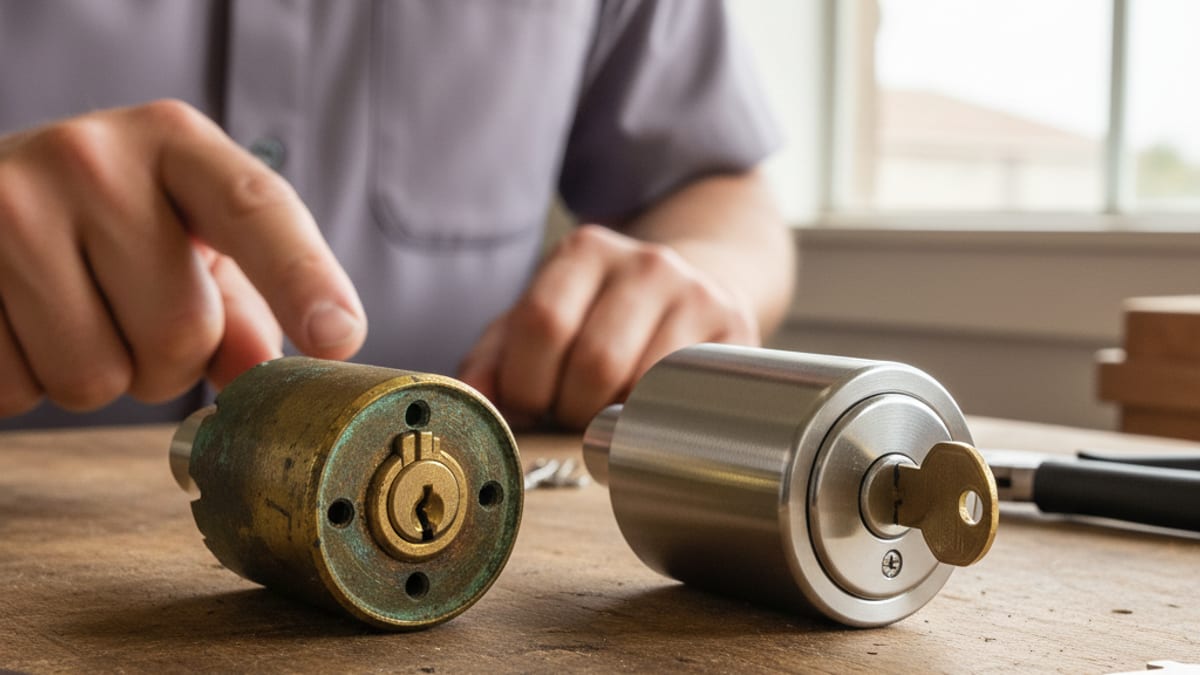
A door lock should operate smoothly every day, because it is the hardware between the interior and the street. There is no single year count that applies to every grade, door, and climate. Judge the lock in front of you by how it feels, looks, and lines up with the strike, then choose inspect, maintain, rekey, repair, or replace.
Swift Key San Diego is a referral service. Independent licensed locksmiths inspect hardware and set their own terms. This page does not assign manufacturer lifespans or coastal year ratings.
Start with symptoms, not with age
Use this order:
- Inspect. Does the key enter and turn smoothly? Does the bolt throw fully into the strike? Is the body tight on the door?
- Maintain. Loose screws, a dirty keyway, or a misaligned strike can mimic a dying lock.
- Rekey. The hardware works, but you need old keys to stop working.
- Repair or replace the cylinder. The pins or plug are failing, but the bolt and trim may still be usable. See replacing only the lock cylinder.
- Replace the lock. The body is loose, the bolt will not throw, corrosion has reached the mechanism, or you want different hardware.
Grade labels on the package describe a tested rating. They do not guarantee a number of years on your door. Builder-grade hardware on an exterior opening often shows wear sooner than heavier residential or commercial-rated hardware, especially with heavy use.
Environment is a reason to inspect more often
San Diego County is not one climate.
Near the coast. Salt air can pit finishes and corrode internal parts. Wipe hardware, watch for stiffness, and do not assume a pretty finish means a healthy cylinder.
Inland. Heat cycling can dry finishes and shift doors in their frames. A bolt that used to drop cleanly may start catching the strike.
Higher elevation or cold nights. Plastic keypad housings and unrated electronics can struggle in cold weather. Confirm the product’s rated conditions before you treat a smart lock as equivalent to a mechanical deadbolt.
None of those notes is a calendar. They are reminders to check the lock when the environment is harsh.
Smart locks are two systems
A smart lock has a mechanical side and an electronic side. Motors, boards, batteries, hubs, and manufacturer support can fail while the bolt still throws, or the reverse. Keep a working keyed backup when the product provides one, and follow the maker’s battery and firmware instructions.
When electronics stop getting support, the mechanical cylinder (if it exists) is what still lets you in. That is a product-design choice, not a Swift Key recommendation of a year window.
Signs it’s time to act before a lockout
The key feels rough or binds going in
Worn pins or a dirty keyway are common. Graphite lubricant made for locks can help a mildly rough keyway. If the key still binds, stop forcing it. Rekey if the hardware is otherwise sound and you also want a new keying. Replace or rebuild if the cylinder is mechanically failing.
The deadbolt doesn’t fully extend
Misalignment, a shifted door, or a worn bolt can stop the throw. Check the strike plate before you buy a new lock. Sometimes the plate needs to move. Sometimes the lock is failing.
The thumb-turn rotates with play
If the thumb-turn moves before the bolt starts, the internal connection is wearing. Plan replacement before it disconnects.
Visible finish damage
Pitting and peeling are environmental clues. They do not always mean the lock has failed, but they are a reason to test operation, not to ignore stiffness.
Wobble or play in the lock body
Tighten mounting screws first. If the door is cracked around the bore or the lock still rocks, replace.
Maintenance that is worth doing
These steps help many mechanical locks. They do not add a promised number of years.
- Use a lock-specific graphite or manufacturer-approved lubricant in the keyway. Avoid general-purpose sprays that attract grit.
- Confirm the bolt drops into the strike without scraping. Adjust the plate if it catches.
- On coastal doors, wipe salt off exterior hardware with a damp cloth.
- Tighten mounting screws when the lock starts to rattle.
If lubrication does not restore a smooth key turn, the next step is inspection, not another product claim.
When to upgrade even if the lock still works
Replacement can still be the right call when:
- You want stronger hardware after a break-in or a nearby incident. Lock replacement is the service path.
- You want keypad or app control for guests or cleaners.
- You are refinishing the entry and want matching trim.
- You want a restricted keyway, which the current lock cannot provide.
- You want several doors keyed alike and the current mix of brands cannot share a key.
Frequently asked questions
How long does a deadbolt last in a San Diego coastal home?
There is no single figure. Salt air can corrode finishes and internals faster than a dry inland door. Inspect for stiffness, pitting, and alignment rather than waiting for a year mark.
How do I know if my lock needs replacing or just rekeying?
Rekey when the lock operates smoothly and you only need to retire old keys. Replace when the bolt feels loose, the key binds after proper lubrication, the body wobbles, or you want different hardware. The independent locksmith confirms which cylinders are serviceable.
Can I extend the life of my lock without replacing it?
Basic care helps: correct lubricant, tight screws, a aligned strike, and salt wiped off coastal hardware. If the mechanism is already failing, maintenance will not restore it.
How long do smart locks last compared to traditional deadbolts?
Electronics, batteries, motors, and software support fail on a different schedule from a mechanical cylinder. Treat them as separate systems. Keep a keyed backup when the product allows it.
What’s the first sign a San Diego lock is failing?
A key that turns rough or binds is a common early signal. Do not force it. Lubricate once with a lock-safe product. If that fails, have the cylinder inspected before a lockout.
Not sure which path your doors need? Call (858) 400-4082. Swift Key San Diego refers you to an independent licensed locksmith who inspects the hardware and quotes rekey, repair, or replacement. There is no free assessment from Swift Key, and the locksmith sets their own terms.