A loose handle, sticky latch, or shifting trim can make an entry feel broken. For lockset repair in San Diego, the first step is comparing the problem part with the condition and fit of the whole assembly. A limited issue may support repair, while several mismatched parts can point toward replacement.
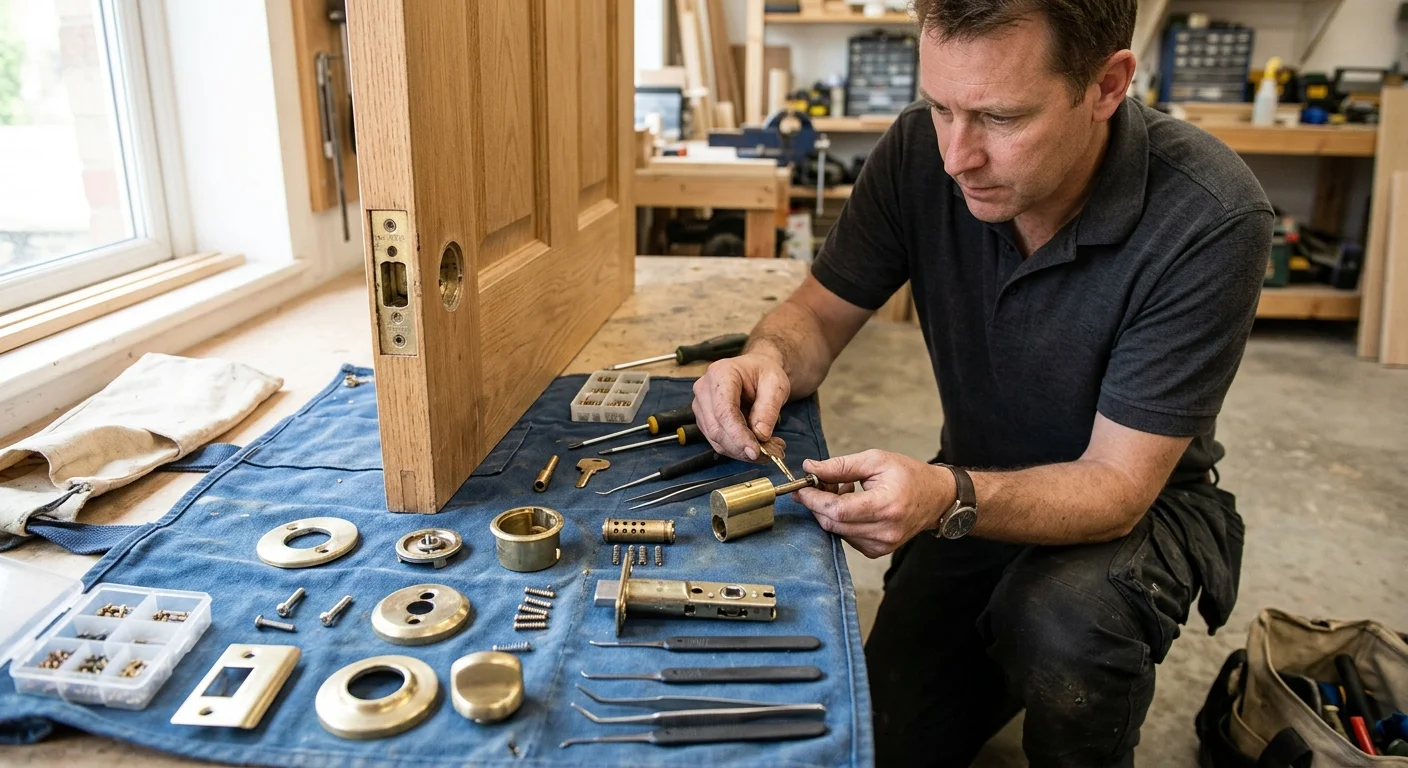
What a lockset is and which part usually fails
A lockset is the group of parts that operates together at a door. The visible knob or lever is only one piece. Trouble elsewhere can make that handle seem like the cause.
The latch sits in the door’s edge and moves into the frame. The spindle carries the turning motion from the handles. On a keyed lockset, the cylinder accepts the key. The rose is the round or shaped trim against the door. The strike is the metal piece on the frame that receives the latch.
Not every lockset uses these parts in the same arrangement. A separate deadbolt also isn’t automatically part of the knob or lever below it. Describe each piece separately when asking for help.
There’s no verified San Diego breakdown showing which lockset part fails most often. An inspection matters more than a guess based on frequency. Start with observations instead:
- Does the inside handle move differently from the outside handle?
- Does the key turn when the door is open?
- Does the latch move when the handle turns?
- Does the problem happen only when the door is closed?
- Is the rose moving against the door?
- Is the strike visibly loose or displaced?
These details separate a cylinder complaint from a full lockset complaint. They also show whether the door and frame may be involved.
About 49.6% of homes in the city of San Diego were built before 1978. That doesn’t reveal the age of any particular lockset. It does mean a professional shouldn’t assume an older opening matches newer hardware without measuring it.
Repairs that are worth doing
Repair deserves consideration when the complaint appears limited to one part. The remaining hardware should still fit the door and work together correctly. A licensed locksmith can inspect the assembly before recommending a path.
Possible repair conversations include securing loose trim, correcting a latch or strike relationship, or replacing a compatible component. These aren’t universal fixes. The lockset’s design, condition, and available parts determine what can actually be done.
Pay attention to how the problem developed. A rose that shifts may need a different evaluation than a key that won’t turn. A latch that works with the door open but not closed gives the locksmith another useful clue. Report the behavior without trying to name the failed part.
Rekeying is also different from mechanical repair. A lock rekey changes which key operates a compatible cylinder by changing its internal pins. That process doesn’t, by itself, correct a loose handle or a latch problem. Tell the locksmith if key control and hardware operation both need attention.
Repair may also preserve hardware that already matches nearby doors. That can matter in a condo, rental, office, or home with several coordinated openings. Ask whether the proposed repair keeps the existing key, finish, and function.
Don’t approve vague work described only as “fixing the lock.” Ask which component needs attention and what will remain in place. The independent locksmith should explain the proposed work before you decide. Swift Key San Diego makes the referral, while the customer contracts with and pays the professional directly.
When replacement is the cheaper end of the decision
Replacement can reach the cheaper side of the decision when repair requires several separate parts or repeated adjustments. That conclusion still needs an inspection and comparable quotes. A low parts count doesn’t automatically mean a lower final price.
We don’t publish price figures for lockset repair. Swift Key San Diego doesn’t set the professional’s prices. Confirm the current amount and scope with the independent locksmith before work begins.
Ask for repair and replacement options based on the same door. Each option should make clear which hardware stays, which parts change, and whether additional door preparation is included. That gives you a real comparison without relying on an unsupported market average.
Replacement may deserve consideration when:
- Several lockset parts show separate problems.
- A needed compatible component can’t be confirmed.
- The existing assembly no longer stays firmly mounted.
- The desired key or handle function requires different hardware.
- Previous changes left mixed parts that don’t operate together correctly.
- The new use calls for a different lockset style.
Those points guide the conversation. They don’t prove that every affected lockset must be replaced.
A full lock replacement can also simplify the scope when a matching repair part isn’t available. The professional should still confirm that the proposed hardware fits the existing door.
Condition matters more than a calendar alone. Our guide to how long a lock should last explains why age is only one part of the decision. Operation, fit, damage, and parts availability also need review.
Matching new hardware to an existing door prep
A replacement lockset must match the holes and edges already prepared in the door, unless the agreed work includes changing that preparation. Three terms make this conversation easier: backset, bore size, and handing.
Backset is the distance from the door’s edge to the center of the handle or cylinder opening. Don’t estimate it from a photo. A clear measurement helps the locksmith compare the door with the proposed latch and lockset.
Bore size describes the main opening through the face of the door. There’s also a smaller edge opening where the latch meets that main opening. Measure both if the locksmith requests them. Door thickness is another separate detail that can affect fit.
Handing describes the hinge side and the direction the door swings. Stand where the locksmith asks before describing it, since perspective can cause confusion. A short video showing the door opening can be clearer than saying “left” or “right.”
Photograph the complete door before taking close-ups. Include both faces, the door edge, the strike, and any separate deadbolt. Add a ruler or tape only when a measurement is requested. Photos should show the opening clearly without hiding damage behind the hardware.
The city of San Diego’s older housing share makes assumptions especially unhelpful. A home’s construction date still doesn’t prove when its doors or locks were changed. Hardware may have been replaced while the original door preparation remained.
If the visible problem is limited to the knob or lever, the door knob replacement guide covers that narrower decision. For a full lockset, keep the latch, spindle, cylinder, rose, and strike in the same assessment.
Don’t buy hardware based only on finish or package appearance. Give the locksmith the measurements and photos first. If you already bought a lockset, share its exact model information and keep all included parts together.
What to tell a licensed locksmith on the phone
A useful phone description starts with the door, not a guessed diagnosis. Say whether it’s an exterior entry, interior door, gate, office door, or shared building opening. Then describe the hardware you can see.
Give the exact San Diego County location. Coastal North County, central San Diego, East County, and the South Bay aren’t interchangeable descriptions. A city and ZIP code help the referral service match you with a local professional.
Next, explain the symptom in a simple sequence. For example: the outside lever turns, the latch doesn’t retract, and the inside lever feels normal. Mention whether the behavior changes when the door is open. Also report loose trim, missing screws, visible damage, or parts that have separated.
Have these details ready:
- Photos of both sides, the edge, and the frame
- Any brand or model markings you can read
- Whether the key still turns
- Whether a separate deadbolt works normally
- The backset, bore, and door thickness, if measured
- Your preferred key, handle, and finish outcome
- Any replacement hardware already purchased
Say whether you want to keep the current key. If key access has changed, explain who should still have access. The locksmith can then distinguish the hardware issue from a rekeying request.
California locksmith work is regulated by the Bureau of Security and Investigative Services. You can check a company or professional through the state’s license search. Swift Key San Diego is a referral service, not the locksmith performing the work.
Before agreeing, ask what the proposed scope includes. Confirm which parts will be repaired or replaced and who supplies the hardware. The independent professional sets the price, performs the work, and provides any terms connected with that work.
When to call us
A lockset needs professional attention when the parts won’t operate together or you can’t confirm which replacement fits. We’ll match you with a licensed, independent local locksmith who can inspect the complete assembly. Call us at (858) 400-4082 and we’ll connect you with a licensed local locksmith.