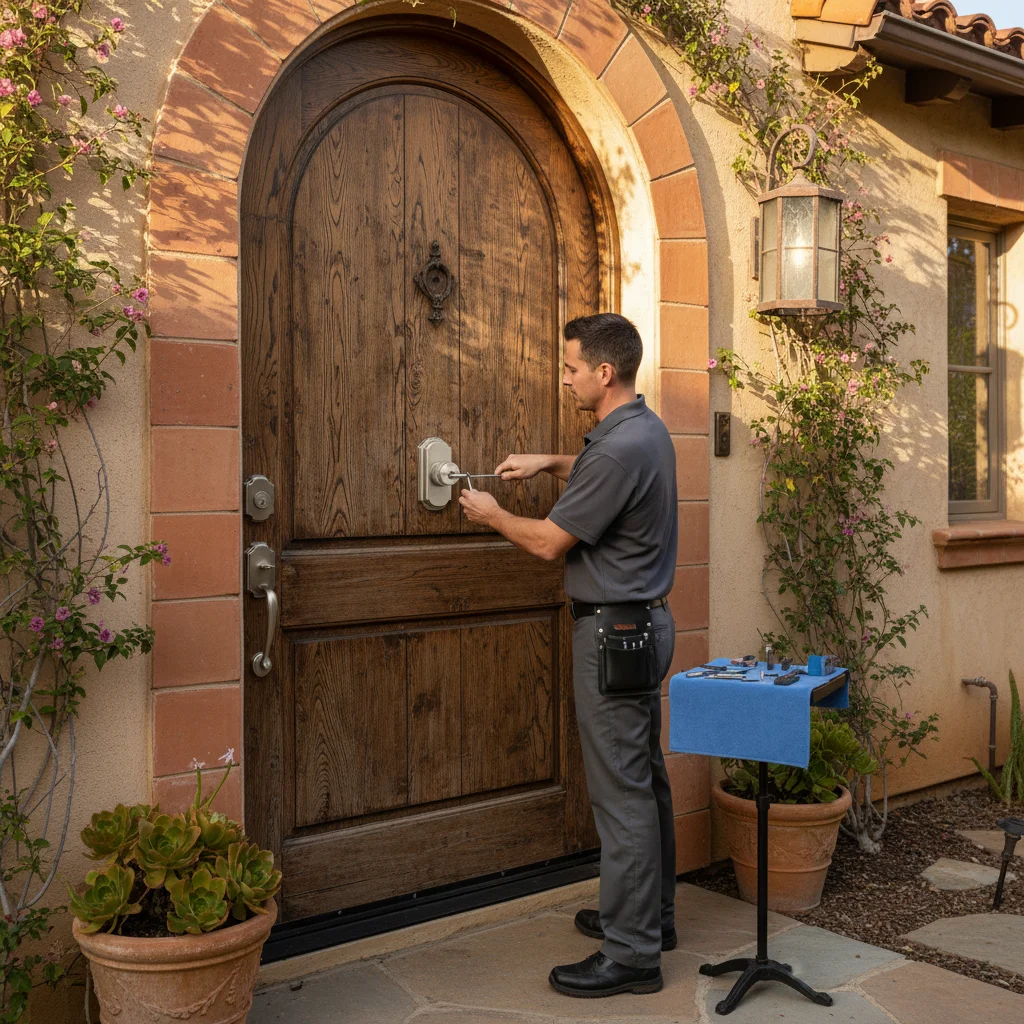
A key lock box is a combination-controlled container for a spare house key. For most San Diego homes, it’s a better choice than leaving a key under a mat, fake rock, mailbox, or planter. Choose weather-resistant materials, mount it away from street view, and change the code whenever temporary access ends.
That recommendation comes with an important limit. A box doesn’t fix careless code sharing. Once a code spreads beyond its intended users, the key isn’t controlled anymore.
What is a key lock box?
A key lock box stores a physical key behind a combination mechanism. It’s also called a house key lockbox, key safe, or hide-a-key box.
Most residential models follow one of two designs. A portable combination box hangs from a doorknob, railing, or gate. A wall-mounted box fastens to a solid surface and usually uses dials or push buttons.
Portable boxes are easy to move between properties. They’re also more visible when hung directly on the front door. Wall-mounted boxes allow a less obvious location, but placement needs more thought.
Neither design should be treated as invisible or impossible to damage. The goal is controlled access, not a promise that the container can’t be attacked.
Why shouldn’t you hide a spare key?
A loose hidden key depends entirely on surprise. The familiar hiding places aren’t surprising.
Avoid leaving a house key in these spots:
- Under the front or back doormat
- Inside a fake rock near the walkway
- Above the door frame
- In or beside an unlocked mailbox
- Beneath the closest planter or patio decoration
These locations sit beside the entry and require little searching. Moving the same key a few feet rarely changes that problem.
Swift Key’s San Diego burglary-data analysis discusses reported entries involving no forced entry. The practical connection is direct. An exposed spare key or stale lockbox code can let someone bypass the door hardware entirely.
A stronger deadbolt still matters, but key control matters too. The front-door security guide covers the broader entry setup.
Where should a key lock box go?
Place the box outside direct street view, but keep it reachable. A protected side-yard wall or gate area can work when the intended visitor can access it legally without first opening the locked door.
Don’t mount it directly beside the lock it opens. That placement advertises both the box and its purpose. Avoid a spot visible from the sidewalk, alley, or shared hallway.
The mounting surface matters too. Follow the box manufacturer’s instructions for the exact surface and fasteners. A wall-mounted box shouldn’t wobble, while a hanging box shouldn’t sit where it swings against the door.
Coastal placement needs extra care. Pacific Beach, Mission Beach, Ocean Beach, and La Jolla properties face salt air around exposed exterior hardware. Look for weather-resistant materials in the manufacturer’s product description. Inspect the dials, buttons, cover, shackle, and mounting points for corrosion or sticking.
Don’t assume a rating printed for a door lock applies to a key box. Check the exact box documentation instead. Material quality and weather protection are more useful than an unrelated grade label.
For a coastal example, see the Pacific Beach service area page. A covered mounting point may reduce exposure while keeping the box accessible.
When does a lockbox make sense?
A lockbox makes sense when a known person needs planned access. It shouldn’t become a permanent public shortcut into the home.
| Access situation | Practical starting point | Access rule |
|---|---|---|
| House cleaner or dog walker | A lockbox can support recurring access | Change the code when the arrangement ends |
| Contractor or repair visit | Use temporary access only when nobody can meet them | Change the code after the work is complete |
| Out-of-town family checking the home | A box can hold an emergency spare | Share the location and code directly |
| Vacation rental turnover | Compare a lockbox with a keypad or smart lock | Replace guest access after every checkout |
| No regular visitor needs entry | Keep the spare with a trusted person off-site | Don’t create outdoor access without a reason |
For a Pacific Beach or Mission Beach rental, guests aren’t the only users. Cleaners, property managers, and repair contractors may need separate access decisions. A single shared code can quickly outlive its original purpose.
Frequent guest turnover may justify another setup. The guide to smart locks for San Diego vacation rentals explains the tradeoffs around guest and cleaner access.
How should you manage the combination?
Change the factory code before placing a key inside. Choose a code that isn’t reused for another property device. Don’t use a visible address detail as the combination.
Share the code directly with each intended user. Avoid putting it in a public listing, a permanent property note, or a broad group thread. Keep a simple record of who received it.
Rotate the code when temporary access ends. That includes guest checkout, contractor completion, tenant turnover, or a roommate moving out. For a recurring cleaner or dog walker, change it when the working arrangement ends or the code may have spread.
A code that never changes isn’t meaningfully different from a key under the mat once too many people know it.
Changing the combination controls future access to the box. It doesn’t undo earlier access to the physical key. Someone who handled that key may still have made a copy.
How should you check the box?
Test the box regularly, especially before someone depends on it. Confirm the cover opens, the combination resets, and the key comes out without forcing the mechanism.
Check a portable box’s shackle and a wall-mounted box’s fasteners. Look for movement, corrosion, jammed buttons, or stiff dials. Follow the manufacturer’s care instructions when something binds.
Keep the stored key simple. Don’t attach the full address or identifying property details. Store only the key needed for that visit when practical.
Also keep the current combination somewhere secure and separate. A forgotten code or seized box can turn the backup plan into a lockout. The companion guide covers what to do during a home lockout with no spare key.
When should you call a locksmith instead?
Call a locksmith when the key itself may no longer be controlled. Changing the box code isn’t enough if a former roommate, tenant, contractor, or guest may have copied the key.
Ask whether rekeying the affected locks fits the situation. It may also make sense after a lockbox code was shared too widely and you can’t confirm who opened the box.
A keypad or smart lock can reduce routine sharing of a physical spare. A locksmith can assess the existing door and discuss smart lock installation without treating one product as right for every home.
California regulates locksmiths through the Bureau of Security and Investigative Services. Consumers can verify a professional’s current status at search.dca.ca.gov before approving work.
Swift Key San Diego is a referral service. We match customers with licensed, independent local locksmith professionals across San Diego County. Call (858) 400-4082 if you need help finding a professional for a rekey or lock change.
Frequently asked questions
Is a key lock box better than hiding a spare key?
Yes, a properly placed box with a private, current code is generally better than a loose key in a predictable hiding spot. It adds access control, but it still needs careful placement and code changes.
Where should I put a lockbox for a house key?
Choose a protected location outside direct street view. It must remain reachable to the intended visitor without placing the box beside the lock it opens. Follow the manufacturer’s mounting directions for that exact model.
How often should I change the lockbox code?
Change it whenever temporary access ends or the code may have spread. Guest checkout, tenant turnover, completed contractor work, and a former service provider are clear change points.
Will coastal San Diego weather affect a key lock box?
Salt air can affect exposed metal parts near the coast. Choose weather-resistant materials, follow the manufacturer’s care instructions, and inspect the box for corrosion, sticking, or loose mounting.
Should a vacation rental use a lockbox or smart lock?
A lockbox can work for limited or backup access. A keypad or smart lock may fit frequent guest turnover better because it reduces routine physical-key sharing. The right choice depends on the door, property workflow, and who needs entry.
What if too many people know the lockbox code?
Change the code immediately and limit future sharing. If those people could access the physical key, ask a locksmith whether the lock should be rekeyed. A new box code can’t invalidate a copied key.