Sometimes, but only the keyed part of the device may be rekeyable. If your search started with “locksmith keyless,” separate the physical cylinder from keypad codes, app accounts, and shared digital access before booking work. A matched locksmith must identify the hardware and confirm what that model allows.
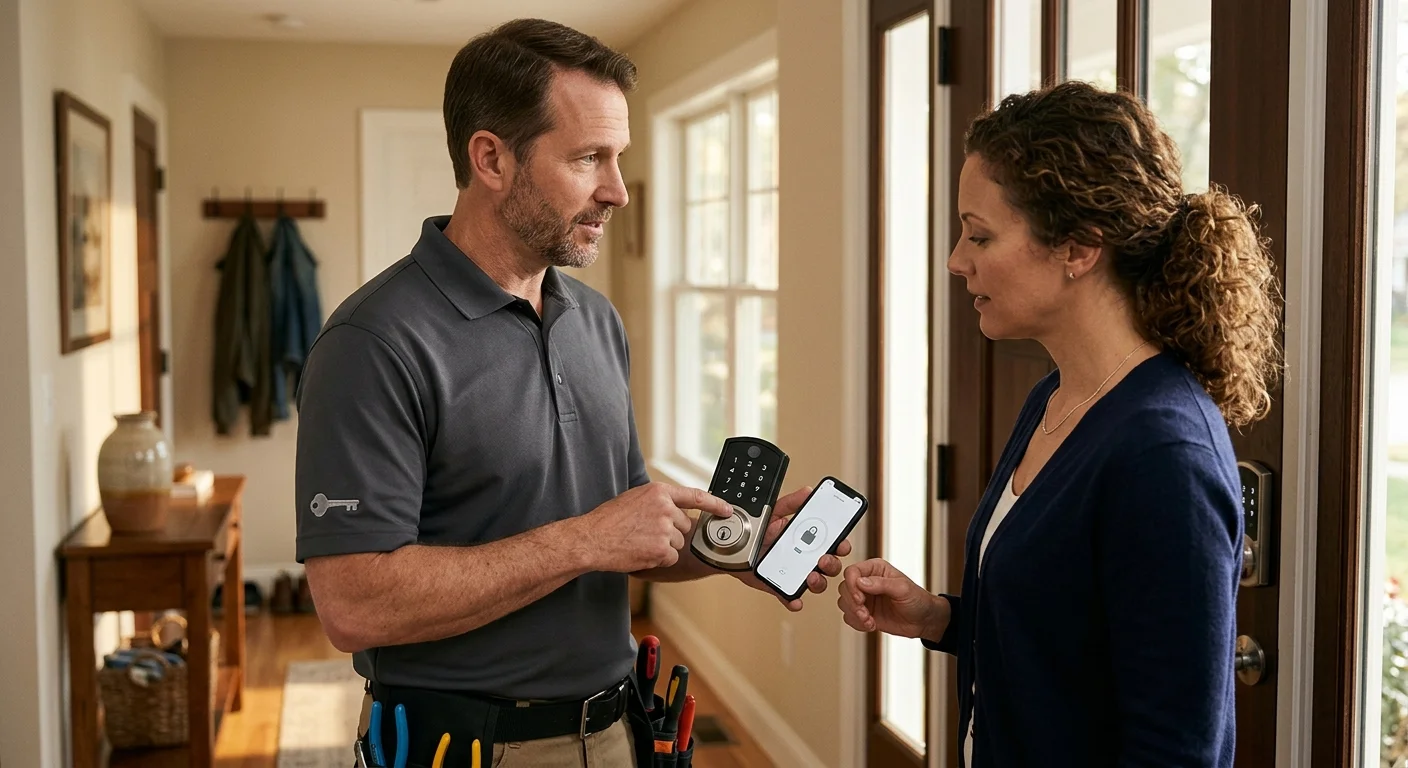
Identify the exact smart lock and cylinder
Start with the lock that’s actually on the door. A product family name alone may not identify its cylinder, keyway, or electronic features. Similar-looking devices can also have different model numbers or configurations.
Check the exterior and interior sides without removing anything. Record any visible manufacturer name and model information. Keep the existing physical key nearby, if you have it. You can also photograph the lock, door edge, key slot, interior housing, and packaging. Don’t include keypad codes, account details, or other credentials in those photos.
Share three basic facts with the locksmith:
- Whether the device has a physical key slot
- Whether you control its keypad and app
- Why you want the access changed
The reason matters. A missing physical key raises a different question than a former guest knowing a code. An inherited lock with an unknown account creates another decision. Describe the event without trying to diagnose the hardware yourself.
Manufacturer documentation should settle model-specific questions. We can’t confirm a universal rekey method, reset process, or cylinder option because smart-lock designs differ. A licensed locksmith can inspect the device and compare it with the current documentation before authorized work begins.
Local housing also makes inspection important. About 49.6% of homes in the city of San Diego were built before 1978. That figure doesn’t describe any particular door. It does show why owners shouldn’t assume every entry has a recent, uniform hardware setup. From City Heights to Chula Vista, the installed lock and door should guide the decision.
Separate physical keys from codes and apps
A smart lock can present several access questions at once. Treat the mechanical key, keypad credentials, app control, and shared digital access as separate items. Don’t use “rekey” as a catchall for every change.
In general locksmith language, rekeying changes the internal pins or tumblers used by a mechanical key. That definition applies to the keyed cylinder, not automatically to every electronic access method. If your smart lock has no physical key cylinder, a mechanical rekey isn’t the service you’re describing.
A keypad code belongs on its own checklist. So does the account controlling the lock’s app. Shared credentials, connected services, and any administrator role should also be reviewed through the manufacturer’s current instructions. Don’t send a locksmith your password or place a working code in an appointment note.
This distinction becomes important after a key goes missing. You may need to discuss the physical cylinder even if you still control the app. If someone previously had digital access, changing the physical key alone doesn’t answer that separate concern.
Our guide to a smart deadbolt with keyed backup explains why the backup key deserves its own review. If the mechanical side is the concern, begin with the available lock rekey service information.
California places locksmith licensing under the Bureau of Security and Investigative Services. Ask for the LCO and check it at search.dca.ca.gov. Swift Key San Diego is a referral service. We match callers with licensed local locksmiths, but we don’t change keys, codes, or accounts ourselves.
Check whether the mechanical keyway can change
A visible key slot tells you that a mechanical key is involved. It doesn’t confirm that the cylinder can be rekeyed, changed, or matched to another lock. Those answers depend on the exact hardware and current manufacturer documentation.
Ask the locksmith to confirm four points before proceeding:
- The exact lock model
- The cylinder or keyway present
- Whether the manufacturer supports the proposed change
- Which physical keys should work afterward
That last point prevents an easy misunderstanding. “Keep the smart lock” and “keep the same key” aren’t identical requests. Explain the result you want. You might want the old physical key rejected, a different authorized key accepted, or several doors reviewed for possible key compatibility.
Brand names alone don’t establish compatibility. Our article about using Schlage and Kwikset locks with one key covers the questions to ask before assuming two products can share a key. The same caution applies when a keypad or app surrounds the mechanical cylinder.
Don’t remove the lock or open its housing to identify internal parts. A clear exterior photo, any model label, and the existing key are better starting points. The professional can then determine whether the request is a rekey, a cylinder change, or a hardware replacement discussion.
California locksmiths must be licensed by the Bureau of Security and Investigative Services. You can check the professional or company through the state’s license search. Swift Key San Diego doesn’t hold a locksmith license or perform the physical work. The customer contracts and pays the independent locksmith directly.
Decide which access methods need updating
Build an access list before the appointment. This keeps a physical-key problem from hiding a separate digital-access problem. Include only the access methods tied to your actual lock.
Your list might contain:
- Physical keys currently accounted for
- Keypad credentials you knowingly issued
- The app account you control
- Shared access you previously granted
- Any connected account shown in the manufacturer’s app
Then mark what triggered the review. Common situations include a missing key, a move, a former occupant, an ended rental, or a phone that’s no longer under your control. These examples don’t determine the correct technical step. They help the locksmith understand what must be examined.
Avoid generic reset instructions from an unrelated model. We can’t confirm one sequence that applies across smart locks. Use the current documentation for your exact model. If account ownership is unclear, follow the manufacturer’s official support path before changing settings.
Keep authorization in view as well. The locksmith should know who controls the property and who may approve the work. Be ready to provide identification and whatever proof the professional requests. Don’t ask someone to bypass a code, account, or access control you aren’t authorized to manage.
If the device needs a broader hardware review, read about smart lock installation. Installation and rekeying are separate requests, even when both concern the same door. Tell the locksmith which outcome you need. They inspect the setup before proposing work.
For a San Diego County property, include the city and the exact door involved. A front entry in Encinitas shouldn’t be described only as “a San Diego lock.” The same applies in El Cajon, Oceanside, National City, and San Ysidro. Clear location and hardware details help frame the request accurately.
When replacement needs separate consideration
Replacement deserves its own discussion when the requested rekey can’t be confirmed for the installed hardware. It may also be relevant when you want a different access arrangement, not merely a different physical key.
Don’t assume replacement is required because the lock is electronic. Don’t assume rekeying is possible because a key slot is visible. Ask the locksmith to identify the device, inspect the mechanical cylinder, and check the manufacturer’s current information. That produces a model-specific answer without guesswork.
Keep the requested outcome simple. Say whether you want to retain the current smart device, reject an old physical key, change digital access, or reconsider the complete lock. If several doors are involved, list each one separately. One door’s answer shouldn’t be copied onto another without checking its hardware.
Price should also remain a direct conversation with the independent professional. Swift Key San Diego doesn’t set rates, collect payment, or provide warranties. Ask who is doing the work, what work is proposed, what hardware is included, and who stands behind it. Get those terms from the locksmith before authorizing changes.
Replacement doesn’t erase the need to review digital access. If an account, code, or shared credential remains part of your concern, identify it separately. Follow the exact manufacturer documentation for that device. Don’t rely on a general online procedure or disclose working credentials to an unknown party.
This process works across San Diego County because it starts with the actual lock. The model, cylinder, physical key, and digital access involved should drive the recommendation.
Call when you need a smart lock’s keyed cylinder assessed, digital access reviewed, or replacement considered. A licensed locksmith should confirm the exact hardware and perform any authorized locksmith work.
Call (858) 400-4082 to connect with a licensed independent locksmith. That locksmith quotes. Swift Key does not quote. Check the LCO at search.dca.ca.gov.