Before you call a locksmith for safe access, gather details about the safe, your authority to access it, and the problem you’ve observed. Also explain where the safe sits and what result you want from the visit.
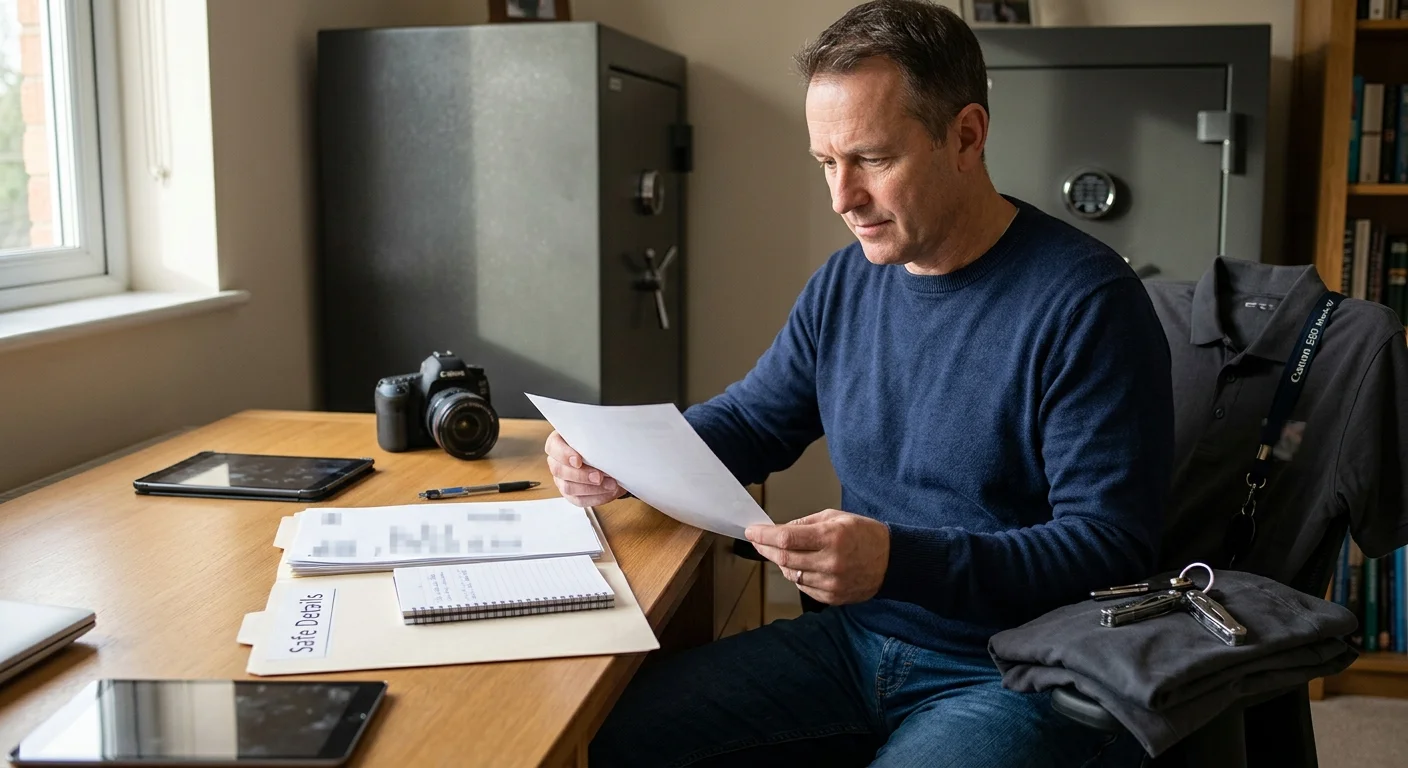
Identify the safe without guessing the model
Start with what you can see. Look for a manufacturer name, logo, model label, or identifying plate. Record the wording exactly instead of choosing a similar model online.
Take clear photos of the safe’s front, lock, keypad, dial, handle, hinges, and any visible labels. Include one wider photo showing the whole safe. Keep the door closed and avoid photographing private papers or valuables nearby.
Don’t post combinations, serial numbers, keys, or identifying documents online. If a professional asks for sensitive information, confirm how it should be shared directly. You can mention that a serial number is available without placing it in a public message.
Write down the safe’s approximate exterior size. You don’t need to guess its weight, construction, or internal parts. Note whether it’s freestanding, inside cabinetry, attached to another surface, or built into a wall or floor. If you don’t know, say so.
The lock type matters too. Tell the professional whether you see a keyway, mechanical dial, electronic keypad, biometric reader, or more than one lock. Don’t identify the internal mechanism unless documentation confirms it.
Our home safe type overview can help you organize the visible details. It shouldn’t replace the locksmith’s inspection. The independent professional confirms the safe and discusses available methods.
Gather ownership and access documentation
Collect records that can help show why you’re authorized to access the safe. Suitable records depend on the property, the safe, and your situation. Ask the matched locksmith what they want to review before the appointment.
Begin with your current photo identification. Then gather documents connecting you to the safe or its location. Those might include a purchase record, manufacturer paperwork, lease information, property records, or written authorization from the owner. Don’t send sensitive copies until you know who will receive them and why.
An inherited safe may involve different records than a safe in your own home. A rental, office, estate, or storage setting may also involve another owner or responsible party. Explain that situation during the first conversation. Don’t present yourself as the owner when you’re acting for someone else.
If another person must approve access, identify that person early. Arrange for them to speak with the professional or provide the requested authorization. For a safe inside a rented unit, managed building, or business, also confirm any entry rules with the person responsible for that property.
California locksmith licensing is handled by the Bureau of Security and Investigative Services. You can check a company license or employee registration through the state’s DCA license search. Swift Key San Diego is a referral service, not a locksmith company. We match callers with licensed, independent local locksmith professionals.
For broader identification guidance, review what to know about locksmith ID and proof requirements. Requirements can vary, so confirm the specific documents with the professional handling your request.
Describe the lock, key, keypad, or handle symptom
Describe what happened in sequence. Stick to what you saw, heard, or felt. A precise symptom report is more useful than announcing that the lock is broken.
For a key lock, note whether the key enters fully, turns, stops, or feels different from before. Mention whether the key is original, a copy, damaged, or unavailable. Don’t force it or copy opening tricks from an unverified video.
For a mechanical dial, explain whether the dial moves and whether you know the combination. If you’ve forgotten the combination, say that plainly. This guide to forgotten safe combination options explains how to frame that situation without attempting an opening yourself.
For an electronic lock, describe the display and controls. Note what appears when you press the keys and whether any lights, sounds, or messages appear. Record the exact message instead of interpreting it. Mention any steps you already tried, including changes made before the problem started.
Explain how the handle behaves, but don’t use extra force to test it. Say whether it moves normally, stops, spins, or remains fixed. If the door is already open, state that at the beginning. A lock problem with an open door presents a different starting condition than a closed safe.
Also mention when you last accessed the safe successfully. Don’t guess a date if you don’t remember. A simple description such as “earlier this week” or “several months ago” is enough when that’s all you know.
Explain the safe’s location and access limits
Tell the professional exactly where the safe is within the property. Include the floor, room, entrance, and any barriers between parking and the safe. Describe stairs, elevators, narrow halls, gates, locked common areas, or building check-in rules.
San Diego County covers very different property settings. A safe inside a Mission Valley parking structure may require different access notes than one in a Ramona outbuilding. The same applies to a Chula Vista apartment, a Point Loma home, or a business near Kearny Mesa. Share the real setting instead of using only a city name.
For a condo or apartment, confirm the building’s access procedure. Note whether someone must meet the professional at an entrance. If an elevator or service area has rules, get those details from the building manager. Don’t assume permission for work in a shared area.
Clear ordinary items away from the immediate area when you have authority to move them. Don’t move the safe, detach it, or alter surrounding construction just to prepare. Instead, photograph the available space and tell the professional what can’t be moved.
Mention nearby walls, cabinets, flooring, doors, or other fixed features. If the safe is in a closet, describe the door opening and working space. If it’s behind stored property, explain what you can clear before the visit.
Parking and property entry should be described without promising access. Tell the professional whether the location uses street parking, a private driveway, a controlled garage, or a gated entrance. If temporary parking rules apply, confirm them with the property manager or posted authority.
These details help frame the request for safe opening service. The independent locksmith still evaluates the location, safe, and possible work after arrival.
Confirm the opening scope before work begins
Decide what outcome you want, then explain it without prescribing a method. You may need access to the contents, continued use of the safe, an evaluation of the lock, or information for a later decision. State your priority and let the professional explain what’s available.
Don’t assume the safe can be opened or preserved. Swift Key San Diego doesn’t promise a particular result or method. The licensed independent locksmith evaluates the safe and confirms the options they’re willing to offer.
Ask the professional to describe the proposed scope before work begins. Confirm which part of the safe they expect to work on and what the proposed work includes. Ask whether the plan could affect the lock, door, finish, mounting, surrounding cabinet, wall, or floor.
If preserving the safe matters, say so at the start. Then review what to ask about opening a safe without damage. That phrase describes a goal, not a guaranteed outcome. The professional must determine what’s possible for the specific safe.
Confirm the price directly with the independent locksmith before authorizing work. Ask what the stated amount covers and what could change it. Swift Key San Diego doesn’t set prices, collect payment for the work, or decide the final scope. You contract with and pay the professional directly.
Ask the professional about any warranty terms they offer. Swift Key San Diego doesn’t provide warranties. Don’t rely on an assumed policy or a promise that hasn’t been given to you directly.
Before work starts, make sure the professional has the correct safe, the correct access request, and your current contact details. Keep combinations, documents, and identifying information private. Share only what the professional requests through an agreed channel.
When to call us
Call when you need a licensed locksmith to evaluate a locked safe in San Diego County. We’ll match you with an independent local professional who confirms the safe, scope, and available options.
Call us at (858) 400-4082 and we’ll connect you with a licensed local locksmith.