A Grade 1 label can sound like a promise against break-ins. It isn’t. On a Schlage B60, it means Schlage publishes the deadbolt as meeting ANSI/BHMA A156.36-2010 Grade 1.
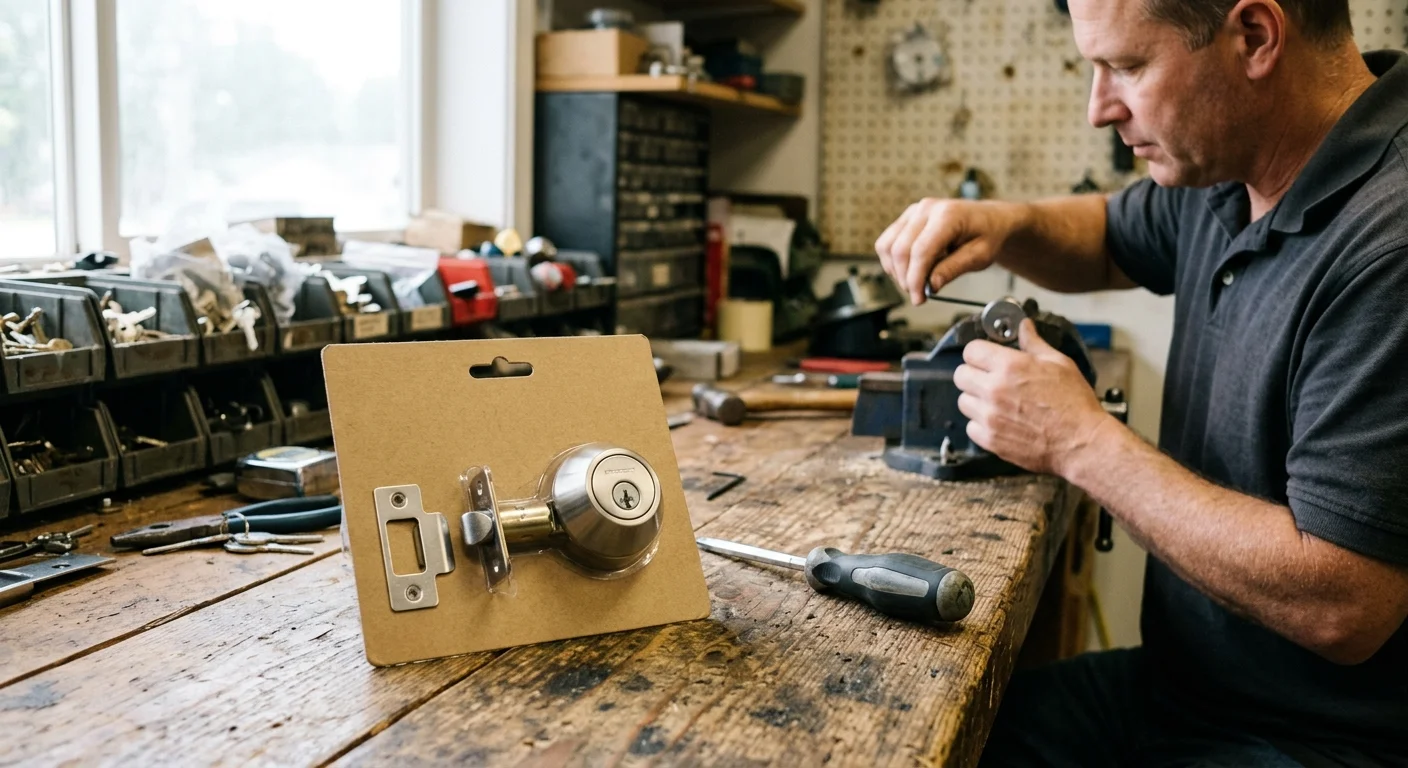
What ANSI/BHMA A156.36 grades and who sets it
The full designation matters more than the words “Grade 1.” Schlage identifies the B60 under ANSI/BHMA A156.36-2010. That designation points to the standard used for the published grade.
ANSI and BHMA appear together in the designation. The detailed test criteria sit inside the A156.36 standard. Our verified source record identifies it as a paid BHMA standard. We haven’t opened the complete standard, so we won’t reproduce figures from memory or retailer summaries.
That means you won’t find cycle counts, impact counts, force values, or test durations here. Those figures couldn’t be confirmed from the primary material available for this article. Anyone needing the exact test table should check current information through BHMA and the applicable BHMA standard.
For a homeowner, the careful reading is simple. Grade 1 is a published performance classification under a named hardware standard. It isn’t a free-form phrase like “heavy duty.” It also isn’t a complete description of the lock, door, or installation.
Check the whole designation when comparing labels. “Grade 1” without the standard number leaves out important context. The edition matters too. Schlage’s B60 page specifically prints A156.36-2010, so that is the wording supported here.
Retail listings can shorten product details. Packaging can also change. Before buying, compare the exact model number with the manufacturer’s current page. That keeps a B60 claim tied to a B60, instead of a similar-looking product.
What Grade 1 does and does not certify
The Grade 1 marking tells you how the manufacturer classifies that deadbolt against the named standard. It doesn’t tell you how long a burglar will need. It isn’t a burglary rating, resistance time, or guarantee.
That distinction answers the common kick-in question. A Grade 1 label doesn’t provide a verified number of kicks, blows, or minutes. The standard sets specific test criteria, but those figures aren’t confirmed in this site’s approved source record. Turning the label into a break-in countdown would be misleading.
The grade also doesn’t describe every part of your doorway. It doesn’t report the condition of the frame, strike area, door edge, hinges, or surrounding material. It doesn’t confirm that the bolt lines up correctly after the door closes. Those are separate questions.
Think of the grade as one line in a larger inspection. It helps identify the deadbolt’s published classification. It doesn’t turn an unknown doorway into a tested security assembly.
The label also doesn’t answer whether Grade 1 is the right purchase for your home. That depends on the existing opening, key system, and what you’re trying to improve. Our guide to choosing a Grade 1 deadbolt covers that decision without treating the grade as the only factor.
For broader upgrades, compare the claim with the actual concern. A worn opening, lost key, damaged frame, and desired key control aren’t the same problem. A product grade answers only part of that conversation.
Where the Schlage B60 sits and what its spec sheet prints
The residential Schlage B60 product page prints “ANSI/BHMA A156.36-2010 Grade 1.” It also publishes a BHMA AAA rating. Those are Schlage’s stated specifications for the B60, not a break-in guarantee from Swift Key San Diego.
You can check the wording on Schlage’s B60 product page. Match the page to the exact lock in your hand. A package label, model number, and manufacturer’s listing should refer to the same product.
The B60 is different from Schlage’s commercial B600. Similar names can cause bad comparisons. Don’t transfer a B600 specification to a B60, or describe the two locks as the same model.
The B60’s keyway is another separate specification. Schlage publishes the residential B60 with a standard 5-pin C keyway and two brass keys. A 6-pin cylinder is available. The grade doesn’t change that keyway description into a different cylinder.
Fit is separate too. Schlage states that the B60 fits doors from 1-3/8 inches to 1-7/8 inches thick. Measure the actual door before treating the product as compatible. Don’t judge thickness from the age or appearance of the house.
If your main question is whether another lock type offers better key control or different features, read our discussion of whether high-security locks are worth it. That is a broader comparison. The ANSI/BHMA label alone can’t settle it.
Why a Grade 1 bolt in a weak frame still fails
A deadbolt extends into an opening at the door frame. The grade printed for the lock doesn’t grade that existing frame. It also doesn’t report how the strike is attached or whether the bolt reaches its opening cleanly.
This matters when people ask if the Schlage B60 is resistant to kick-ins. Schlage publishes a Grade 1 classification. That fact doesn’t establish a resistance time for your complete front door.
A solid deadbolt still depends on the material receiving it. If the strike shifts, surrounding material breaks, or the bolt doesn’t fully enter, the lock’s label can’t describe that failure. The opening must be assessed as a system.
Start with movement you can see. Close the door without forcing it. Turn the deadbolt and notice whether it binds. Look for a strike that moves when touched, cracks near the opening, missing fasteners, or a door edge that appears damaged. These observations don’t produce a security grade. They help identify what a locksmith should inspect.
San Diego homes don’t share one doorway condition. A house in Encinitas, an apartment in the city, and a property in El Cajon can have different existing hardware. About 49.6% of homes in the city of San Diego were built before 1978. That doesn’t make an older door unsafe, but it makes assumptions based on a new lock package especially unhelpful.
A complete front-door review should keep the hardware and opening in the same conversation. Our guide to improving front-door security explains that wider view.
What to check on your own door before upgrading
Begin with the exact lock model. Photograph the package label and both sides of the installed hardware. Write down any model information you can read. Don’t assume every round Schlage deadbolt is a B60.
Next, measure the door’s thickness. Schlage publishes a B60 fit range from 1-3/8 inches to 1-7/8 inches. If your measurement falls outside that range, don’t force the hardware into place. Ask a licensed locksmith to confirm suitable options.
Then operate the existing bolt with the door open. Repeat the check with the door closed. Note any scraping, binding, partial travel, or need to push the door. You’re recording symptoms, not diagnosing the cause.
Inspect the visible frame and strike area. Look for movement, splits, old openings, loose parts, or repairs that don’t sit flat. Check the door edge around the deadbolt bore. A grade label can’t tell you whether those areas are ready for new hardware.
Bring the key question into the discussion too. A standard residential B60 uses Schlage’s 5-pin C keyway, while a 6-pin cylinder is available. If matching an existing house key matters, show the locksmith the key and current locks. Don’t assume another brand or keyway can be matched.
Finally, define the actual goal. Replacing damaged hardware differs from changing key access. Improving the whole doorway differs from choosing a deadbolt grade. Clear goals help a locksmith inspect the right parts.
For professional fitting, our deadbolt installation referral service can connect you with a licensed independent locksmith. You can verify a locksmith company or employee through the California Department of Consumer Affairs license search before work begins.
When to call us
Call when the bolt binds, the frame is damaged, or you need model and fit confirmed. A licensed local locksmith can inspect the complete opening and discuss suitable hardware. Call us at (858) 400-4082 and we’ll connect you with a licensed local locksmith.