No approved manufacturer evidence confirms that a residential Schlage B60 stops bump keys or can’t be picked. Treat it as a standard keyed deadbolt, not a pick-proof or bump-proof lock. Its published grade doesn’t change that answer.
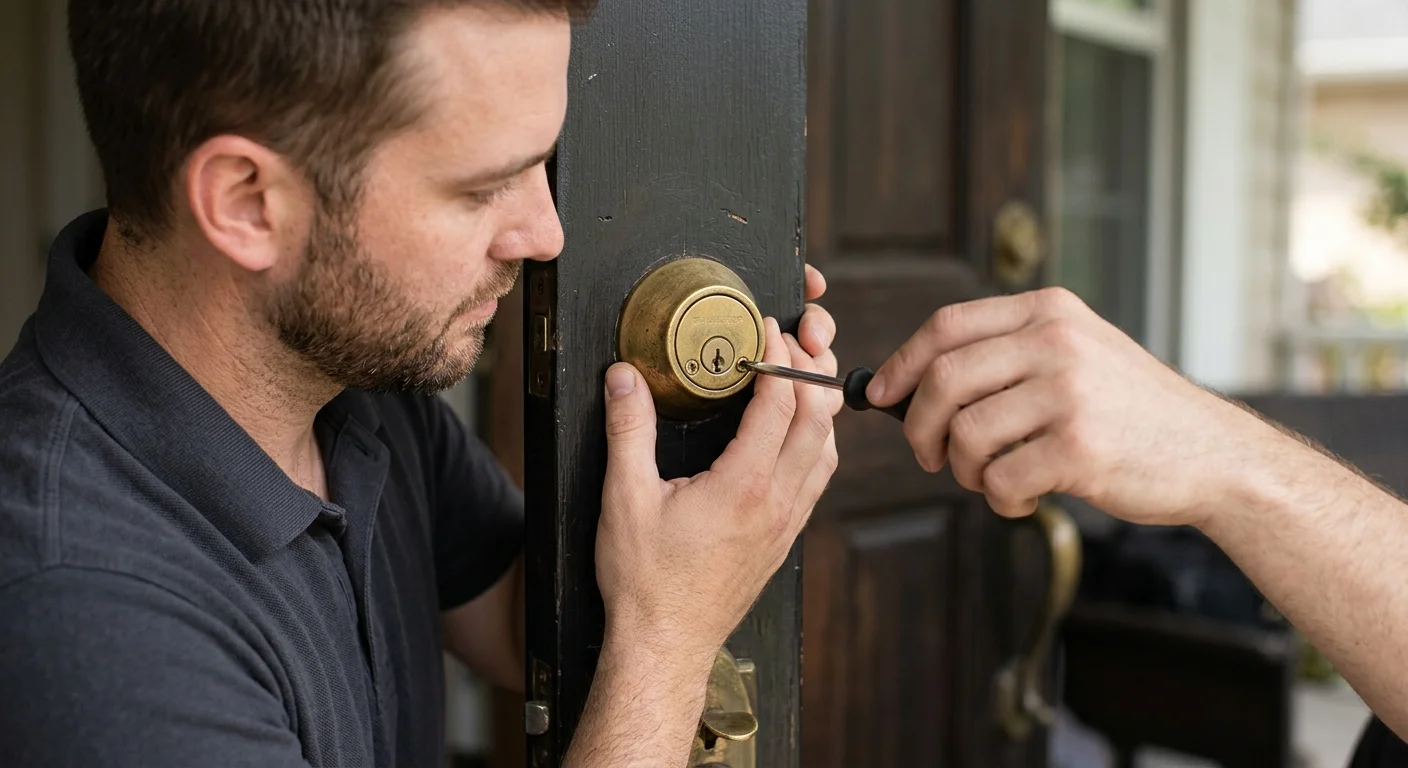
How picking and bumping differ from forcing a lock
Picking and bumping are separate forms of cylinder attack. Picking means manipulating a keyed cylinder without its authorized key. Bumping refers to an attack involving a bump key made for a compatible keyway.
That distinction matters because neither question measures the deadbolt’s resistance to drilling, sawing, prying, or impact. Those attacks concern different parts of the lock and door. Our companion guide covers the B60’s drill and saw resistance without mixing those results into this cylinder discussion.
A forced opening and a suspected covert opening also call for different evaluations. Visible damage may suggest force, but appearance alone doesn’t prove how a door was opened. A scratch near the keyway isn’t enough to diagnose picking. A door without obvious damage doesn’t prove bumping occurred.
For Schlage B60 pick resistance, the responsible answer is limited. The approved manufacturer material identifies the cylinder and the lock’s published grade. It doesn’t provide a verified picking time, bumping score, or guarantee against either attack. No such figure should be inferred from marketing language.
This is also why a broad claim such as “Grade 1 means pick-proof” goes too far. Schlage publishes the B60 as ANSI/BHMA A156.36-2010 Grade 1 with a BHMA AAA rating. That grade isn’t a resistance time, burglary rating, or guarantee. The detailed test figures haven’t been verified here. Readers can check current standards information through ANSI.
What the B60’s cylinder is and what that means
The residential Schlage B60 ships with a standard five-pin C keyway and two brass keys. Schlage also lists a six-pin cylinder option. Those are the verified cylinder facts relevant to this question.
The keyway name identifies the physical key profile accepted by the cylinder. It doesn’t supply a picking score. The pin count also doesn’t let us publish a resistance time or declare the six-pin option immune to a specific attack.
A buyer should confirm which cylinder is actually installed. A product page showing an available option doesn’t prove that option is inside a particular door. Packaging, purchase records, and the installed hardware can help a licensed locksmith identify it without guessing.
Don’t confuse the residential B60 with Schlage’s commercial B600. The commercial B600 is a different lock family. It defaults to the patented Everest 29 S123 keyway, while the residential B60 information discussed here concerns the C keyway. A review that assigns B600 cylinder features to a B60 reaches the wrong conclusion.
That distinction matters across San Diego County’s 67-city service area. Door age alone doesn’t identify the installed lock. In the city of San Diego, about 49.6% of homes were built before 1978. That verified housing figure still can’t tell you whether a current door has its original hardware, a residential B60, or another cylinder.
Look for the exact model and cylinder before comparing resistance claims. If identification requires removing hardware, leave that work to a licensed locksmith. The goal is an accurate answer about the installed cylinder, not a conclusion based only on the brand stamped outside.
Why bumping needs a matching keyway
A key must physically fit a cylinder’s keyway before it can function in that cylinder. That makes keyway compatibility central to any discussion of Schlage B60 bump key resistance.
For the residential B60 described by Schlage, the relevant verified identifier is the C keyway. A key profile made for a different opening won’t become compatible because two locks share a similar finish, grade, or brand category. Matching a keyway also doesn’t guarantee that a bumping attempt will open a particular lock.
That’s the practical answer to “does Schlage B60 stop bump keys?” No approved source confirms that it does. The C keyway specification establishes compatibility information, but it doesn’t establish a successful attack or a guaranteed defense. Those are different claims.
The available six-pin option doesn’t support a stronger conclusion either. Without verified manufacturer testing that addresses bumping for that exact cylinder, it shouldn’t be labeled bump-proof. The same rule applies to replacement cylinders and products sold with broad security language.
This article intentionally doesn’t provide bumping instructions, key dimensions, tool lists, or attack steps. Homeowners don’t need an entry tutorial to make a sound buying decision. They need the correct model, the correct keyway, and documentation that addresses the threat they care about.
If resistance to covert entry is a priority, ask a licensed locksmith to name the proposed cylinder in writing. Then ask for the manufacturer document supporting any pick-resistant or bump-resistant claim. Our guide to whether high-security locks are worth it offers a broader framework for that conversation without promising that any lock is attack-proof.
Where a Weiser or Kwikset comparison actually lands
A Schlage B60 vs Weiser pick resistance comparison needs exact model information from both sides. “Weiser” names a brand, not one verified cylinder specification. We don’t have primary-source picking or bumping results for a Weiser deadbolt, so we won’t name a winner.
The verified Kwikset information is also narrow. Kwikset states that its Halo and Halo Select products use a SmartKey Security KW1 cylinder. That fact applies to those products. It shouldn’t be extended to every Kwikset lock or treated as proof that one brand defeats another attack.
The residential B60 uses the standard five-pin C keyway, with a six-pin option available. Halo and Halo Select use the SmartKey Security KW1 cylinder. Those facts show that the compared products don’t share the same verified cylinder description. They don’t establish which one takes longer to pick or whether either stops bumping.
Our B60 and Kwikset security comparison covers the broader buying decision. For covert-entry resistance, stay focused on the installed cylinder and the evidence offered for it.
A responsible comparison should name both exact models. It should also separate published specifications from unsupported conclusions. Grade labels, keyway names, price, appearance, and brand familiarity don’t create a verified picking score by themselves.
If a seller or contractor says one lock is pick-proof, ask for the manufacturer’s current documentation. Check whether it names the exact model and cylinder being offered. If it discusses another lock family, another keyway, or a different attack, it doesn’t answer this comparison.
San Diego homeowners can also verify a locksmith company or employee through the California Department of Consumer Affairs license search. California locksmith licensing is handled by BSIS, not CSLB.
What to do if you think a lock has been picked
Start with what you can document, not an attack theory. Photograph the door, cylinder, strike area, and any visible marks. Save relevant camera footage and note when the door was last known to be secured.
Don’t label the incident as picking or bumping from one mark. A key that suddenly stops working, an open door, or changed property may justify concern, but none identifies the entry method by itself. A licensed locksmith can inspect the hardware and explain what can and can’t be determined.
If you believe a crime occurred, contact the law enforcement agency serving the property. The San Diego County Sheriff provides current information for areas under its jurisdiction. Properties served by a city police department should follow that department’s reporting process.
Next, decide whether key control has changed. Missing keys, an unknown former occupant, or uncertainty about who holds copies may make lock rekeying part of the discussion. Rekeying changes the cylinder’s internal pin arrangement so a different key operates it. That decision addresses key access, not a verified picking or bumping weakness.
A lock replacement installs new hardware. Ask the locksmith to explain why replacement is recommended, identify the proposed cylinder, and provide the source for any resistance claim. Don’t accept “high security” as a complete specification.
Swift Key San Diego is a referral service. We match callers with licensed, independent local locksmiths and don’t perform the inspection or physical work. The customer contracts with and pays the professional directly, so confirm the scope, price, and any warranty terms with that professional before work begins.
When to call us
Call when the installed cylinder can’t be identified, key control is uncertain, or you need help comparing rekeying with replacement. A licensed local locksmith can inspect the door and explain the available hardware without treating any lock as pick-proof.
Call us at (858) 400-4082 and we’ll connect you with a licensed local locksmith.