When a house key won’t turn, stop applying more force. Check the key, the door position, and whether the same problem happens with the door open. If the cause isn’t obvious, a licensed locksmith can inspect the lock without relying on guesswork.
This guide covers residential and commercial doors only. For a vehicle, see our guide to a car key that won’t turn in the ignition.
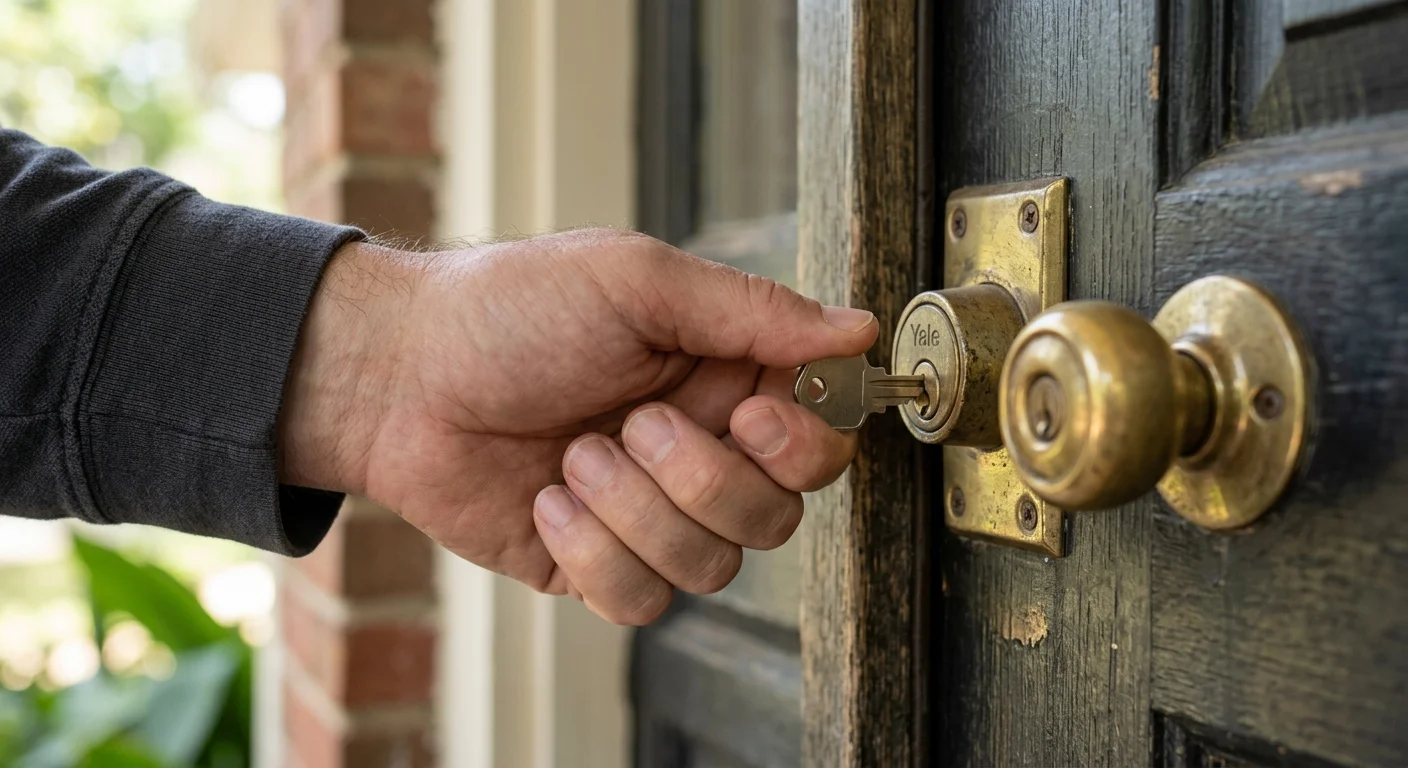
What to try before you force anything
Start by removing pressure from the key. Pull it out, look at it under good light, and wipe it with a clean, dry cloth. Check for an obvious bend, crack, damaged edge, or material stuck to it. Don’t try to straighten a visibly damaged key inside the lock.
Confirm that you’re using the right key. This matters in homes with similar deadbolts, rental units, offices, storage rooms, and shared commercial spaces. A key may enter a different keyway without operating that lock.
If you have an undamaged spare, compare the two keys. Try the spare with gentle pressure. Stop if it meets the same firm resistance. A spare that works gives the locksmith useful information, but it doesn’t prove what failed.
Next, test the lock with the door open, if you can do so safely. Keep the door steady and turn the key lightly. If it works while open but binds when closed, tell the locksmith. That difference helps separate a door-position problem from one happening inside the lock.
Don’t spray an unknown product into the keyway. Products can interact, collect residue, or make later inspection harder. Follow the lock manufacturer’s current care instructions if you have them.
Most importantly, don’t keep twisting. A hard turn can leave part of the key inside the cylinder. If that has already happened, read our guide to broken-key extraction in San Diego and leave the fragment in place.
Why a key that goes in but won’t turn is usually the cylinder
A key enters through the cylinder’s keyway. If it slides in fully but won’t rotate, the cylinder becomes an immediate inspection point. That symptom doesn’t confirm the diagnosis, though. The key, the cylinder, and pressure from the door can create similar results.
Notice exactly where movement stops. Does the key enter fully? Does it begin turning before it catches? Does gentle pressure on the door change anything? Does the spare behave differently? These observations are more useful than repeatedly testing the lock.
A cylinder problem may call for repair, rekeying, or replacement. Those aren’t interchangeable answers. Rekeying changes the internal pins or tumblers so a different key operates the lock. Replacement installs different hardware. The right option depends on what the locksmith finds and what hardware is already on the door.
Avoid taking the cylinder apart when the door is locked. Small parts can move, and an incomplete reassembly may leave the entrance unusable. Commercial hardware can also differ from the familiar deadbolt or knob on a house.
A licensed locksmith can inspect the cylinder, test the available keys, and explain the options. California locksmith licensing is handled by the Bureau of Security and Investigative Services. You can check a company or professional through the state’s DCA license search before authorizing work.
If replacement is recommended, ask why the existing cylinder can’t remain. You can also ask which keys will operate the proposed hardware before approving any lock replacement.
Door alignment, swelling and strike-plate binding
The cylinder isn’t the only place to look. A deadbolt or latch also has to meet the opening in the frame. If the door shifts, rubs, or needs pressure to close, the lock may feel stuck even when the key and cylinder still deserve separate inspection.
Open-door testing gives you a useful comparison. If the key turns with the door open but not when it is closed, don’t force the bolt toward the frame. Look for visible rubbing, fresh scrape marks, or a latch that doesn’t line up cleanly. A door that has become harder to close may also have alignment or swelling involved.
Try only light positional pressure. Gently push or pull the door while applying minimal turning pressure to the key. Stop when the key meets firm resistance. Lifting hard on the handle or wrenching the key can turn one problem into damaged hardware.
San Diego County conditions aren’t identical everywhere. A property near the coast in Oceanside, Encinitas, or Imperial Beach presents a different setting from a door in El Cajon or Santee. Describe the location and visible condition instead of assuming weather caused the failure. For locks exposed near the coast, our coastal corrosion guide explains what details to report.
A deadbolt that turns but won’t enter the frame needs a different troubleshooting path. Check our guide for a deadbolt that won’t lock. A locksmith can then inspect both the lock and the door position before recommending adjustment or new hardware.
When the key itself is the problem
The key deserves a close look before anyone condemns the lock. Compare it with a working spare on a flat surface. Look for a bend, crack, worn-looking edge, or tip damage. Don’t rely on a damaged key for repeated tests.
Think about where the key came from. Was it the key you normally use, a spare from a drawer, or a copy that hasn’t been tested on this door? Tell the locksmith. That history can narrow the inspection without treating your memory as proof.
A key that operates another door isn’t automatically correct for this one. Homes and businesses often have several similar keys. Labeling can also become unreliable after a move, tenant change, office reorganization, or hardware replacement.
Don’t file, sand, clip, or reshape the key. Removing material can’t be undone. Don’t use pliers to create more turning force, either. Pliers increase pressure without explaining why the key is stuck.
If an undamaged spare works smoothly, set the questionable key aside. A locksmith can compare it with the lock and discuss whether another key should be made. If no key works, the inspection should include the cylinder and door position.
A key stuck inside an unlocked door also needs restraint. Keep the door open when practical, and don’t rotate the key back and forth aggressively. If the door is locked and you can’t enter, our home lockout service explains how we connect callers with licensed independent local locksmiths.
What a licensed locksmith does about each cause
The locksmith starts by identifying where the resistance occurs. That may include checking the key, testing an available spare, operating the lock with the door open, and inspecting how the latch or bolt meets the frame. The goal is to separate the observed symptoms before recommending work.
When the key appears damaged, the locksmith can assess whether another usable key is available. If no working key exists, the professional can explain the available path for that specific lock. Don’t discard the original key, even if it looks worn. It may still help during inspection.
When the cylinder is the concern, the locksmith can examine its operation and discuss repair, rekeying, or replacement. Ask what condition led to the recommendation. Also ask whether the proposed cylinder will work with your intended keys. The locksmith performing the work sets the price and provides any warranty terms.
When door position changes the symptom, the inspection can move to the latch, bolt, strike area, and surrounding hardware. The professional can explain whether an adjustment or hardware change is proposed. Get the scope clearly before approving work, especially on a storefront, rental, or shared entrance.
For visible corrosion or damaged exterior hardware, mention the property’s setting. A beach-area rental in Oceanside, a storefront in Kearny Mesa, and a home in inland East County may need different observations recorded. Location alone doesn’t diagnose the lock.
Swift Key San Diego is a referral service. We match callers with licensed, independent local locksmiths. We don’t perform the work, set the professional’s price, or provide the professional’s warranty. The customer contracts with and pays the matched locksmith directly.
When to call us
Call when gentle checks don’t identify the cause, the key is bending, or the door can’t be secured. A licensed locksmith should also inspect a cylinder that remains stuck or hardware that no longer aligns.
Call us at (858) 400-4082 and we’ll connect you with a licensed local locksmith.