A spare apartment key can be copied in some situations. Your lease, property manager, and key type determine the next step. In San Diego, check those details before taking the original key anywhere.
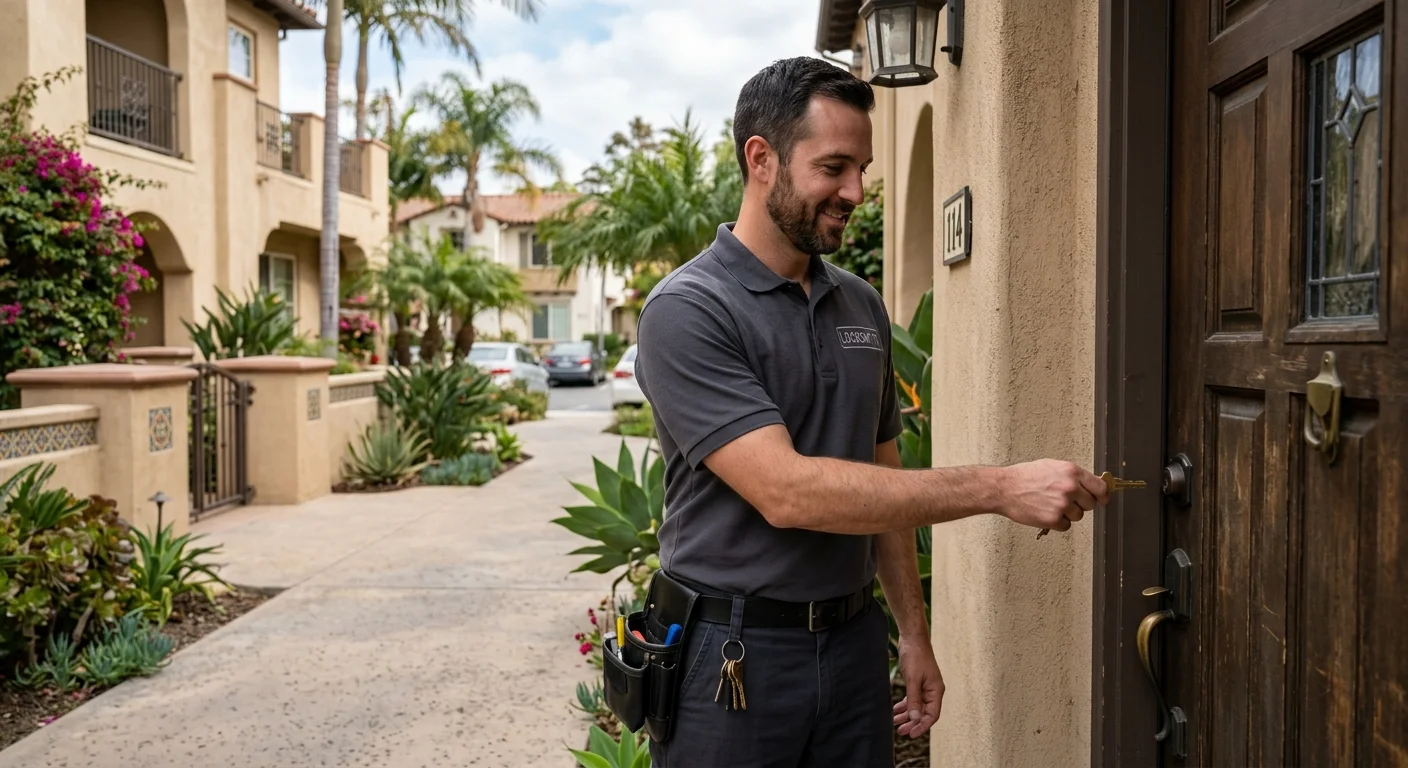
Which apartment keys a locksmith may be able to copy
Apartment key duplication starts with identifying what you have. A standard metal key, a restricted key, and an electronic fob need separate decisions. Don’t assume a shop or locksmith can duplicate every item.
Bring the original key to the provider for an inspection. Ask whether they handle that exact key and what authorization they require. The markings on the key may help them identify the correct process. A provider can then explain whether it accepts that request.
California law draws a narrow distinction around simple duplication. The state’s definition of a locksmith excludes a person whose activities are limited to making a duplicate from an existing key. Opening, rekeying, repairing, installing, or modifying locks falls within the state’s locksmith definition.
That distinction doesn’t settle your apartment’s permission rules. It also doesn’t confirm that a particular blank, key design, or access device can be copied. Those questions still need answers from the provider and property manager.
This matters across San Diego County. A renter in Pacific Beach may have a different key arrangement than someone in City Heights, Chula Vista, or El Cajon. Follow the instructions for your specific building, not another complex’s policy.
Our key duplication referral service can connect you with a licensed, independent local locksmith. Swift Key San Diego doesn’t cut keys or perform locksmith work itself.
Check your lease and ask the property manager first
Start with the lease or rental documents you received at move-in. Search for sections about keys, access devices, replacement keys, occupants, and move-out procedures. If the wording isn’t clear, ask the property manager before requesting a copy.
We couldn’t confirm one California rule that gives every apartment resident the same duplication permission. We also couldn’t confirm a statewide rule covering apartment keys marked “Do Not Duplicate.” Your lease and the person managing the property are the practical sources for your building’s instructions.
Ask direct questions in writing:
- May I have this apartment key copied?
- Does management provide the duplicate?
- Is written authorization required?
- Does a roommate need to be listed first?
- Is there a separate process for shared entrances?
- What should I do if the original key is missing?
Keep the response with your rental records. If management approves an outside duplicate, ask what proof or paperwork the provider should see. Don’t assume that a text from a roommate, an address on an ID, or a copy of the lease will satisfy every provider.
This step is especially useful when one key opens both the unit and a shared entrance. We can’t confirm how your building controls those doors. The manager can tell you whether the requested copy involves only your unit, a shared area, or both.
Permission questions belong with the property manager. Questions about whether a particular key can be duplicated belong with the provider inspecting it.
Why restricted keys and access fobs are different
A metal key marked as restricted shouldn’t be treated like an ordinary copy request. The marking alone doesn’t tell you what California law permits. It also doesn’t confirm what the manufacturer, property owner, or provider will require.
Our approved sources don’t contain a verified California rule about “Do Not Duplicate” markings. For that reason, we won’t claim the words either prohibit or permit copying. Ask the property manager who issued the key. Then ask the provider whether it can accept the request and what authorization it needs.
An electronic access fob needs a separate conversation. Don’t assume that a machine used for metal keys can handle it. Don’t assume another fob from the same building can be copied either. The property manager can identify the building’s approved replacement process.
That distinction matters in apartment communities from Mission Valley to National City. Your unit door might use one item while the lobby, garage, elevator, or pedestrian gate uses another. Make a short list of every entrance involved. That keeps a unit-key request from getting confused with a shared-access request.
If the missing item opens an apartment gate, read our guide to apartment gate key fob replacement in San Diego. It explains how to organize the request without assuming a fob can be copied.
When the answer remains unclear, pause. Get written direction from management before asking anyone to duplicate or alter the access item.
What to bring when requesting a duplicate
Bring the existing key if you still have it. Also bring any written permission or property instructions you received. Before making a trip, ask the provider what identification and documents it requires.
Requirements can differ by provider and request. We can’t confirm one universal document list for every San Diego apartment key copy. Ask whether the provider wants:
- A current photo ID
- Proof that you live at the address
- A copy of the relevant lease page
- Written approval from property management
- The original key instead of a photograph
- Information about any markings on the key
Don’t alter, cover, or remove a marking before the key is inspected. Describe it accurately when you call. If the key has a name, number, or unusual head shape, mention that too. Let the provider decide whether it handles that type.
Explain whether the request concerns your apartment door or a shared entrance. If several keys look alike, label them for yourself before leaving home. Don’t ask the provider to guess which door a key operates.
Our general guide to what to know before duplicating a key offers more preparation tips. It doesn’t replace your lease or the property manager’s instructions.
If the request expands beyond copying an existing key, confirm the professional’s credentials. California requires locksmith licensing for covered locksmith activities. You can check a company or individual through the state’s Department of Consumer Affairs license search.
When a lockout needs a different solution
Apartment key duplication assumes there’s an existing key available to copy. A lockout is different. If the usable key is inside, missing, or broken, making a spare may not solve the immediate access problem.
Contact the person or office identified in your rental documents. Explain whether the key is lost, inside the unit, or damaged. Ask what access procedure applies and what proof they’ll want to see. We can’t confirm one lockout procedure for every San Diego property.
Don’t assume you have permission to replace, modify, or rekey apartment hardware. Ask the property manager before authorizing changes. If someone else is named on the lease, confirm who should participate in that decision.
Opening, rekeying, repairing, installing, and modifying locks are covered by California’s locksmith definition. Those tasks aren’t the same as making a duplicate from an existing key. If management directs you to hire a locksmith, verify that professional through the state license search.
Tell the locksmith that the property is a rental. Describe the door, the key situation, and any instructions from management. Ask what documents the locksmith requires before accepting the request. Swift Key San Diego refers callers to licensed, independent locksmith professionals, but the customer hires and pays the matched professional directly.
Our San Diego apartment lockout guide covers the information to gather before seeking help. Once access is restored, ask management whether you should request an approved spare.
When to call us
Call when apartment key duplication turns into lock opening, rekeying, repair, or another licensed locksmith task. Swift Key San Diego will refer you to an independent local professional, and that professional will confirm the work and requirements directly.
Call us at (858) 400-4082 and we’ll connect you with a licensed local locksmith.