A locksmith may be able to copy your high-security key in San Diego. The answer depends on the keyway, available documentation, and whoever controls duplicate authorization. Start by identifying the exact system instead of relying on the key’s appearance.
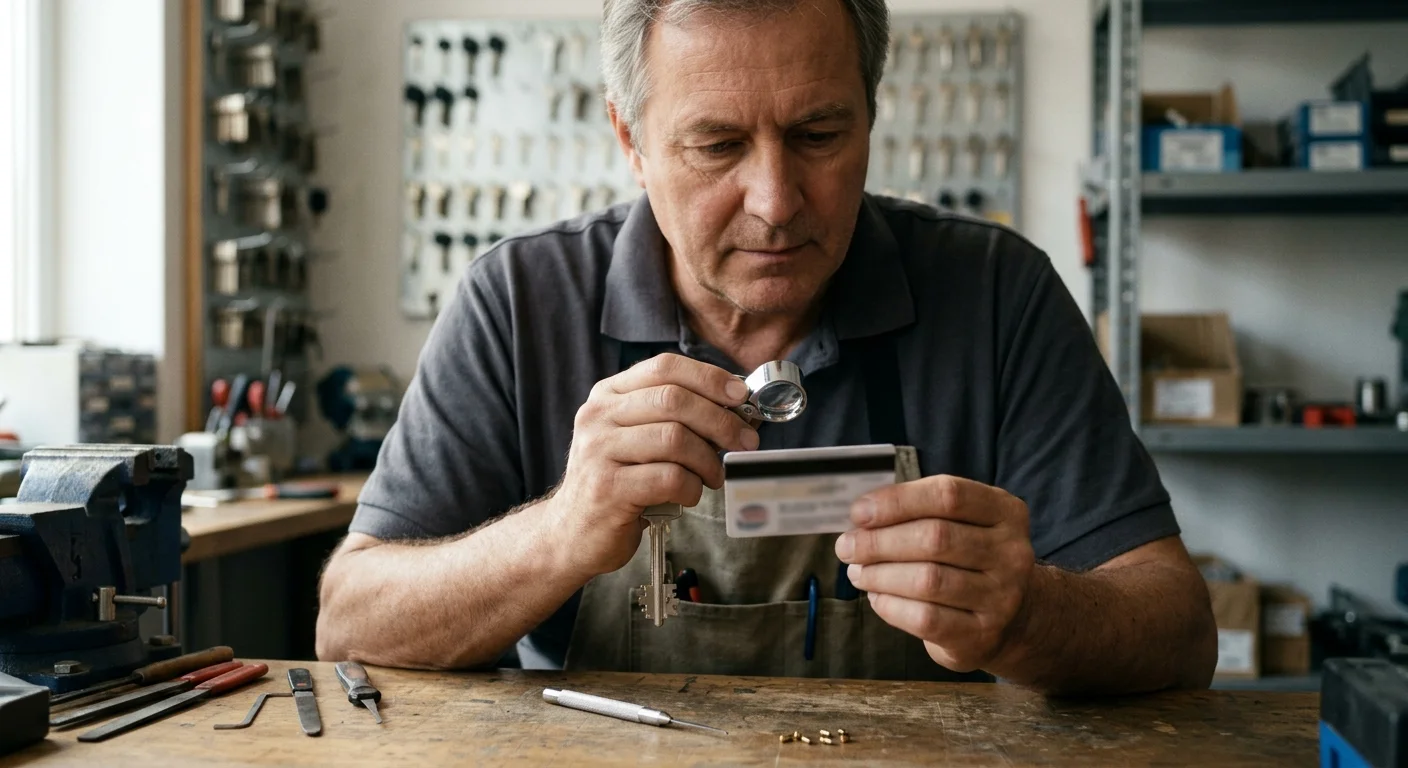
Identify the key and keyway before copying
The first step is identifying what you actually have. “High-security” can be a description, a product label, or a property manager’s shorthand. None of those descriptions settles whether your specific key can be copied.
Bring the original key if it’s available. Keep any card, sleeve, receipt, or property paperwork that came with it. Don’t post clear photos of the key online. Instead, let the locksmith review the physical key and any documents privately.
The locksmith can look for information that identifies the keyway and its source. That review helps separate three different questions:
- Can the key be identified?
- Is a suitable blank and copying method available?
- Has the required person approved this duplicate?
One answer doesn’t automatically resolve the others. A recognizable key may still need an authorization check. Written permission also doesn’t prove that a particular locksmith can support that keyway.
That distinction matters across San Diego. A renter in City Heights may need direction from property management. A Mission Valley condo owner may have association documents. A Kearny Mesa office manager may need to follow an employer’s access process. The neighborhoods differ, but the first move stays the same: identify the key and its controlling system.
Our key duplication service connects callers with licensed independent locksmiths. The matched professional confirms whether the requested duplication falls within the work they can perform.
Check who controls duplicate authorization
Before ordering a copy, identify who issued or controls the key. That might be you, a landlord, a property manager, an employer, or another organization. The correct answer depends on your arrangement and the documents connected to that key.
Start with the person or organization that gave you the key. Ask what approval they require and who can provide it. If the key came with an authorization card or written instructions, bring those materials. The locksmith can then compare your request with the information you provide.
For a rental, don’t assume possession of the key equals permission to duplicate it. Check your lease and contact the property manager. For a workplace, follow the employer’s access process before visiting a locksmith. Our guide to duplicating an office key in San Diego covers that situation separately.
If you own the property, gather records that connect you to the door or lock. The locksmith may request identification or other proof before accepting the job. What they request can depend on the key, the property, and the proposed work.
Don’t ask a shop to bypass a documented approval process. If you can’t identify the controlling party, pause the duplication request. A matched locksmith can explain what information is missing, but they can’t create authorization for you. Permission must come from the person or organization entitled to give it.
Why markings alone may not settle the question
A stamped phrase can be useful, but it isn’t the complete answer. Treat words such as “restricted” or “do not duplicate” as a reason to investigate. Don’t treat the marking alone as proof that copying is always permitted or always prohibited.
The approved claims ledger doesn’t confirm a California rule that gives every “do not duplicate” marking the same legal effect. The reviewed BSIS and California Legislature materials didn’t establish a blanket answer for every marked key. Confirm the current position through the key issuer, the system documentation, and an appropriate California authority if legal certainty is needed.
California Business and Professions Code Section 6980(j) contains a narrow licensing distinction. Its definition of locksmith excludes someone whose activities are limited to making a duplicate from an existing key. That language doesn’t decide whether a particular high-security key is authorized, supported, or eligible for copying.
Licensing still matters when the requested work goes beyond that narrow activity. California places locksmith licensing under the Bureau of Security and Investigative Services. You can check a company or professional through the state’s license search.
Look at the full situation instead of one inscription. Identify the keyway, review the documents, and confirm the approving party. If a locksmith declines the request, ask what couldn’t be confirmed. The missing item may be identification, authorization, keyway support, or something else. That explanation gives you a better next step than arguing from the stamp alone.
What information a locksmith may request
Prepare for an authorization review before seeking a high-security key copy. The locksmith may ask who owns the property, who issued the key, and where the key is used. Those questions help them understand the request without treating possession as the only evidence.
Useful materials may include:
- The original key
- Your government-issued identification
- An authorization card associated with the key
- Written approval from the controlling person or organization
- Lease, management, or employment records related to access
- Contact information for someone who can confirm permission
These aren’t universal requirements. A particular locksmith may request different information or decide that the documents aren’t enough. Ask what’s needed before making a trip. Don’t email sensitive documents until you know who will receive them and why.
Describe the request accurately when you call. Say whether it’s for a house, apartment, condo, office, cabinet, or common-area door. Explain whether you own the lock, manage the property, rent the space, or hold the key through work. If you don’t know the key system, say that plainly.
Avoid guessing at the manufacturer, keyway, patent status, or restrictions. Those details require current documentation. A matched independent locksmith can inspect what you bring and tell you what they can confirm.
If the issuer won’t authorize another key, the locksmith can’t resolve that ownership decision. Return to the property manager, employer, association, or other controlling party. Their written process should guide the next step.
When rekeying needs separate consideration
Copying and rekeying address different decisions. Duplication concerns making another key. Rekeying changes the lock so a different key operates it. Asking for one doesn’t automatically settle whether you need the other.
A spare-key request may begin with duplication. A missing, unreturned, or unaccounted-for key creates a separate access-control question. Another copy won’t determine whether an existing key should continue working. The property owner or authorized manager should decide whether that concern requires further action.
Don’t assume every high-security lock can be rekeyed in the same way. The approved source material doesn’t confirm technical rules for every manufacturer or system. A locksmith must identify the hardware and review current documentation before recommending work.
This distinction often matters during tenant turnover, employee departures, or changes in property management. Written authorization for a duplicate doesn’t necessarily authorize changes to the lock. Confirm who may approve the work before requesting lock rekey service.
If you’re comparing broader security choices, read our guide on whether high-security locks are worth it. Keep that decision separate from the immediate copy request. First confirm what key you have, who controls it, and whether authorized duplication is available.
A licensed independent locksmith can explain the options after inspecting the lock and key. Swift Key San Diego makes the referral. The customer hires and pays the matched professional directly.
When to call us
Call when the keyway is unclear, authorization needs review, or rekeying may require a licensed locksmith pro. Call us at (858) 400-4082 and we’ll connect you with a licensed local locksmith.