Make one working house key for each person who needs routine, independent access. Then add only the backup copies assigned to a clear purpose. There isn’t one correct number for every San Diego County household.
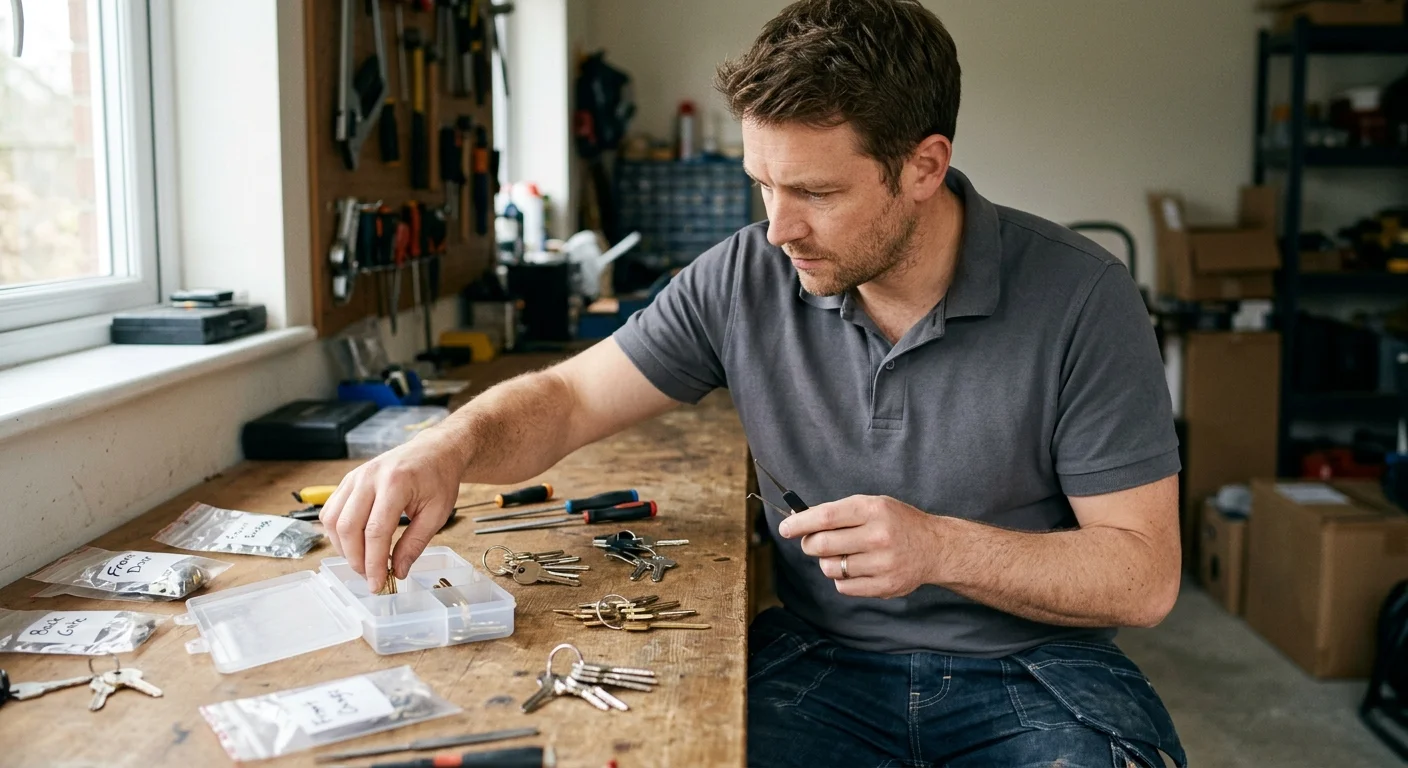
Your final count depends on who lives there, who helps there, and how you’ll control each copy. A written key list makes that decision easier.
List who needs regular access
Start with people, not a target number. Write down every resident who regularly enters without another person present. That usually gives you the minimum number of working keys to consider.
Next, review people who provide recurring help. That might include a caregiver, pet sitter, cleaner, or trusted family member. Don’t count someone simply because you trust them. Count them only when independent access serves a current, specific need.
For each person, answer three practical questions:
- Do they enter regularly without a resident present?
- Will they keep the key between visits?
- Who will collect the key when that access ends?
Those answers separate ongoing access from occasional convenience. A visitor who comes with you doesn’t need a separate copy. Someone who enters while you’re away may need one, depending on your arrangement.
Location matters too. A trusted contact near your City Heights home may be more practical than a relative in Oceanside. For a Chula Vista household, the useful backup holder could be someone nearby in the South Bay. These are household decisions, not universal rules.
Children and other family members also need individual consideration. Base the choice on your household’s routines and comfort level. Don’t use age alone as an automatic yes or no.
Once the roster is complete, assign each proposed spare key to one name. If you can’t name the holder or purpose, leave that copy out for now.
Separate convenience copies from controlled keys
Not every spare key serves the same role. Sorting copies by purpose keeps the total easier to manage.
A convenience copy belongs to someone with regular access. That person carries or stores it under your household’s normal plan. A controlled key stays reserved for a specific situation, person, or handoff. It shouldn’t circulate without a record.
You might create separate categories such as:
- Resident keys for daily access
- Recurring-access keys for named helpers
- One household backup with a named custodian
- Temporary keys that must be returned on a set event
The labels describe your plan, not the physical key. Avoid putting the full property address on a key tag. Use a private code or another identifier that makes sense only to your household.
Don’t create several unassigned copies for vague future needs. Extra keys for family members are useful only when each recipient has a current reason to hold one. A drawer full of unidentified copies makes later decisions harder.
Storage is a separate choice from duplication. If you’re considering an exterior box, read our guide to choosing and managing a key lock box in San Diego. Decide who receives the access information and when it should change.
Keep a simple inventory with the copy’s identifier, assigned holder, and current status. Update it when someone returns a key or no longer needs access. The goal isn’t the largest possible spare-key count. It’s a small set of copies you can account for.
Check whether the key can be duplicated
Don’t assume every key presented for copying is eligible for duplication. The correct answer may depend on the key, its system, and any documents tied to it.
For a rental, condo, or managed property, check your lease and written building policies first. If they don’t answer the question, ask the property manager or key issuer. We couldn’t confirm a blanket California rule that gives every tenant the same duplication authority, so don’t fill that gap with an assumption.
The same caution applies to keys with special markings or controlled distribution. This site’s verified sources don’t establish whether a “do not duplicate” marking has legal force in California. Ask the issuer or manufacturer what documentation and authorization apply to that exact key.
A locksmith can inspect the actual key and explain available options. Swift Key San Diego is a referral service. We connect customers with licensed, independent local locksmiths, but we don’t copy keys or decide whether a key is eligible.
California locksmith licensing is handled by the Bureau of Security and Investigative Services. Ask for the LCO and check a professional or company through the state’s DCA license search.
Our key duplication service page explains how we connect callers with local professionals. You can also review what to know before duplicating a key before arranging the work.
Plan what happens when a spare goes missing
A missing spare changes the plan, even when another copy still works. Decide your response before you hand out keys.
Your written inventory should show who had the missing copy and which door it served. Ask when it was last seen and whether it carried an address label. Record what you’ve confirmed instead of relying on memory.
Then separate a misplaced key from an unreturned one. A key forgotten inside a known home creates a different decision than one lost in an unknown public place. A former resident or helper who hasn’t returned a copy also needs direct follow-up.
Don’t assume duplication alone resolves the problem. Making another copy restores your available count, but it doesn’t account for the missing key. A licensed locksmith can inspect the lock and discuss what options fit the actual hardware. Swift Key San Diego doesn’t prescribe the work, set the price, or provide a warranty.
If the missing key leaves you outside, avoid turning the search into forced entry. Our home lockout referral page explains how to request a connection with a licensed local professional.
After the immediate issue is handled, update your inventory. Mark the old copy as missing, returned, or otherwise resolved. Assign any replacement copy a new identifier.
This plan also helps when a roommate moves, a caregiver arrangement ends, or a temporary visitor leaves San Diego. Ask for the assigned key back, confirm its status, and decide whether the current access setup still fits the household.
Test each copy before relying on it
A newly made spare isn’t ready for your plan until you’ve tested it. Do that while you still have the original key and another way inside.
Try the copy in every lock it’s meant to operate. Use normal pressure. Don’t force a key that doesn’t move as expected. If one door uses a different key, note that clearly instead of assuming the new copy covers the whole home.
Test the exact copy you’ll hand to each person. Don’t test one key and treat every other copy as identical. Keep each key tied to its inventory identifier throughout the process.
If a copy doesn’t work correctly, take both the copy and the original back to the provider. Explain which lock you tested and what happened. Let the provider inspect the keys rather than attempting to reshape one yourself.
Finish with a short handoff. Tell the recipient which entry the key serves, where it should be kept, and when it must be returned. Don’t attach the property’s full address. Update your list as soon as the key changes hands.
Revisit the list whenever household access changes. Add a copy only when a new person or backup purpose requires one. Remove an assignment when that need ends.
This approach answers how many spare house keys to make without forcing every household into one number. The right count is the number of authorized, tested copies you can identify and manage.
When to call us
Call when a key’s duplication eligibility is unclear, a spare is missing, or the lock needs professional evaluation. Swift Key San Diego refers callers to licensed, independent locksmiths and performs no physical work. Call us at (858) 400-4082 and we’ll connect you with a licensed local locksmith.