A spinning door deadbolt needs a cautious response. Stop forcing it, keep the door open if that’s safe, and arrange an inspection if the bolt won’t move. You can compare the key side, thumb turn, and door position without taking the lock apart.
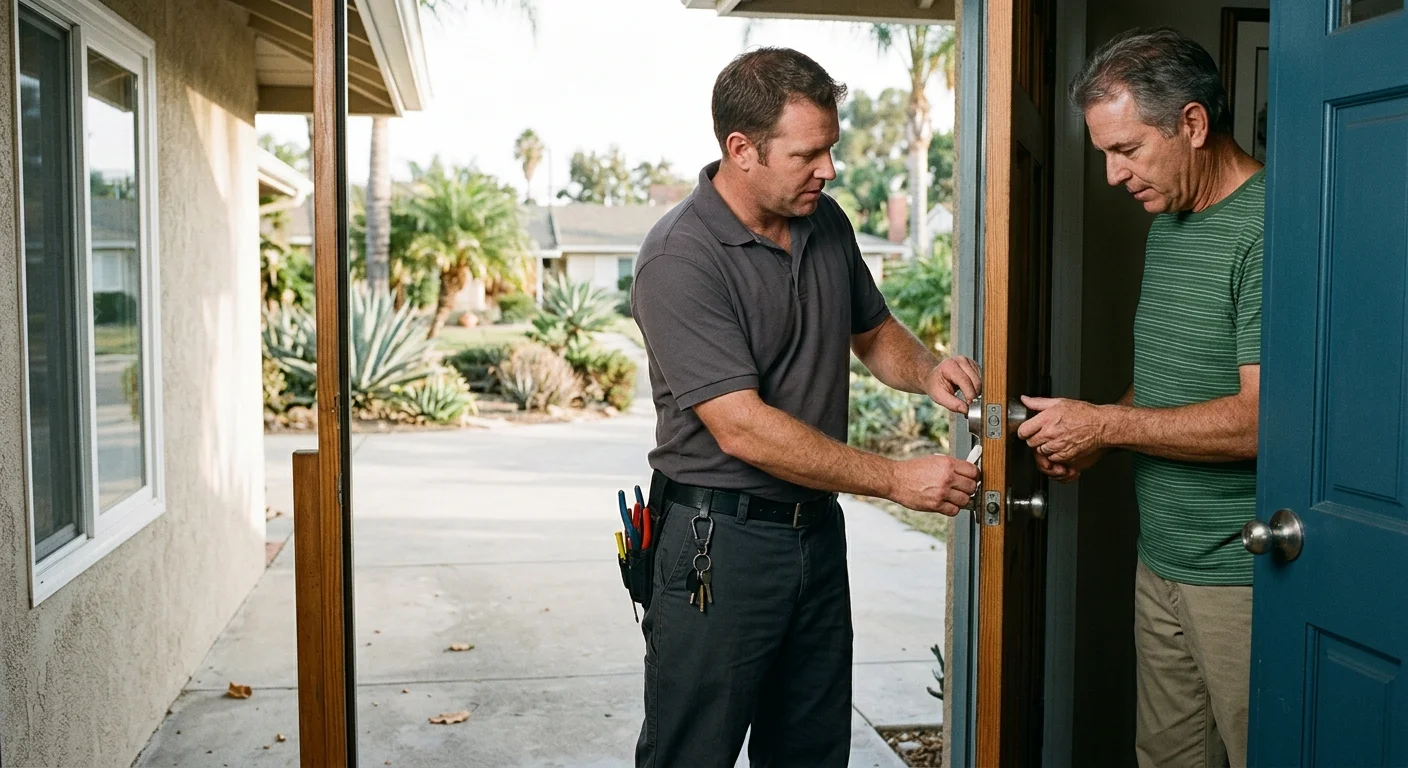
Why a deadbolt may spin without retracting
When the key or thumb turn rotates but the bolt stays put, the visible symptom is clear. The part you’re turning isn’t producing the expected bolt movement. That symptom alone doesn’t confirm which component needs attention.
A licensed locksmith may inspect several separate areas. Those include the key cylinder, interior thumb turn, internal connection, bolt assembly, and strike area. The inspection should establish where movement stops before anyone recommends work.
Notice exactly what happens. Does the outside key spin while the inside thumb turn works? Do both sides turn without moving the bolt? Does either side meet resistance? These details help describe the problem, but they aren’t a final diagnosis.
An El Cajon address also doesn’t identify the cause. El Cajon is an inland part of San Diego County, but no verified source reviewed for this page ties local heat to a freely spinning deadbolt. Heat shouldn’t be presented as the explanation without evidence from the hardware inspection.
Don’t keep rotating the key to test it repeatedly. Avoid drilling, prying, or removing screws. Those steps can change the condition before a professional examines it. They can also leave an exterior door unsecured.
If the door is currently locked, use another authorized entrance when one is available. Don’t attempt a bypass. A matched independent locksmith can inspect the door and perform authorized work. Our El Cajon locksmith guide explains what to confirm before hiring locally.
Checks that don’t require taking the lock apart
Start by recording what you can see and feel. Don’t remove the cylinder, thumb turn, faceplate, or bolt. A short, accurate description is more useful than a guessed diagnosis.
First, identify which control spins. Test the key gently from the outside if you have authorized access. Then compare the interior thumb turn. Stop if the key bends, catches, or needs force. Don’t add a lubricant or cleaner unless the lock manufacturer directs it.
Next, look at the door’s position. If the door is already open and can remain open safely, turn the deadbolt once with the door open. Watch the door edge to see whether the bolt moves. Don’t close the door solely to repeat the test. That could leave you locked out or unable to secure the entrance.
You can also note these details:
- Whether the key completes a partial or full rotation
- Whether the thumb turn behaves differently
- Whether the bolt moves at all
- Whether the symptom changes with the door open
- Whether the hardware feels loose from normal hand contact
- Whether the issue began after other door or lock work
Take clear photos of both sides and the door edge. Include the hardware name or model only when it’s readable. Don’t guess at a model from appearance.
These checks don’t determine whether repair or replacement is required. They give the locksmith a cleaner starting point. If the bolt moves but won’t hold when the door is shut, our deadbolt troubleshooting guide covers that separate symptom.
Separate cylinder trouble from door alignment
A spinning key and a door that won’t align can feel like the same lock problem. The safest way to separate them is through observed behavior, not disassembly.
Compare the outside cylinder and inside thumb turn. If one moves the bolt and the other doesn’t, report that difference exactly. If neither side moves it, report that too. Don’t label the cylinder, bolt, or internal connection as broken before inspection.
Door position provides another useful comparison. When the bolt moves with the door open but not with it closed, tell the locksmith that the symptom changes when the door meets the frame. That directs attention toward the door position, bolt path, and strike relationship.
When the bolt doesn’t move in either position, door alignment alone doesn’t explain the open-door result. The hardware still needs inspection. That doesn’t tell you which internal component is involved, and it doesn’t establish whether a repair is available.
Check only what remains visible. You may look for an obvious object in the strike opening without inserting tools. Don’t file the strike, enlarge an opening, bend the bolt, or loosen hinges as a diagnostic step. Those changes can hide the original symptom.
Also note whether the door can currently be secured through another existing lock. Don’t assume a spinning deadbolt is holding simply because the door looks closed. If you can’t confirm that the entrance is secure, keep people and belongings protected while arranging professional help.
This distinction matters because the scope may differ. The person inspecting the lock should explain whether the concern is inside the hardware, at the door and frame, or in more than one place.
When repair may be possible
Repairability depends on the exact lock, its condition, and the guidance available for that hardware. No verified source used for this page establishes a universal repair rule for a freely spinning deadbolt. An in-person inspection is needed before anyone can confirm the right scope.
A licensed locksmith can identify the hardware and explain what isn’t moving correctly. Ask the locksmith to name the affected component in plain language. You can also ask whether the manufacturer provides an approved replacement part or repair procedure for that model.
Rekeying shouldn’t be treated as another name for repair. Rekeying changes the lock’s internal keying, while replacement installs new hardware. Neither term alone confirms what will resolve a spinning mechanism.
Before authorizing work, ask for a written description of the proposed service. Confirm which parts will remain, which parts will change, and what the independent locksmith will charge. Swift Key San Diego doesn’t set the professional’s price or provide a warranty. You contract and pay the matched professional directly.
A repair discussion should also cover the door’s current operation. The locksmith can test the completed work and explain any remaining concern. If the existing hardware can’t be repaired under the applicable manufacturer guidance, deadbolt installation may become the next discussion.
Don’t choose a repair solely because it sounds smaller. Don’t choose replacement solely because the lock spins. The inspection should support the recommendation.
When replacement needs to be discussed
Replacement becomes a discussion after the current hardware has been identified and inspected. There isn’t a verified one-size-fits-all rule based only on spinning. The locksmith should explain why the existing lock can or can’t be returned to proper operation.
Ask for the exact model being proposed. The professional should confirm that it fits the door and intended use. If the door, frame, or strike also needs attention, that work should appear separately in the scope.
You should also ask whether the proposal replaces the complete lock or only a specific component. Clear wording prevents confusion when comparing options. Our lock replacement service page explains how we connect San Diego County customers with independent professionals for this work.
Swift Key San Diego is a referral service. We don’t install hardware, employ technicians, own service trucks, set prices, or provide warranties. The licensed independent locksmith performs the authorized work and provides the applicable terms.
California locksmiths are regulated by the Bureau of Security and Investigative Services. You can check a company license or employee registration through the California Department of Consumer Affairs license search. Confirm the current status before authorizing work.
For an El Cajon property, tell the locksmith whether the entrance serves a house, apartment, business, or shared area. Also explain who authorized the work. Those details help the professional understand the requested scope without guessing about access or ownership.
Get the price and work description from the professional before approving replacement. No universal price for this symptom could be confirmed from the approved sources used for this page.
When to call us
Call when your deadbolt spins without moving the bolt, the entrance won’t secure, or inspection requires removing hardware. Call us at (858) 400-4082 and we’ll connect you with a licensed local locksmith.